Spanish Name Generator
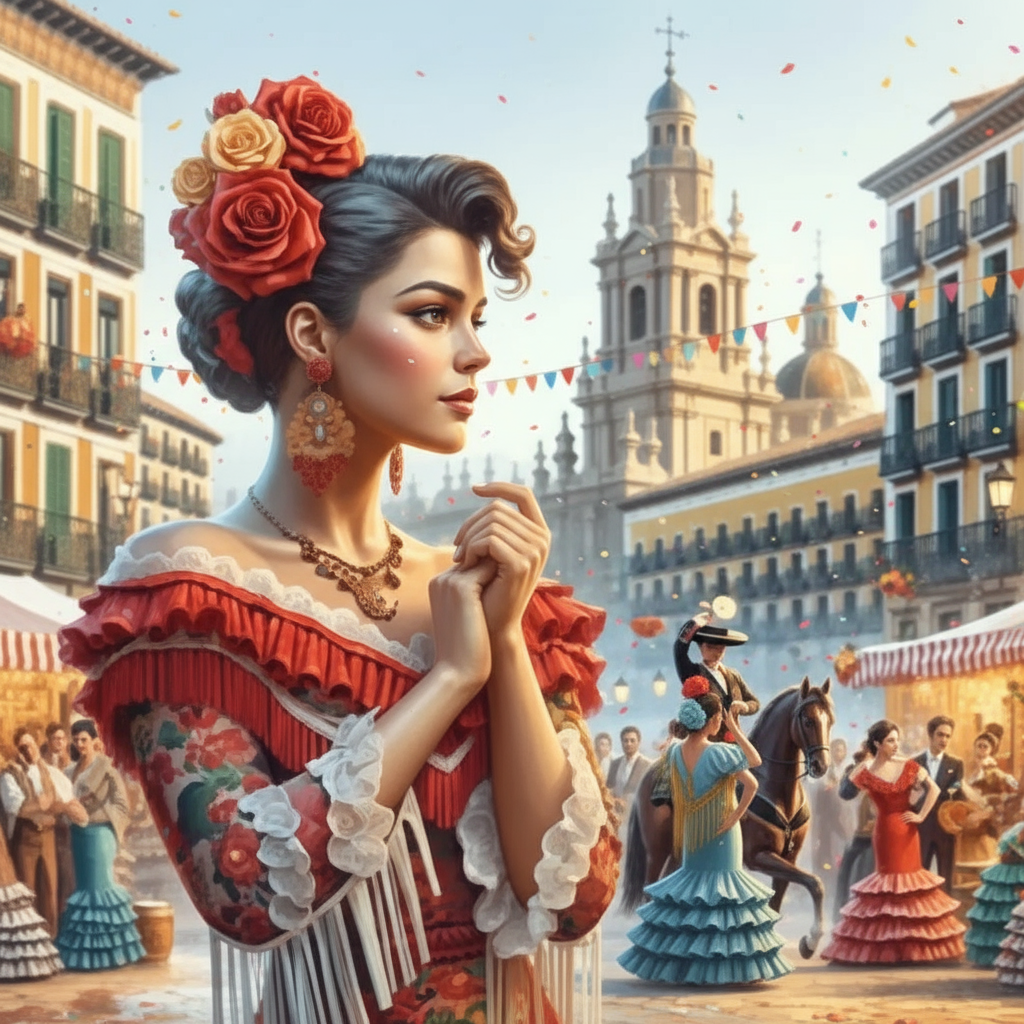
Dance with passion using our Spanish name generator! Craft vibrant names great for conquistador campaigns, Latin fantasy RPG, or flamenco-inspired characters.
Gender Preference
Generating magical names...
Authentic Hispanic Names for Your Next Character
Spanish names possess a unique musical quality—vowels flow together like notes in a flamenco melody, creating combinations that feel both elegant and powerful. Whether you're building a conquistador for your fantasy campaign, developing characters for historical fiction, or simply exploring the rich traditions of Hispanic naming, understanding how these names work opens up entirely new creative possibilities.
A Spanish name generator helps you discover authentic options rooted in centuries of cultural history. From Visigothic warriors to Arabic-influenced regions, from Marian devotional practices to modern variations, Spanish naming traditions weave together multiple influences into something distinctly beautiful.
How the Spanish Name Generator Works
The generator creates authentic Spanish names by drawing from historical naming patterns and traditional conventions. You can customize results based on several preferences:
Gender filters let you choose between male names (like Rodrigo or Alejandro), female names (such as Esperanza or Marisol), or a mix of both. This basic option covers most creative needs.
Advanced customization provides deeper control over the results. Name length settings range from short single-syllable options like Cruz or Luz to longer four-syllable names like Maximiliano or Encarnación. Syllable filters help match names to specific rhythms—two-syllable names tend to feel punchy and direct, while multi-syllable options carry more formal weight.
The "Starts With" and "Ends With" filters prove particularly useful for worldbuilding. Names beginning with "Al-" often show Arabic influence (Alfonso, Almudena), while endings like "-ción" signal religious devotional names (Asunción, Concepción). These patterns help create cohesive naming schemes for fictional regions or family lineages.
Each generated name includes its meaning and etymological background, providing context that can inform character development. Rodrigo means "famous power" and traces back to Visigothic roots, while Paloma translates to "dove" from Latin origins—details that add depth to your creative work.
Understanding the Spanish Dual-Surname System
Spanish naming conventions follow a distinctive pattern that differs significantly from English-speaking traditions. The complete structure consists of a given name followed by two separate surnames—the first from the father's family line and the second from the mother's family line.
For example, in the full name "Alejandro García López," García represents the paternal surname while López indicates the maternal surname. This dual system creates a living genealogical record, allowing anyone to trace both sides of a person's family heritage through their name alone.
Traditional order matters. Historically, the paternal surname always appeared first, though Spanish law changed in 1999 to allow parents to choose the order. Since June 2017, neither surname holds automatic precedence—parents must explicitly agree on the arrangement for their children. Despite these legal changes, approximately 99.5% of Spanish families still follow the traditional paternal-first pattern.
Both surnames function differently than middle names. Many people mistakenly treat the second surname as equivalent to an English middle name, but that's not accurate. Both surnames carry equal legal weight and appear on all official documentation. In everyday use, however, most people go by their given name and first surname—so Alejandro García López would typically introduce himself as "Alejandro García."
The particle "de" serves specific purposes. This preposition literally means "from" and traditionally connected people to geographic origins or noble estates. When you see names like "José Manuel de la Rúa," the "de" indicates ancestral ties. The particle appears in lowercase when the full name is written but capitalizes when the given name is omitted ("Doctor De la Rúa"). Current Spanish law generally restricts adding "de" unless it prevents confusion between a surname and given name.
The conjunction "y" links compound surnames. Adopted in the 16th century, "y" (meaning "and") helps distinguish when both surnames might otherwise blur together, as in "Santiago Ramón y Cajal." If the maternal surname begins with an "i" sound, the conjunction changes to "e" for easier pronunciation—"Eduardo Dato e Iradier" flows more naturally than "Eduardo Dato y Iradier."
Hyphenation represents a modern adaptation. Spanish-speaking communities increasingly hyphenate surnames in English-speaking contexts to avoid confusion, creating forms like "Alejandro García-López." This practice helps preserve the dual-surname tradition when dealing with institutions unfamiliar with Spanish naming conventions.
Women maintain their birth names after marriage. Unlike many other cultures, Spanish women don't change their surnames when they marry. A woman named "Sofía Rodríguez Martínez" remains "Sofía Rodríguez Martínez" throughout her life, never adopting her spouse's surname as part of her legal identity.
This comprehensive system ensures that family lineage from both parents remains permanently visible, creating names that function as biographical capsules spanning generations.
Categories of Spanish Names: From Visigothic to Marian
Spanish names draw from multiple cultural sources, each contributing distinct characteristics and meanings.
Visigothic and Germanic Heritage
The Visigoths ruled Spain from the 5th to 8th centuries, leaving a permanent mark on Spanish nomenclature. Names like Fernando (meaning "bold voyager"), Rodrigo ("famous power"), Gonzalo ("battle genius"), and Alfonso ("noble and ready") all trace back to Germanic tribal roots. These names dominated Spanish nobility and eventually spread throughout all social classes.
The famous Spanish hero El Cid bore the name Rodrigo Díaz de Vivar—his given name reflecting Visigothic heritage while his surnames followed the Spanish dual pattern. Hernando Cortés, the conquistador, carried a variant of Ferdinand that evolved through Spanish phonetic changes over centuries.
Arabic-Influenced Names
Nearly 800 years of Moorish presence in Iberia left linguistic traces throughout Spanish culture, including personal names. Almudena derives from the Arabic "al-mudayna" (the citadel), referring to Madrid's ancient fortress. According to legend, a concealed statue of the Virgin Mary was discovered in a building by this name during the Reconquista, leading to the title "Virgin of Almudena," Madrid's patron.
The name Guadalupe combines Arabic "wadi" (river) with either Latin "lupus" (wolf) or Arabic "lubb" (stones), creating "river of black stones" or "river of the wolf." This geographic name became associated with the famous Marian shrine and evolved into a popular given name throughout the Spanish-speaking world.
Other Arabic-influenced names include Fátima and Zayda (meaning "prosperous"), though these remain less common in modern Spain compared to Latin America, where naming traditions evolved somewhat differently from the Iberian peninsula.
Marian Devotional Names
Catholic devotion to the Virgin Mary generated an entire category of Spanish names, many following the pattern "María de [title]." These compound names honor different Marian advocations—specific aspects or appearances of Mary venerated in Catholic tradition.
María del Carmen honors Our Lady of Mount Carmel. The name Carmen alone means "song" or "garden," connecting to the biblical "vineyard" symbolism. Similarly, María de los Ángeles translates to "Mary of the Angels," while Dolores (meaning "sorrows") references the Virgin's suffering during Christ's crucifixion. The affectionate nickname "Lola" derives from Dolores, demonstrating how Spanish speakers transform formal religious names into intimate forms.
Consuelo means "consolation," Luz translates as "light," and Paz signifies "peace"—each reflecting a different aspect of Marian theology. These names function as both religious declarations and expressions of parental hopes for their children's character.
Interestingly, "María" also appears in masculine names, though always paired with another name and placed second: José María honors both Saint Joseph and the Virgin. This practice became especially popular in Spain during the mid-20th century, creating combinations that might confuse outsiders but carry deep spiritual meaning for Spanish families.
Nature and Virtue Names
Spanish names frequently draw from natural elements and abstract virtues. Marisol elegantly combines "mar" (sea) and "sol" (sun) into a single flowing name that evokes coastal beauty. Paloma means "dove," symbolizing peace and the Holy Spirit. Rosa simply means "rose," while Alba translates to "dawn" or "white," representing new beginnings and purity.
Virtue names include Esperanza (hope), Fe (faith), and Caridad (charity)—the three theological virtues. These names serve double duty as both personal identifiers and moral aspirations, embedding values into a child's identity from birth.
Saint Names and Religious Figures
Catholic saints provide another major naming source. Santiago (Saint James) represents Spain's patron saint and combines "Santo" (saint) with "Iago" (an old form of James). The famous pilgrimage route, the Camino de Santiago, led to this name's enduring popularity.
Francisco honors Saint Francis of Assisi, while Teresa or Teresita references Saint Teresa of Ávila, a Spanish mystic and reformer. Rafael means "God has healed" in Hebrew and honors the archangel Raphael. These names connect children to spiritual protectors and role models from Catholic tradition.
Using Spanish Names in Creative Writing and Gaming
Spanish names bring specific advantages to creative projects, particularly fantasy RPGs, historical fiction, and worldbuilding exercises.
For RPG Characters
Spanish names work exceptionally well for certain character archetypes. A paladin named Santiago Ramirez de León immediately suggests noble bearing and religious devotion. A swashbuckling rogue called Alejandro Cruz feels dashing and dangerous. A wise cleric bearing the name Esperanza Delgado Morales communicates both spiritual depth and cultural grounding.
The dual-surname system helps establish family connections within your campaign world. If two characters share a surname, players can infer family relationships or regional origins. A party might include both "Diego Mendoza Ortiz" and "Isabella Mendoza Rivera"—the shared "Mendoza" suggests they're related through Diego's father and Isabella's mother, creating instant story hooks about shared heritage or family obligations.
For Historical Fiction
When writing conquistador-era fiction or Spanish colonial settings, authentic names add crucial verisimilitude. Using proper naming conventions—given name plus two surnames—signals research and attention to detail. A character incorrectly named "Captain Hernando Rodriguez" (single surname) feels less authentic than "Captain Hernando Rodriguez Aguirre" (dual surnames), even to readers unfamiliar with Spanish conventions.
Regional variations matter for historical accuracy. Names popular in 16th-century Castile differed from those common in Catalonia or Andalusia. The Spanish Name Generator's etymological information helps match names to specific time periods and regions, ensuring your conquistador captain doesn't carry a name that wouldn't emerge for another century.
For Worldbuilding
Creating fictional cultures inspired by Spanish traditions becomes easier with understanding of naming patterns. You might design a fantasy kingdom where noble families follow strict dual-surname inheritance, while commoners use single surnames. Religious orders might adopt virtue names (Paz, Fe, Esperanza) as markers of their calling.
The particle "de" offers worldbuilding opportunities—perhaps in your world, "de" indicates magical bloodlines rather than geographic origins. Names ending in "-ción" might mark members of a specific religious sect. Playing with authentic Spanish patterns while adapting them to your fictional setting creates cultures that feel grounded yet imaginative.
The Musical Rhythm of Spanish Names
Spanish names possess an inherent melodic quality that sets them apart from names in other languages. This musicality stems from Spanish phonetics—the language's vowel-heavy structure creates smooth, flowing sounds that feel pleasant when spoken aloud.
Compare the rhythm of "Alejandro" with its English equivalent "Alexander." The Spanish version opens with the bright "a" vowel, flows through "le-han," and finishes with the resonant "dro." The English version feels choppier, with harder consonant clusters and less vowel space. This difference repeats across Spanish names: Valentina flows more smoothly than "Valentine," Rafael sounds more musical than "Raphael."
The melodic quality makes Spanish names particularly effective for romantic or passionate characters. A name like Isabella García de Mendoza carries inherent drama—you can almost hear guitar strings and castanets in its rhythm. This sonic beauty explains why Spanish names remain popular in creative works even when the setting has no Hispanic cultural connection.
Nicknames amplify this musicality. Francisco becomes Paco or Paquito, Guadalupe shortens to Lupe or Lupita, and Dolores transforms into Lola. These diminutives add another layer of characterization—formal names for formal situations, affectionate nicknames for intimate moments.
Frequently Asked Questions
How do I choose between masculine and feminine Spanish names?
Spanish names typically follow traditional gender associations, though modern practice allows more flexibility. Names ending in "-o" (Alejandro, Fernando, Ricardo) are traditionally masculine, while names ending in "-a" (Sofía, Valentina, Lucía) are traditionally feminine. Some names work for any gender, like Cruz (cross) or Guadalupe. The generator's gender filter helps you find names matching your character's identity.
Can I mix Spanish given names with non-Spanish surnames?
Absolutely. Many Spanish-speaking communities in the United States and other countries combine Spanish given names with surnames from other cultural backgrounds. A character named "María Thompson García" or "Diego O'Brien Martínez" reflects authentic multicultural heritage common in many regions.
What are the most common Spanish names?
Current popular names in Spain include Santiago, Mateo, Lucas, and Hugo for boys, and Lucía, Sofía, Martina, and María for girls. However, popularity varies significantly across Spanish-speaking countries—names common in Spain might be less popular in Mexico or Argentina, and vice versa.
How do Spanish nicknames work?
Spanish creates nicknames through several patterns. Some shorten the original name (Francisco → Paco, Rafael → Rafa), while others use diminutive endings like "-ito" or "-ita" to show affection (Carlos → Carlito, Ana → Anita). Compound names often drop one element (María José → Marijose or just José). These nicknames signal intimacy and familiarity in relationships.
Should I use accent marks when writing Spanish names?
Yes, when writing Spanish names in their authentic form, include proper accent marks (tildes). José, María, Andrés, and Sofía all require their accents for correct pronunciation and spelling. However, in English-language documents or when dealing with systems that don't support special characters, removing accents is acceptable.
Can I use Spanish names for fantasy races like elves or dwarves?
Spanish names work surprisingly well for fantasy races, particularly when you want to evoke specific cultural feelings. Elven characters with Spanish names feel elegant and ancient—Celestina Moonwhisper or Leandro Starweaver carry that graceful quality. Dwarven characters might use shorter, punchier Spanish names like Gil Ironforge or Blas Stonehammer to match their sturdy nature.
What's the difference between Spanish names from Spain versus Latin America?
While the fundamental naming structure remains consistent, regional variations exist. Some names popular in Mexico rarely appear in Spain, and vice versa. Indigenous influences in Latin America introduced names and naming patterns less common in Spain. Colonial history also created different trends—names honoring independence heroes became popular in Latin American countries but not in Spain.
Start Generating Your Perfect Spanish Name
Spanish names offer creative richness few other naming traditions can match. They carry centuries of history, blend multiple cultural influences, and sound beautiful whether shouted across a battlefield or whispered in a romantic moment.
The Spanish Name Generator helps you discover names that fit your specific needs—from short, powerful options like Cruz or Luz to elaborate formal combinations like Maximiliano Fernández de Córdoba. Whether you're developing a conquistador captain for your next campaign, crafting a passionate protagonist for your historical novel, or simply exploring the beauty of Hispanic naming traditions, authentic Spanish names add depth and resonance to your creative work.
The dual-surname system, religious devotional practices, and melodic phonetic patterns all contribute to making Spanish names distinctive and memorable. Understanding these conventions transforms name selection from random choice into intentional character development, where every syllable carries meaning and cultural weight.
Try the generator with different settings—experiment with length, syllable count, and starting letters until you find combinations that resonate. Pay attention to meanings and etymologies; they often suggest character traits or story directions you hadn't considered. Most importantly, speak the names aloud. Spanish names reveal their true beauty when pronounced, their vowels flowing together like notes in a song.