German Name Generator
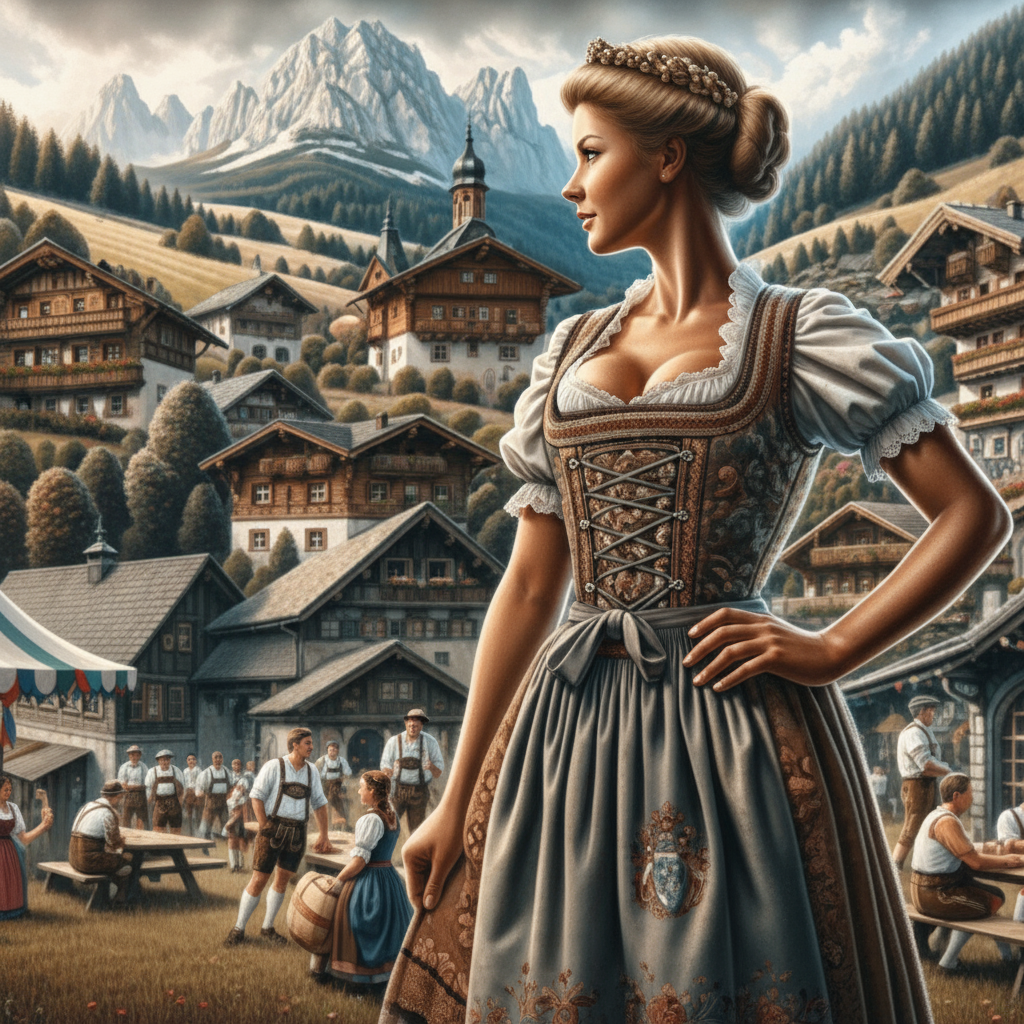
Honor Teutonic strength with our German name generator! Forge powerful names perfect for medieval fantasy RPG, Grimm fairy tales, or European campaigns.
Gender Preference
Generating magical names...
Create Authentic Teutonic Names
When you need a name that carries the weight of medieval Europe, few traditions offer the depth and historical richness of Germanic naming whether you're building a character for a tabletop RPG campaign set in a Holy Roman Empire-inspired kingdom, writing a dark fairy tale echoing the Brothers Grimm, or simply exploring your own genealogy, understanding how German names function transforms a random selection into something meaningful.
The difference between a forgettable character and one that resonates often comes down to authenticity. A German name generator serves as more than a convenience tool—it becomes a gateway into centuries of linguistic evolution, cultural memory, and the practical realities that shaped how communities across Deutschland identified themselves and their neighbors.
The Foundations of Germanic Naming
Germanic given names emerged from a linguistic tradition that viewed names as compound constructions, each element carrying a distinct meaning. Unlike Latin-based naming conventions that often borrowed from Christian saints, traditional German names followed what linguists call "dithematic" structure—combining two meaningful roots to create a complete identity.
According to linguistic research documented on Wikipedia, "Germanic given names are traditionally dithematic; that is, they are formed from two elements (stems), by joining a prefix and a suffix." This wasn't decorative wordplay. Each component served as a semantic building block, embedding qualities parents hoped their children would embody.
Understanding Name Elements
The most frequently encountered elements reveal what Germanic cultures valued:
Battle and Strength:
- hild (battle, war) appears in names like Hildegard ("battle enclosure") and Brunhild ("armored battle")
- Gund (battle, war) forms names such as Gunther and Gundulf
Protection and Guardianship:
- mund (hand, protection) creates Edmund ("wealthy protection") and Sigmund ("victorious protection")
- helm (helmet, protector) appears in Helmut and Wilhelm
Noble Qualities:
- Adal (noble) forms the foundation of Adelaide, Adolf, and Albert
- beraht/berht (bright) produces names like Bertrand, Albert, and Robert
Power and Rule:
- wald/walt (power, ruler) shapes Waldemar and Oswald
- ric/rih (ruler, mighty) appears in names such as Alaric, Theodoric, and Richard
These elements combined freely, creating names where meaning emerged from understanding both parts. King Æthelred's name derived from æþele (noble) and ræd (counsel), literally identifying him as a "noble counselor." The semantic relationship between elements mattered less than the individual meanings they carried forward.
The Evolution of German Surnames
While given names operated on compound principles, surnames developed through entirely different mechanisms tied to practical identification needs. As communities grew and populations became more mobile, a single given name proved insufficient for distinguishing one Johannes from another.
According to Family Tree Magazine, "Most German commoners acquired their surnames in the Middle Ages, sometime around the 1300s, and for most areas those surnames were fixed from one generation to another." This transition created four primary surname categories that reveal how medieval Germans understood identity and social structure.
Occupational Surnames
These names, typically ending in -er or -mann, preserved ancestral professions as permanent family markers:
- Schmidt/Schmitt/Schmitz (Smith)—so common it became the German equivalent of "Smith."
- Müller (miller)—operating the crucial grain mills that fed communities
- Schneider (tailor)—the craftsman who produced clothing
- Fischer (fisherman)—those who worked rivers and coasts
- Becker/Bäcker (baker)—providers of daily bread
Geographic Surnames
Location-based names functioned as permanent address markers, tying families to specific places:
- Marburger likely traced ancestry to the city of Marburg
- Schweitzer indicated Swiss origin or heritage
- Bach (stream) described someone living near water
- Berg (mountain) marked highland dwellers
- Wald (forest) identified those near wooded areas
Characteristic Surnames
Descriptive names captured physical traits or personality attributes:
- Lang/Lange (tall, long)—bestowed on notably tall individuals
- Klein (small, short)—marking a smaller stature
- Schwarz (black)—likely describing dark hair or complexion
- Weiss (white)—indicating fair hair or skin
- Stark (strong)—recognizing physical power
Patronymic Surnames
Father-derived names, though less common in German-speaking regions than Scandinavian areas, still appear:
- Hansen (Hans's son)
- Jacobsohn (Jacob's son)
- Peters (Peter's son)
Notably, areas like Ostfriesland and Schleswig-Holstein—closest to Scandinavia—maintained changing patronymic surnames into the 1800s, where each generation took their father's given name as their new surname.
Regional Variations and Complications
German naming conventions weren't uniform across all German-speaking territories. The Hofname tradition in border regions between Niedersachsen and Nordrhein-Westfalen created genealogical puzzles where farm names superseded family surnames. When a daughter inherited land, her husband often adopted the farm's name, and children born before versus after the inheritance carried different surnames.
Spelling presented another layer of complexity. Umlauts (ä, ö, ü) confused English-speaking record keepers, creating multiple "standardized" spellings for the same family. The surname Schürch (pronounced roughly "Shoo-air-k") evolved into American variants including Shirk, Sherk, Sherrick, Sherick, and numerous other phonetic approximations.
Using a German Name Generator Effectively
Modern AI-powered German name generators build on this historical foundation, offering tools to create authentic names without requiring deep linguistic expertise. The most effective generators provide filtering options that let you shape results to match specific character needs.
Basic Generation Options
Start with fundamental choices:
- Gender selection (male, female, or unisex options)
- Name length (short, medium, or long)
- Syllable count (1-4+ syllables)
Advanced Customization
Refine results using more specific parameters:
- Starting letters to match existing character naming patterns in your world
- Ending sounds to create family naming consistency (all siblings ending in -mund, for instance)
- Meaning filters when available, letting you select names embodying specific traits
Combining Given Names and Surnames
For complete character identity, pair traditional Germanic given names with appropriate surnames. Consider:
For a noble knight: Adalbert von Eisenberg ("noble brightness from the iron mountain")
For a village craftsman: Friedrich Zimmermann ("peaceful ruler, carpenter")
For a fierce warrior woman: Brunhilde Schwarzwald ("armored battle from the black forest")
The generator provides raw material; your understanding of naming conventions transforms those suggestions into meaningful character identifiers that enhance rather than distract from your narrative.
Creative Applications
Medieval Fantasy RPG Campaigns
Germanic names ground characters in European medieval settings. A party might include:
- Siegfried der Starke (Siegfried the Strong)—a warrior whose name literally means "victorious peace."
- Adelheid Kräutermann—a healer whose surname marks her as an herbalist
- Wolfram von Rabenstein—a noble whose first name invokes the wolf and whose surname ties him to "raven stone."
Grimm-Inspired Fairy Tales
Brothers Grimm tales drew heavily on Germanic folklore and naming traditions. Characters like:
- Gretel (diminutive of Margarethe, meaning "pearl")
- Hans (God is gracious)
- Wilhelm (will, desire + helmet, protection)
These names carried symbolic weight that modern fairy tale writers can replicate by understanding name meanings rather than selecting sounds that merely "feel German."
Historical Fiction
Period-appropriate naming anchors readers in time and place. For a novel set in 15th-century Bavaria:
- Occupational surnames reflect actual medieval professions
- Given names draw from saints popular in that era and region
- Location-based surnames ground characters in specific geographic areas
Frequently Asked Questions
How accurate are AI-generated German names?
Quality varies significantly. The best generators draw from historical databases of actual Germanic name elements and combine them according to documented patterns. Less sophisticated tools simply randomize syllables that sound vaguely German. Verify generated names against historical sources when authenticity matters.
Can I use these names for commercial projects?
Names themselves aren't copyrightable, though specific fictional characters bearing those names may be. Generated Germanic names drawn from historical linguistic patterns are safe for commercial use. Avoid names strongly associated with existing copyrighted characters.
What's the difference between Old High German and modern German names?
Old High German (c. 500-1050 CE) represents the earliest stage of the language, with compound names built from Proto-Germanic roots. Middle High German (c. 1050-1350 CE) saw the solidification of hereditary surnames. Modern German names retain many traditional elements but show increasing international influence and simplified spelling.
How do I choose between similar name variants?
Historical context guides selection. Friedrich versus Frederick versus Frederik reflects German versus English versus Danish spelling conventions. For fantasy settings, internal consistency matters more than perfect historical accuracy—pick one convention and maintain it throughout your world.
Are there gender-specific German name elements?
Some elements appear primarily or exclusively in feminine names (-hild, -gard, -trude), while others (-mund, -hard, -wald) skew masculine. However, many elements like -beraht and -ric appear across genders. Medieval Germanic cultures had clearer gendered naming patterns than modern practice.
What if I need a surname that sounds German but isn't occupational or geographical?
Characteristic surnames offer flexibility. Descriptive names based on temperament (Kühn for "bold," Weise for "wise") or physical traits provide options beyond the most common categories. Alternatively, create compound surnames combining two elements, a pattern that appears occasionally in historical records.
Forging Identity Through Names
Names carry more weight than arbitrary labels. In Germanic tradition, a name encoded family history, personal qualities, and social position. When Hildegard von Bingen signed her theological writings, readers understood her name invoked both battle (hild) and protection (gard)—a fitting identity for a woman whose works defended Church doctrine.
Modern character creators inherit this tradition. Whether generating names for a D&D campaign, populating a novel's cast, or building an immersive video game world, understanding how Germanic naming conventions function transforms a mechanical task into an act of cultural worldbuilding.
A German name generator provides the raw materials. Your knowledge of dithematic structure, surname origins, and regional variations shapes those materials into authentic identities that enhance rather than undermine your creative vision. The difference between Adalbert von Eisenberg and "Bob the Strong" isn't just aesthetic—it's the difference between a character rooted in linguistic and cultural reality versus one that feels like a placeholder waiting for something better.
Choose names that honor the centuries of meaning embedded in Germanic tradition, and your characters will carry that weight forward.