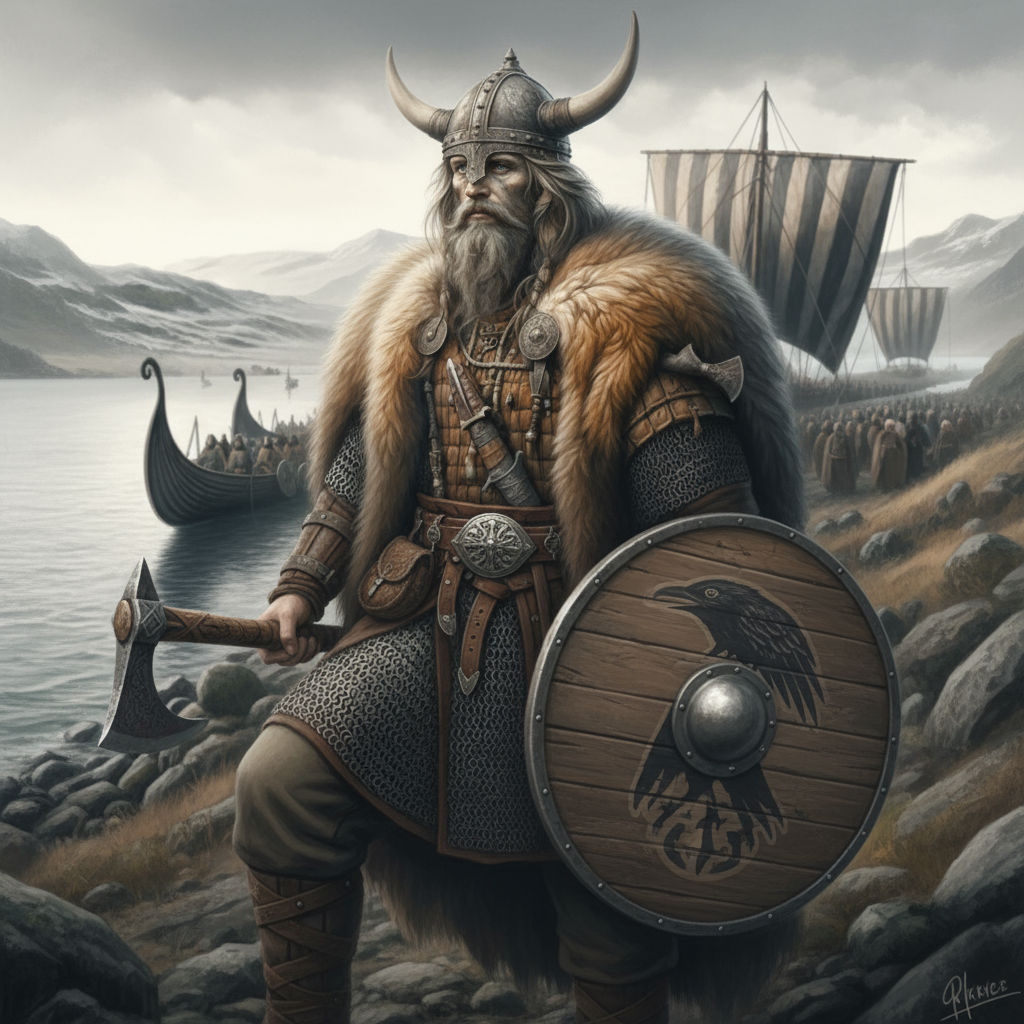
Norse Name Generator
Sail to Valhalla with our Norse name generator! Forge Viking warrior names perfect for DnD barbarians, Nordic fantasy campaigns, or mythology-based stories.
Gender Preference
Generating magical names...
Your Guide to Viking Names
Old Norse naming conventions weren't random choices—they were declarations of identity, prophecies whispered over cradles, and connections to gods who walked among mortals. When Viking parents named their children, they embedded stories of strength, cunning, and divine favor into syllables that would echo across generations. These names carried weight that modern labels rarely match, functioning as both badge and burden for those who bore them.
The enduring appeal of Norse names speaks to something deeper than pop culture trends. From Marvel's Thor and Loki to the Viking sagas preserved in medieval manuscripts, these names continue to captivate precisely because they compress entire worldviews into a few powerful sounds. Understanding how Norse naming worked—and how to use a Norse name generator effectively—opens a window into a culture that viewed identity as something earned, inherited, and proclaimed rather than simply assigned.
Understanding Old Norse Naming Conventions
The Vikings didn't approach naming the way we do today. Norse naming practices emerged from a worldview where fate, family lineage, and divine favor existed on the same continuum. Parents believed they were shaping destiny itself when they chose a name, often honoring deceased relatives in what approached a form of spiritual reincarnation. According to historical sources, "The religious basis of the practice was that a departed ancestor is reborn and again rejoins the living members of the family if his/her name is given to the newborn child."
This belief system created strict hierarchies for name selection. A child was always named after a dead family member—ideally a direct ancestor, but also aunts, uncles, or other relatives. When a close relative died shortly before a birth, particularly while the child was still in the womb, that child invariably received the deceased's name. A son born after his father's death always carried his father's name forward, creating an unbroken chain of identity through generations.
The Patronymic System
The most distinctive feature of Norse naming was the patronymic (and occasionally matronymic) system that persists in Iceland today. Vikings didn't use surnames as we understand them. Instead, they identified themselves through their parentage using simple suffixes: -son for males and -dóttir for females.
Leif Erikson literally meant "Leif, son of Erik"—specifically Erik the Red, the famous explorer. This system created instant genealogies, where hearing someone's full name immediately revealed their family connections. The pattern was remarkably consistent: Skallagrimson meant "son of Skallagrim," while Hakonardottir meant "daughter of Hakon."
Matronymics existed but were extremely rare. Historical records document only 34 women in Iceland whose sons bore their mother's name as a matronymic. Examples include Eilif Guðrunarson and Hrafn Guðrunarson—both sons of a woman named Guðrun who were identified through her name rather than their father's.
Compound Names and Their Elements
Most Norse given names were compound constructions built from two name elements, each carrying distinct meanings. Þórbrandr combined Þórr (the god Thor) with brandr (sword or fire), while Ragnhildr merged Reginn (a mythological figure) with Hildr (battle). This wasn't mere wordplay—it was architecture of identity.
Not all elements could appear in any position. Some functioned exclusively as first elements, others only as second elements, and some could serve in either role. Certain elements were gender-specific: -dís (goddess), -veig, and -ný appeared only in women's names, creating linguistic markers of femininity that had nothing to do with weakness. Names like Magnhild ("powerful in battle") and Brenda ("sword") demonstrate that female Norse names carried the same martial weight as their male counterparts.
Single-element names also existed, often based on nouns from daily life or nature: Biorn (bear), Úlfr (wolf), Fálki (falcon), Auðr (treasure), Drífa (snowdrift). These simple names could stand alone or be expanded into compounds, offering flexibility for families navigating complex naming traditions.
Norse naming even included an element of verbal luck. Compound names, particularly those incorporating divine elements, were believed to grant "long life and health" (langlifis ok heilla). This wasn't superstition—it was theology embedded in nomenclature, where calling upon the gods in a child's name invited their protection.
How to Use a Norse Name Generator
A quality Norse name generator does more than produce random combinations of Old Norse syllables. It functions as a bridge between ancient naming conventions and modern creative needs, whether you're developing a character for tabletop gaming, writing Nordic fantasy fiction, or exploring your Scandinavian heritage.
Start with Gender Selection
Most generators offer three primary options: male, female, or any/neutral. This initial choice shapes everything that follows because Old Norse names carried distinct gender markers through specific elements and suffixes. Male names frequently incorporated martial elements like -mundr (protection), -brandr (sword), or divine names like Þórr. Female names used -dís (goddess), -hildr (battle), or -veig (strength) as building blocks.
Selecting "any" generates names across the full spectrum, which works well if you're exploring options or need gender-neutral results for contemporary contexts. However, understanding the historical gendering helps you recognize authentic patterns versus modern inventions.
Customize Name Length and Complexity
Advanced generator options typically include controls for:
- Name length: Short names (Biorn, Úlfr, Asta) versus longer compounds (Skallagrimson, Ragnhildr)
- Syllable count: Single-syllable punch (Thor, Leif) through multi-syllable complexity (Guðmundr)
- Starting/ending letters: Useful for alliterative naming traditions or matching existing character names
These technical filters help narrow results, but don't overlook the cultural logic behind length. Viking families sometimes followed alliterative naming through generations (Agni, Alrek, Yngvi) or used variation principles where one element remained constant across siblings. A ninth-century Norwegian named Végeirr had sons named Vébiorn, Vésteinn, Véþormr, Vémundr, and Végestr—all sharing the Vé- prefix.
Understanding Generated Results
When a generator produces names like "Bjornulf" or "Astridottir," pause to decode the elements:
- Bjornulf = Biorn (bear) + Úlfr (wolf) = double animal ferocity
- Astridottir = Astrid (divine strength) + dóttir (daughter) = patronymic formula
Quality generators often provide these breakdowns automatically, showing not just the name but its meaning and construction. This transparency matters because it reveals whether you're getting historically plausible combinations or nonsensical mashups.
Deep Dive: Norse Name Meanings
The true power of Norse names lies in their compressed storytelling. Every name functioned as a miniature saga, conveying values, aspirations, and cosmic connections through carefully chosen elements.
Divine and Mythological Names
Names incorporating gods weren't casual choices—they represented direct appeals to divine favor. Haldor ("Thor's rock") bound its bearer to the thunder god's strength and protection. Astrid ("divine strength" or "godly strength") invoked the general power of the gods rather than a specific deity. Þorbrandr combined Thor with "sword," creating a name that essentially meant "Thor's weapon" or "divine warrior."
These theophoric names (containing divine elements) were considered especially lucky. As historical sources note, compound names with divine elements were thought to grant long life and health, reflecting a belief that incorporating a god's name into mortal identity created lasting spiritual protection.
Martial and Natural Elements
Viking culture existed at the intersection of violent warfare and harsh natural environments, and their names reflected both realities. Gunnar meant "army," while Gunnhild combined "war" with "battle"—redundant emphasis that warriors clearly valued. Sigrid translates to "victorious horsewoman," creating a specific image of feminine martial prowess.
Nature names operated similarly. Björn (bear) didn't just reference the animal—it invoked the untamed wilderness and the fierce strength that warriors aspired to embody. Ylva (she-wolf) carried the same predatory power in feminine form. Calder ("harsh waters") and Halstein ("stony rock") reflected the rugged Scandinavian landscape that shaped these people.
Occupational and Descriptive Bynames
Beyond given names, Vikings used bynames (auknefni in Old Norse) that functioned as nicknames, though they were rarely used to a person's face and almost never by the person themselves. These bynames were "invariably descriptive, and mostly derogatory in some way, though a few denote desirable traits the person was known for."
Historical examples demonstrate this system's cutting wit. King Harald was nicknamed lúfa ("shock-head") before earning the more flattering hárfagri ("fairhair") after finally washing and cutting his notoriously unkempt hair. The saga notes that everyone who saw him agreed the new byname was the "truest name of all" (it mesta sannnefni) because it accurately described his appearance.
Bynames fell into eight categories: physical characteristics, habits, temperament, occupation, place of origin, biographical details, inherited bynames, and miscellaneous. Examples include Erik the Red, Bjorn Ironside, and Ragnar Lothbrok ("shaggy breeches")—all describing specific traits or events that defined these historical figures.
The Norse-Gaelic Connection
Viking expansion didn't just conquer territory—it created linguistic fusion zones where Old Norse and other languages blended in fascinating ways. The Hebrides, Orkney, and Shetland islands became particularly rich sites of Norse-Gaelic cultural exchange during the Viking Age.
Place-Name Evidence
The linguistic impact is most visible in Scottish place names that preserve Norse elements borrowed into Gaelic. When Vikings settled the Hebrides in the ninth century, Gaelic speakers adopted numerous Old Norse terms, particularly those related to coastal features essential to island life.
The Gaelic word òb (meaning "a bay, a cove") came directly from Old Norse hòp ("a small land-locked bay"). Examples include Òb nam Portan ("bay of the crabs") and Òb Dubh ("black bay"). Similarly, geodha (inlet, cove, gully) is derived from Old Norse gjá (chasm, cleft), appearing in names like Geodha Grannda ("nasty cove") and Geodha a' Sgadain ("herring cove").
Other borrowings include:
- mol (shingly beach) from Old Norse möl (pebbles)
- cleit (rocky eminence) from Old Norse klettr (rock, cliff)
- sgeir (tidal rock) from Old Norse sker (rock in the sea)
These weren't one-way borrowings. The cultural exchange worked in both directions, creating hybrid naming traditions that reflected the merged Norse-Gaelic identity of the islands.
Personal Name Influences
While the place-name evidence is extensive, the direct Norse influence on Gaelic personal names is more subtle and harder to trace. The Viking Answer Lady notes that "Celtic names (Niál, Kormák, Dufthak, Kiallak, Melkof &c.)" existed in Norse contexts, suggesting cultural borrowing, though determining the exact direction and nature of influence requires careful etymological work.
What's clear is that four centuries of Norse control (until the Treaty of Perth in 1266) left permanent marks on Hebridean culture and language. Modern Scottish names with Norse origins—like Magnus, Ivar, or Ragnhild—demonstrate how completely these traditions fused.
Norse Names in Modern Media
The Marvel Cinematic Universe's Thor and Loki have become global icons, introducing Norse mythology to audiences who might never have cracked open the Prose Edda. But the MCU's interpretation takes significant liberties with the source material. According to Britannica, while "the Loki of the Marvel comics and films does derive his cunning character from the Loki of Norse myth, the biggest difference is that in the Marvel universe, Loki is depicted as the adopted brother and son of Thor and Odin."
In authentic Norse mythology, Loki was neither Thor's brother nor Odin's son. He was "represented as the companion of the great gods Odin and Thor, helping them with his clever plans but sometimes causing embarrassment and difficulty for them and himself." His father was the giant Fárbauti, yet he was counted among the Aesir tribe of gods—a complex relationship that Marvel simplified into a more digestible family drama.
Television and Gaming Impact
The History Channel's Vikings brought names like Ragnar, Lagertha, and Bjorn into living rooms worldwide, while video games like God of War, Assassin's Creed Valhalla, and Valheim let players embody Norse-named characters in interactive mythological settings. These media properties have sparked renewed interest in authentic Norse naming, driving searches for name generators and historical resources.
The cultural impact extends beyond entertainment. According to naming trends, traditionally Norse names have seen increased popularity in recent years, particularly in Scandinavian countries experiencing renewed cultural pride, but also in English-speaking nations where parents seek distinctive alternatives to common names.
Choosing Your Norse Name
Whether you're creating a character, choosing a name for a child, or exploring personal heritage, selecting a Norse name rewards thoughtful consideration. Start by identifying the qualities you want the name to convey. Are you drawn to martial strength (Gunnar, Magnhild), divine connection (Haldor, Astrid), natural elements (Björn, Ylva), or wisdom and cunning (Saga, Loki)?
Consider pronunciation carefully. Many Old Norse names contain sounds unfamiliar to modern English speakers: the Þ (thorn) makes a "th" sound, ð (eth) is also "th" but voiced, and ó is a long "o." A name like Þórbrandr might prove challenging in daily use outside Nordic contexts, while simpler options like Thor, Leif, or Freya translate smoothly into English.
Think about cultural appropriation versus appreciation. Using Norse names as someone of Scandinavian heritage differs from adopting them purely for aesthetic reasons with no cultural connection. This doesn't mean non-Scandinavians can't use these names—mythology and history belong to everyone—but awareness and respect for the source culture matters.
Frequently Asked Questions
What's the difference between Norse, Viking, and Scandinavian names?
These terms overlap significantly. "Norse" refers specifically to the Old Norse language and culture of Scandinavia during the Viking Age (roughly 793–1066 CE). "Viking" technically describes raiders and traders from this period, though it's commonly used interchangeably with Norse. "Scandinavian" is the broader geographic and cultural term covering Norway, Sweden, Denmark, and sometimes Iceland and the Faroe Islands. Norse names are a subset of Scandinavian names from a specific historical period.
How do I pronounce Old Norse letters like þ and ð?
The letter þ (thorn) makes an unvoiced "th" sound as in "think," while ð (eth) makes a voiced "th" sound as in "this." Both letters represent sounds common in modern English but written differently. The letter ó is a long "o" sound (like "oh"), and ö sounds like the "u" in "fur." Practice with audio resources helps, as written descriptions only go so far.
Were Norse names actually used in real life or just in sagas?
The names preserved in sagas were genuinely used, though sagas sometimes simplified or altered names for literary purposes. Archaeological evidence from rune stones, historical records, and legal documents confirms that names like Bjorn, Astrid, Leif, and Freya were common in Viking Age Scandinavia. However, some saga names may be literary inventions, and the stories surrounding name origins (like Harald Fairhair) might be embellished.
Can I use a Norse name if I'm not Scandinavian?
Yes, with cultural awareness. Names from mythology and historical periods have been borrowed across cultures throughout history. However, approaching Norse names with respect—understanding their meanings, pronouncing them correctly, and acknowledging their cultural origins—demonstrates appreciation rather than appropriation. Many Norse names have already entered international use (Eric, Astrid, Ingrid), showing their cross-cultural appeal.
How were Viking children actually named?
Viking naming was ritualistic and meaningful. Parents typically name children after deceased relatives, believing this would transfer the ancestor's spirit and virtues to the child. A son born after his father's death always received his father's name. The naming ceremony often occurred when the child was about a week old, though practices varied by region. Some sources suggest names could be formally changed later in life to mark significant achievements.
What's the difference between a given name and a byname in Norse culture?
A given name (like Bjorn or Astrid) was bestowed at birth or shortly after. A byname (auknefni) was an additional descriptive name acquired later, often based on physical characteristics, deeds, temperament, or occupation. Bynames weren't chosen by the individual—they were given by others and were frequently derogatory, though some honored positive traits. Examples include Erik the Red and Harald Fairhair. Modern surnames didn't exist; instead, patronymics (Erikson, Hakonardottir) identified family lineage.
Embrace Your Norse Heritage
Norse names carry the weight of sagas, the strength of warriors, and the blessing of gods who once walked Midgard. Whether you're rolling dice at a gaming table, writing the next great fantasy novel, or naming a child who will inherit a legacy older than nations, understanding these naming conventions connects you to a culture that valued identity as sacred inheritance.
A quality Norse name generator provides more than random combinations—it offers a doorway into a world where names functioned as prophecy, protection, and proclamation. When you select a name like Björn (bear), Astrid (divine strength), or Leif (heir), you're not just choosing sounds that feel powerful. You're participating in a tradition that recognizes the profound truth that names shape identity, and identity shapes fate.
The Vikings understood that what we call ourselves matters. They built that understanding into every syllable of every name, creating a legacy that still resonates across centuries. Your Norse name awaits—choose it with the same intention those ancient parents brought to their newborns, and carry it with the honor it deserves.