German Name Generator
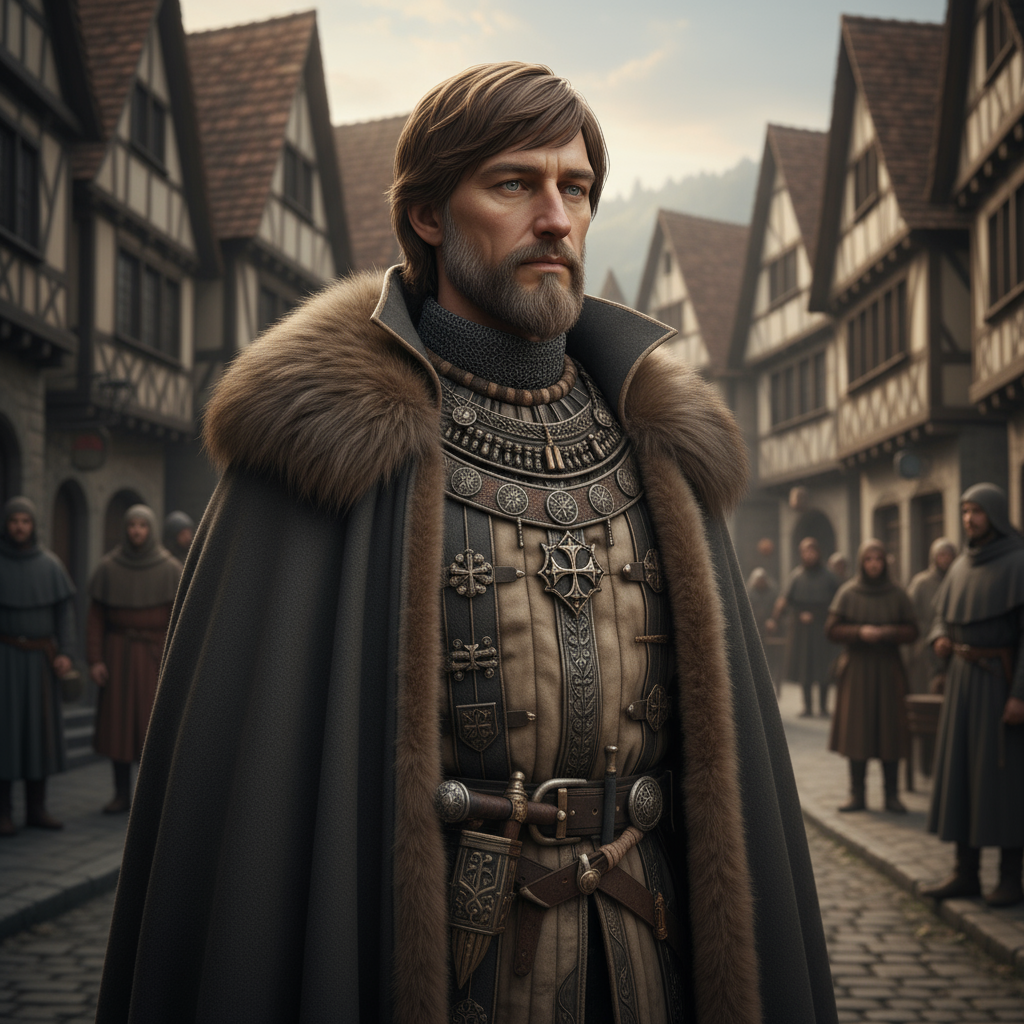
Honor Teutonic strength with our German name generator! Forge powerful names perfect for medieval fantasy RPG, Grimm fairy tales, or European campaigns.
Gender Preference
Generating magical names...
Discover Authentic Germanic Names
Germanic names carry centuries of history in every syllable. From the compound structures of Old High German to the regional variations stretching from the Baltic coast to the Bavarian Alps, these names tell stories of medieval identity, virtue, and cultural evolution. Whether you're building a fantasy character, researching family history, or crafting a historical novel, understanding the depth behind German naming traditions transforms simple labels into meaningful identities.
The German naming system emerged from practical necessity. Before surnames became hereditary, people in German-speaking lands identified themselves through a single given name. As populations grew and villages expanded during the 12th century, communities needed ways to distinguish between multiple individuals sharing the same name. This pressure gave birth to descriptive additions—bynames that referenced occupation, birthplace, physical traits, or parentage.
Exploring the Origins: How Medieval Identity Formed German Naming Traditions
The history of German family names begins in the 12th century, when single forenames no longer sufficed to identify individuals in growing communities. This development spread gradually across German-speaking territories from southwest to northeast over the 13th and 14th centuries. Cities adopted the practice sooner than rural villages, and remote areas maintained older naming patterns well into the 17th or even 18th century.
Before this shift, a person might be known simply as Johannes throughout their life. But as villages filled with multiple men named Johannes, the community needed distinguishing markers. One Johannes became "Johannes the smith," another "Johannes with the curly hair," a third "Johannes the wild," and yet another "Johannes from Bremen" after moving from that city. These descriptive words were surnames—additional identifiers that weren't yet permanent or inheritable.
Over time, these surnames evolved into fixed family names. "Johannes the smith" became "Johannes Schmidt," and this name passed to his children regardless of their actual profession or characteristics. By the 1500s, the practice of using hereditary surnames was well established throughout most German territories. Official decrees in the 17th century began prohibiting changes to family names, and the Civil Code of 1900 made surname spellings permanent across the German Empire.
This standardization preserved linguistic material up to 900 years old, creating a vast archive of medieval German dialect, cultural practices, and social structures embedded in modern surnames. Every German family name carries echoes of the world that created it.
The Architecture of Meaning: Understanding Old High German Compound Names and Virtues
Germanic given names are traditionally dithematic—constructed from two distinct elements (or stems) joined together. This compound structure distinguishes Germanic naming from many other European traditions. The individual elements don't necessarily share semantic relationships, and their combination doesn't always create a literal compound meaning. Rather, these names often derive from formulaic epithets of heroic praise or reflect wishes for the child's future.
Common name elements and their meanings include:
Elements signifying strength and power:
- wald/walt (power, ruling, governance)
- ric/rihhi (ruler)
- kraft (strength, force)
- childBerht (battle, strength)
Elements referencing nature and animals:
- wolf (wolf)
- bera/bern (bear)
- arn (eagle)
- ebur/eber (boar)
Elements denoting nobility and virtue:
- adal (noble)
- friþ/fridu (peace, protection)
- Berht-sen (bright)
- liub (beloved, dear)
Elements describing actions or roles:
- gar/ger (spear)
- helm (helmet, protector)
- brand (fire, sword)
- burg (fortress)
For example, the name Adalbert combines adal (noble) with berht (bright), creating a name that projects "noble brightness." Bernhard joins bern (bear) with hard (brave, strong), suggesting "strong as a bear." Friedrich pairs friþ (peace) with ric (ruler), meaning "peaceful ruler."
These compound names weren't merely decorative—they functioned as aspirational declarations. Parents bestowed names embodying qualities they hoped their children would manifest: courage, wisdom, protection, nobility. The dithematic structure allowed for countless combinations, ensuring variety while maintaining meaningful connections to Germanic cultural values.
Alongside these two-element names existed monothematic forms—single-element names that likely originated as shortened versions (hypocorisms) of longer dithematic names. Examples include Kuno, Emma, and Linda. These abbreviated forms gained independent status over time, becoming recognized given names in their own right.
The Protestant Reformation brought changes to Germanic naming practices. Protestant territories began favoring biblical names from the Old and New Testaments—Abraham, Rebekka, Esther, Lea—while Catholic regions continued emphasizing saints' names. This religious divide created regional patterns in given name selection that persisted for centuries.
From Deeds to Bloodlines: The Evolution and Significance of German Surnames
German surnames generally fall into five categories based on their labeling motivation:
Patronymic Surnames
These surnames derive from the father's given name (occasionally the mother's or another relative's). Examples include Werner, Walter, Peters, and Hansen. In northern Germany, particularly Schleswig-Holstein and Ostfriesland, patronymic surnames changed with each generation until decrees in the late 18th and early 19th centuries required permanent hereditary family names. Hans Petersen was Peter's son, but if Hans had a son Jens, that son became Jens Hansen (son of Hans) rather than Jens Petersen.
Occupational Surnames
The most frequent German family names belong to this category: Müller (miller), Meier (steward/farmer), and Schmidt (smith). Occupational surnames often end with -er or -mann, indicating the bearer's trade or profession. Examples include Schneider (tailor), Fenstermacher (window maker), and Bäcker (baker). These names provide direct insight into medieval German economic life and guild systems.
Provenance and Origin Surnames
Surnames indicating geographic origin could be specific—Marburger (from Marburg)—or general—Schweitzer (from Switzerland). Some simply indicated direction or landscape, like Berger (from the mountain) or Bachmann (near the stream). These names documented migration patterns and helped distinguish newcomers in established communities.
Residence Surnames
Similar to provenance names but indicating current dwelling rather than origin, residence surnames referenced surroundings, location, or building materials. Examples include Bach (stream), Steinhauser (stone house), and Dieffenbach (deep creek).
Characteristic or Nickname Surnames
Physical, emotional, or mental characteristics generated surnames ranging from complimentary to less flattering: Lang (tall), Klein (short), Schwartzkopf (black head), Weiss (white), Altmann (old man), and Dick (fat).
By the High Middle Ages, sound changes and abbreviations had made many names' derivations less transparent. German surnames preserve features of Middle High German, Middle Low German, and Early New High German, making them invaluable resources for historical linguistics.
The nobility and wealthy landowners adopted hereditary surnames first, followed by merchants and townspeople, with rural populations completing the transition over two to three centuries. Baden became the first German state to require fixed surnames in 1790. Prussia issued an edict in 1812 requiring permanent family names within six months, followed by Bavaria and Mecklenburg in 1813 and 1814.
Regional Identity: How Naming Trends Vary from Northern Germany to Bavaria
German naming practices vary significantly across regions, reflecting historical dialect divisions and cultural differences between northern Low German areas and southern High German territories.
Northern Germany
Low German regions (including Friesland, Schleswig-Holstein, and parts of Lower Saxony) maintained patronymic naming conventions longer than other areas. Names in these regions often end with ,-sen or -s, indicating "son of"—Hansen, Petersen, Jans. This pattern parallels Scandinavian naming traditions, reflecting the cultural connections between northern Germany and Nordic countries.
Frisian naming conventions show particular distinctiveness. The use of changing patronymic surnames persisted until government decrees in 1771, 1820, and 1822 for Schleswig-Holstein and 1811 for Ostfriesland finally required permanent hereditary family names.
Southern Germany and Bavaria
Bavarian and southern German naming patterns differ markedly from northern traditions. The diminutive suffix -l or -le appears frequently in both given names and surnames in this region—Hänsle (little Hans), Hämmerle (little hammer). This suffix creates an affectionate, familiar tone absent from northern German names.
The region also shows stronger continuity with Catholic naming traditions, maintaining emphasis on saints' names even after the Reformation. Names like Josef, Maria, and traditional saints' names remained popular in Bavaria,Slavic while Protestant northern regions shifted toward Old Testament biblical names.
Southern Germany also demonstrates the Hofname (farm name) tradition more extensively than other regions. When a farm owner's daughter inherited land, her husband sometimes adopted the farm name as his surname. This practice created complications where siblings born before the inheritance carried their father's original surname, while those born afterward used the farm name from birth. The Hofname pattern appeared most frequently in Westphalia and border areas between Lower Saxony and North Rhine-Westphalia, though it occurred sporadically throughout German-speaking territories.
Eastern Regions and Slavic Influence
Eastern German territories show substantial Slavic influence in their naming patterns, particularly surnames ending in -ski, -sky, -witz, and -czyk. These names resulted from centuries of language contact between German and West Slavic-sen languages (primarily Polish and Czech), original Slavic populations in eastern regions, and migration from former eastern territories and Poland.
The German Surname Atlas project data from 2005 telephone records shows 16,386 different Polish names ending in -ski (totaling 293,474 instances) concentrated in the Ruhr area and northeastern Germany. Czech variants ending in -sky numbered 4,408 types with 41,535 total instances, clustering in the Sorbian area and southeastern Germany.
This extensive Slavic presence created hybrid forms where German surnames acquired Polish suffixes. For example, the occupational name Fuhrmann (waggoner) appears with Polish suffixes as Furmanowski, Furmanek, Furmaniak, Furmanczyk, and Formanowicz. These adaptations occurred on multiple levels—graphical (Szymanski > Schimanski), phonological (Brzeski > Breski), morphological (Blazek > Blaschke), and through folk-etymological reinterpretation (Dombrowski > Dombrück).
Using the German Name Generator: Creating Authentic Identities for Characters and Projects
A German name generator serves multiple purposes beyond simple random selection. Understanding how to use these tools effectively requires knowing what makes German names authentic and meaningful.
Consider Historical Period
Names appropriate for a 10th-century Germanic warrior differ significantly from 16th-century burgher names or modern German identities. Medieval German names drew heavily from Old High German compound elements. A warrior might bear names like Siegfried (victory-peace) or Wolfgang (path of the wolf). Renaissance-era names show greater Latin influence and biblical connections. Modern German names incorporate international influences while maintaining traditional favorites like Emma, Lena, Maximilian, and Paul.
Respect Regional Patterns
Matching names to geographic regions adds authenticity. Northern German characters should have names like Jens, Birte, or surnames ending in -sen. Bavarian characters fit names like Stefan, Lena, or diminutives ending in -l. Eastern German characters might authentically carry names showing Slavic influence.
Understand Gender Conventions
Traditional German names clearly indicate gender. Masculine names include Hans, Friedrich, Werner, and Karl. Feminine names include Anna, Greta, Hildegard, and Margarete. Some names, like Aubrey, can function as unisex, though this remains uncommon in historical contexts.
German grammar sometimes adds -in to women's surnames in historical documents, particularly in Latin church records. Barbara Meyer might appear as "Barbara Meyerin" in birth records but "Barbara Meyer" in death records. This suffix belongs to Latin grammatical conventions, not to the surname itself.
Combine Elements Meaningfully
When creating original German names, select dithematic elements that reflect character traits or narrative themes. A character embodying protective qualities might bear names with helm (protector) or wald (power, governance). A peaceful diplomat could have friþ (peace) in their name. A fierce warrior benefits from elements like hild (battle) or wolf.
Verify Name Meanings
Many German names carry multiple possible etymologies. Müller might descend from a miller or from someone living near a mill. Schmidt could indicate a smith or someone living near a smithy. Understanding these layers prevents awkward mismatches between character and name meaning.
Match Surname Types to Background
Occupational surnames suit characters whose families held traditional trades—Schmidt for blacksmiths, Müller for millers, Schneider for tailors. Provenance surnames work for characters with migration stories—Hamburger (from Hamburg), Schweitzer (from Switzerland). Characteristic surnames add personality—Lang (tall), Klein (short), Schwarz (dark-haired).
Consider Religious Context
Protestant and Catholic regions favored different given names. Catholic areas maintained saints' names—Josef, Maria, Katharina. Protestant territories preferred Old Testament names—Abraham, Jakob, Sara—while avoiding names associated with Catholic saints. This religious divide creates authentic regional and historical specificity.
Account for Dialect Spelling
German surnames show substantial spelling variation reflecting dialect differences. The surname for "smith" appears as Schmidt in High German regions, Schmitt in Rhineland areas, Schmitz in the west, and Schmied in Bavaria. The professional name for "tailor" becomes Schröder in the north and Schneider in the south. These regional spelling patterns add authenticity when matched correctly to character origins.
Avoid Anachronistic Combinations
Modern German names often combine international influences—Noah, Leon, Emma, Mia—that would seem out of place in historical settings. Similarly, medieval compound names sound archaic in contemporary contexts. Match naming conventions to the time period your setting represents.
Frequently Asked Questions
What makes a German name authentic?
Authentic German names reflect historical naming patterns, regional variations, and appropriate time periods. Traditional names use dithematic structures combining meaningful elements (like Adalbert = noble + bright), while surnames indicate occupation, origin, or characteristics. Regional authenticity matters—northern German names differ from Bavarian ones, and medieval names differ from modern ones.
How do German surnames work?
German surnames became hereditary between the 12th and 16th centuries, starting with nobility and spreading to common people. They fall into five categories: patronymic (from father's name), occupational (from profession), provenance (from origin location), residence (from dwelling place), and characteristic (from physical or personal traits). By 1900, the German Civil Code made surname spellings permanent.
Why do German names have compound structures?
Traditional Germanic given names are dithematic—formed from two elements combined to create meaningful names. This structure allowed parents to encode desired virtues and characteristics in their children's names. For example, Friedrich (peace + ruler) expressed hope for peaceful leadership, while Bernhard (bear + brave) suggested strength and courage.
What's the difference between northern and southern German names?
Northern Low German regions maintained patronymic surnames longer (names ending in --senmaintain or -s like Hansen, Peters) and show Scandinavian influence. Southern High German areas, especially Bavaria, use diminutive suffixes like -l or -le (Hänsle, Hämmerle) and maintainindicate stronger Catholic naming traditions with saints' names. Eastern regions show Slavic influences with surnames ending in -ski, -witz, or -czyk.
Are there rules for German names today?
German law protects parental naming rights under Article 6 of the Basic Law, but registrars can refuse names that harm the child's welfare. Names must be recognizable as given names (not objects like "Stone"), shouldn't subject the child to ridicule (courts rejected "Pfefferminze" meaning peppermint), and traditionally indicate, gender (though this requirement has been relaxed). Family names cannot be used as first names except where regional custom permits. Changing a name in Germany requires compelling reasons beyond personal preference.
How do I choose a German name for a character?
Consider the historical period—medieval warriors need Old High German compound names like Siegfried or Wolfgang, while modern characters suit contemporary names like Leon or Emma. Match regional patterns (northern -sen endings, Bavarian -l diminutives). Ensure the name fits gender conventions and religious context (Protestant vs. Catholic regions preferred different names). Research surname types—occupational names suit trade backgrounds, provenance names fit migration stories, and characteristic surnames add personality traits.
What do German name elements mean?
Common elements include: adal (noble), wald/walt (power/ruler), ric (ruler), berht (bright), wolf (wolf), bern (bear), hild (battle), friþ (peace), helm (protector), gar/ger (spear), liub (beloved), kraft (strength). These combine in various ways—Adalbert (noble + bright), Friedrich (peace + ruler), Wolfgang (wolf + path), Bernhard (bear + brave), Gertrude (spear + strength).
Why do some German names have multiple spellings?
Dialect variations created different spellings for the same name across regions. "Smith" becomes Schmidt (High German), Schmitt (Rhineland), Schmitz (western regions), or Schmied (Bavaria). "Tailor" appears as Schneider (south) or Schröder (north). Vowel umlauts (ä, ö, ü) were sometimes written as ae, oe, ue, creating variants like Häuser/Haeuser/Heuser. Historical spelling standardization occurred gradually, preserving these regional differences in modern surnames.
Can German names indicate family history?
Absolutely. Occupational surnames reveal ancestral trades (Müller = miller, Bäcker = baker). Provenance surnames show migration (Hamburger = from Hamburg, Schweitzer = from Switzerland). Patronymic endings in northern Germany (Hansen, Peters) indicate Scandinavian cultural connections. Slavic surname elements in eastern German names (endings in -ski, -witz) reflect language contact zones. Even given names reveal religious affiliations—Protestant families favored Old Testament names while Catholic families chose saints' names.
How accurate are German name generators?
German name generators vary in accuracy. The best generators draw from historical records, understand dithematic structure, and incorporate regional variations. However, generators can't replace research into specific time periods, regions, and cultural contexts. Use generators as starting points, then verify that selected names fit your character's background, time period, and geographic origin. Check that compound elements combine meaningfully, and that surname types match character occupations or family history.
Forge Your Germanic Identity
German names carry extraordinary weight—each syllable preserves centuries of linguistic evolution, cultural values, and regional identity. From the compound architecture of Old High German given names to the occupational surnames documenting medieval German trades, these names tell stories far richer than simple labels.
Whether you're creating characters for historical fiction, building worlds for tabletop campaigns, researching genealogy, or exploring Germanic heritage, understanding the depth behind these naming traditions transforms how you approach identity. The dithematic structures weren't arbitrary—they encoded parental hopes, cultural virtues, and social aspirations. The regional variations weren't accidents—they reflected dialect boundaries, migration patterns, and centuries of cultural evolution.
A German name generator offers a starting point, but true authenticity comes from understanding what makes these names meaningful. Consider the historical period, respect regional patterns, match surnames to character backgrounds, and verify that compound elements align with the narrative you're building. The effort pays off in characters who feel genuinely rooted in Germanic tradition, carrying names that echo with historical resonance.