Village Name Generator
Build humble beginnings with our village name generator! Create cozy settlement names perfect for DnD 5e starting towns, Pathfinder campaigns, or world-building.
Gender Preference
Generating magical names...
Create Authentic Fantasy Settlements
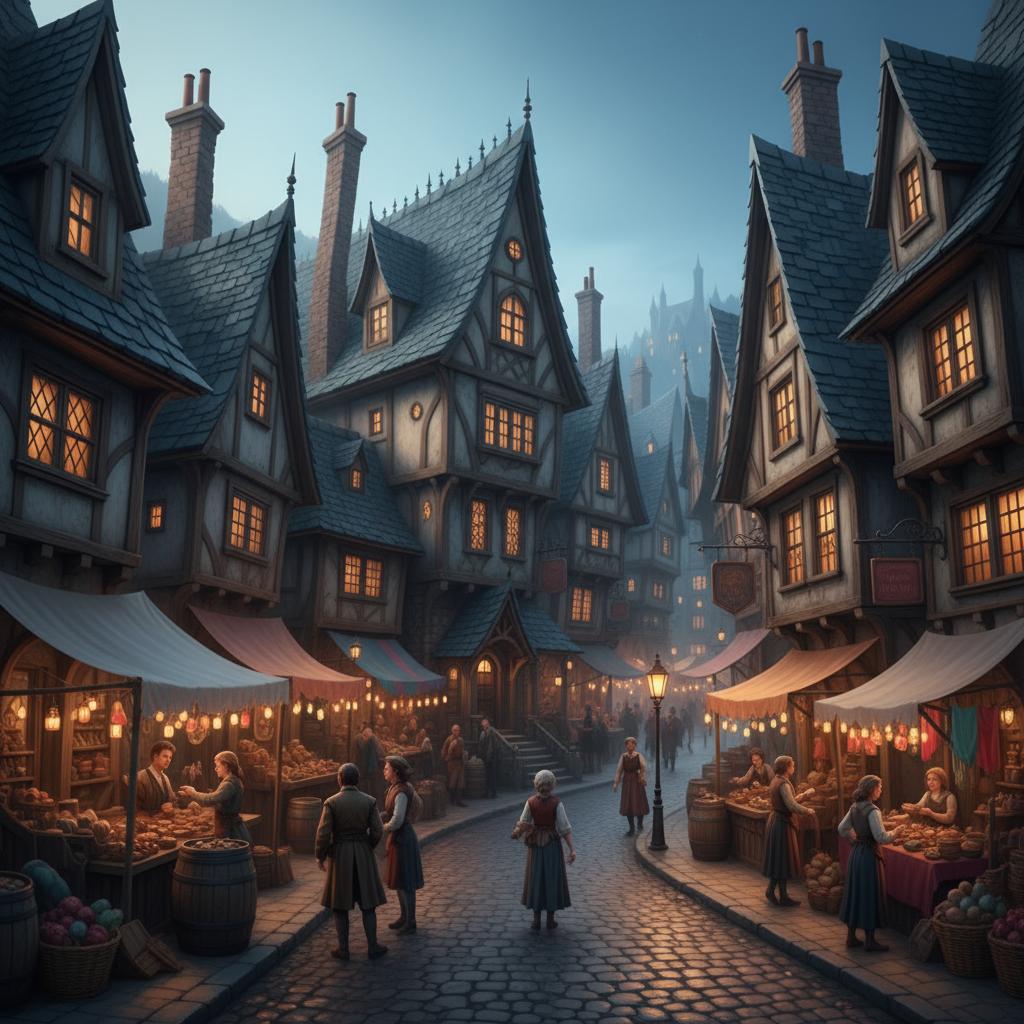
Every great adventure begins somewhere small. A weathered signpost. A cluster of thatched roofs. The warm glow of a tavern window against the evening mist. Your fantasy world needs these humble starting points—villages that feel lived-in, authentic, and memorable. But how do you name them without defaulting to "Genericville" or "Randomshire"?
A village name generator solves this creative challenge by blending linguistic patterns, cultural authenticity, and geographic logic into names that ground your world in something real. Whether you're a Dungeon Master preparing a D&D 5e campaign, a fantasy novelist populating your realm, or a game developer building the next great RPG, the right village names transform forgettable waypoints into places your audience will remember.
This guide explores how village name generators work, what makes fantasy village names memorable, and how to customize generated names to match your world's unique culture and history.
How Village Name Generators Work
Village name generators create authentic-sounding names by following the same patterns found in real-world toponymy—the study of place names. According to Britannica, toponymy divides place-names into two categories: habitation names (peopled settlements) and feature names (natural landmarks). The most effective village names combine both elements.
Consider how real English villages earned their names. Willow Creek describes a stream lined with willow trees. Stonebridge Vale identifies a valley containing a stone bridge. These compound constructions pair descriptive elements with geographic features, creating names that immediately paint mental pictures.
Fantasy village generators replicate this process by combining:
- Flora and fauna (Oakwood, Willowbrook, Ravenhollow)
- Geographic features (Riverbend, Hillcrest, Deepvale)
- Materials and structures (Ironforge, Stonebridge, Millhaven)
- Weather and atmosphere (Mistwood, Sunnyvale, Winterhaven)
- Historical or cultural markers (Kingsford, Oldtown, Thornbury)
Each generated name includes three components: the name itself, its meaning (what the name represents), and its etymology (the linguistic construction explaining how the name was built). This depth helps you choose names with internal consistency and authentic roots.
Key Features of Modern Village Name Generators
The best village name generators go beyond random word combinations. They provide tools that let you shape names to match your world's specific linguistic patterns and cultural identity.
Meaning and Etymology Display
Every generated name should explain what it represents. "Silverwood Hollow" isn't just pleasant-sounding—it specifically describes a depression or valley containing silver-barked trees. The etymology might note "Compound construction combining precious metal descriptor with natural vegetation and geographic feature," grounding the name in believable linguistic development.
This information matters because names tell stories. A village called Maidenpool suggests local folklore about a maiden and a body of water. Duskendale implies a valley shrouded in twilight. These details provide hooks for quests, local legends, and cultural flavor.
Advanced Customization Filters
Professional-grade generators offer filters that match names to your world's established patterns:
Name Length: Short names (Bree, Dale, Thornvale) work for working-class settlements and quick references. Medium names balance memorability with detail. Long names (Willowbrook Crossing, Silvermist Valley) convey grandeur and ancient history.
Syllable Count: One or two syllables create a punchy, Anglo-Saxon feel. Three or four syllables add melodic quality reminiscent of Celtic or Romance language influences.
Prefix and Suffix Control: The most powerful customization option lets you specify starting or ending elements. Want all villages in the northern region to end in "-dale"? Set the suffix filter. Need coastal settlements starting with "Sea-"? Use the prefix field.
Cultural and Linguistic Consistency
According to research on fantasy naming conventions from Writer's Cookbook, maintaining linguistic consistency across your world map creates authenticity. If your eastern kingdoms use Germanic-influenced names like Eisenwald and Nordmark, don't suddenly introduce Romance-style names like Celestria in the same cultural region—unless you're deliberately showing cultural contact zones.
Village generators help maintain this consistency by letting you filter for specific linguistic feels. Germanic patterns favor hard consonants and compound words. Celtic patterns emphasize flowing vowels and soft consonants. Romance patterns use melodic endings like -ia, -ora, and -elle.
Applications Across Creative Mediums
Village name generators serve different but equally important purposes across various creative fields.
Tabletop RPG Campaigns
Dungeon Masters running D&D 5e or Pathfinder campaigns need dozens of settlement names on short notice. The Dungeon Master's Guide includes random tables for settlement creation (pages 112-114), but these focus on settlement characteristics rather than names. A dedicated village generator fills this gap.
Players remember villages where significant events occurred. A randomly generated name like "Thornbury" becomes memorable when it's where they first encountered the cultists. "Ashford" gains meaning when it's the village destroyed by dragon fire, motivating the party's quest for revenge.
Fantasy Novel Writing
Fiction writers face a different challenge: creating enough distinct settlements to populate a realm without overwhelming readers with forgettable place names. As author Rachel Neumeier notes in her worldbuilding series, place-naming conventions should follow internal logic that readers can intuitively grasp without explanation.
A village name generator helps novelists establish patterns early. If your protagonist travels through Riverside, Oakwood, and Stonebridge, readers understand your world uses descriptive compound names. When they later hear about Ironforge, they immediately picture a settlement built around metalworking—no exposition required.
Game Development and World Building
Video game developers and homebrew campaign creators need comprehensive naming systems that scale. A single province might contain 20-30 villages. Manually naming each one invites inconsistency and creative fatigue.
Generated names solve this problem while maintaining variety. Use filters to create distinct regional naming patterns: coastal villages ending in "-haven," mountain settlements starting with "High-," and riverside communities incorporating "-ford" or "-bridge." This creates geographic identity without repetition.
Creating Village Names from Cultural Patterns
The most authentic fantasy village names draw from real-world linguistic traditions adapted to your setting's needs.
Germanic and Old English Influences
Germanic naming patterns excel at practical, descriptive names. These follow the Anglo-Saxon tradition documented in toponymy studies, where villages were named for their defining characteristics.
Common Old English elements include:
- -ton (enclosure, homestead): Thornton, Riverton, Asherton
- -ham (farm, settlement): Nottingham, Durham, Wymondham
- -ley/-leigh (woodland clearing): Barnsley, Chorley, Oakley
- -ford (river crossing): Bradford, Guildford, Hereford
- -bury/-borough (fortified place): Thornbury, Marlborough
These patterns appear throughout English village names because they efficiently communicate function and location. Your fantasy equivalents might use similar constructions with invented elements: Dragonford, Elfham, Dwarfton.
Celtic and Gaelic Patterns
Celtic naming traditions emphasize the relationship between people and landscape. According to the cultural naming patterns documented in fantasy worldbuilding resources, Celtic-influenced names feature flowing vowels and compound words that sound almost musical.
Welsh village naming elements include:
- Llan- (church, parish): Llandudno, Llanelli, Llangollen
- Pen- (head, top, end): Penarth, Penzance, Pendine
- Aber- (river mouth, confluence): Aberystwyth, Abergavenny, Aberaeron
- Cwm- (valley): Cwmbran, Cwmdu
Scottish Gaelic adds:
- Bal- (farm, homestead): Ballater, Balmore
- Loch- (lake): Lochinver, Kinlochleven
These patterns work beautifully for mystical or ancient settlements in fantasy settings—places where magic and nature intertwine.
Norse and Scandinavian Elements
Old Norse naming conventions entered English through Viking settlement, creating the linguistic patterns visible in the former Danelaw regions of England. These names carry historical weight that translates well to fantasy settings with harsh climates or warrior cultures.
Norse elements include:
- -by (settlement, village): Grimsby, Whitby, Derby
- -Thorpe (secondary settlement): Scunthorpe, Mablethorpe
- -Thwaite (clearing, meadow): Langthwaite, Rosthwaite
For fantasy applications, these create names that feel weathered and enduring—perfect for frontier villages or settlements in challenging environments.
Sample Village Names and Their Meanings
Understanding how meaning builds through name construction helps you evaluate generated options and create your own variations.
Village Name | Meaning | Naming Pattern | Best Used For |
Willow Creek | Streamlined with willow trees | Flora + Water Feature | Peaceful riverside settlement |
Oakhaven | Shelter among oak trees | Flora + Refuge | Protected woodland community |
Stonebridge Vale | Valley containing a stone bridge | Structure + Geography | Trade route crossing point |
Silverwood Hollow | Depression with silver-barked trees | Metal + Flora + Geography | Ancient forest settlement |
Thornbury | Fortified place with thorns | Flora + Fortification | Defensive border village |
Mistwood | Forest shrouded in mist | Weather + Nature | Mysterious woodland hamlet |
Ironforge | Metalworking settlement | Material + Craft | Mining or smithing community |
Riverbend | Curve in a river | Water + Geography | Settlement at river meander |
Highstone | Elevated rocky outcrop | Position + Material | Mountain village |
Ashford | River crossing near ash trees | Flora + Water Crossing | Former site of destruction |
Each name tells a micro-story. Ashford might be a village rebuilt after a fire. Thornbury suggests defensive concerns. Highstone indicates mountain folk. These implications provide instant worldbuilding depth.
Famous Literary Examples and Patterns
The most beloved fantasy villages demonstrate consistent naming principles that make them memorable without explanation.
Tolkien's Middle-earth
J.R.R. Tolkien, a philologist by training, created village names with genuine linguistic depth. Hobbiton simply means "village of Hobbits," following English naming conventions. Bree functions as a waypoint name, coming from a Celtic word for "hill." Rivendell translates from Sindarin (Tolkien's invented Elvish language) as "deeply cloven valley"—a name that perfectly describes its geography.
Lake-town uses the most straightforward naming approach: pure geographic description. These Tolkien examples show that memorable names don't require complexity—they require consistency and meaning.
Rowling's Wizarding World
J.K. Rowling's village names blend whimsy with Anglo-Saxon patterns. Godric's Hollow follows the possessive+geographic formula common in English villages. Hogsmeade uses compound construction typical of Scottish village names. Little Hangleton and Little Whinging both use the "Little" diminutive prefix found throughout English geography, creating familiarity despite their magical contexts.
Martin's Westeros
George R.R. Martin's A Song of Ice and Fire demonstrates regional naming variation. The Riverlands feature water-themed names: Maidenpool, Seagard. The Stormlands reference weather: Storm's End. Dornish settlements carry Romance language influences: Starfall, Sunspear. This geographic naming consistency helps readers navigate a complex world.
Advanced Customization Techniques
Once you understand naming principles, you can use generator filters strategically to create exactly what your world needs.
Creating Regional Identity
Establish naming patterns for each cultural region in your world:
Northern Kingdoms: Use Germanic patterns with hard consonants and winter imagery. Filter for names ending in -holm, -mark, or -sted. Start names with Ice-, Snow-, or Wolf-.
Coastal Provinces: Emphasize maritime elements. Filter for names including -haven, -port, or -bay. Start with Sea-, Salt-, or Storm-.
Forest Realms: Focus on flora and fauna. Use -wood, -grove, or -glade endings. Include Oak-, Elm-, or Thorn- prefixes.
Mountain Territories: Highlight elevation and stone. End names with -peak, -crag, or -hold. Begin with High-, Stone-, or Sky-.
Matching Names to Village History
Adjust name complexity based on settlement age and importance:
Ancient settlements deserve longer, more elaborate names that suggest linguistic evolution. Willowbrook-on-the-Water implies centuries of development and formal designation.
Frontier villages work better with short, practical names. Newford. Crossroads. Lastlight. These suggest recent founding and utilitarian concerns.
Ruined or abandoned sites might use archaic-sounding constructions or prefixes like Old-, Lost-, or Dead- to immediately signal their status.
Syllable Strategy
Syllable count affects how names feel when spoken aloud—crucial for tabletop gaming:
- 1-2 syllables: Punchy and memorable for frequently referenced locations (Bree, Thornvale, Ashford)
- 3 syllables: Balanced and comfortable for mid-tier settlements (Silverton, Oakenhurst, Riverside)
- 4+ syllables: Grand and significant for historically important villages (Willowbrook Crossing, Silvermist Valley)
Common Pitfalls and How to Avoid Them
Even with powerful generators, certain mistakes can undermine your village names' authenticity.
Overusing Apostrophes and Special Characters
Fantasy writers often assume apostrophes and accent marks make names more "fantastical." They don't—they make names harder to read and remember. As Rachel Neumeier notes in her naming conventions guide, real-world place names rarely use such devices because they evolved through oral tradition before standardized spelling.
Unless you're depicting a non-human culture with genuinely alien phonetics, skip the apostrophes. "Raventhorn" reads better than "Raven'thorn." "Elvendale" works better than "Elven'dale."
Ignoring Pronunciation
If your players or readers can't pronounce a name, they'll forget it or avoid using it. Test generated names by speaking them aloud. Do they flow naturally? Can you say them quickly three times without stumbling?
Celtic-influenced names sometimes violate this rule for English speakers (Llanfairpwllgwyngyll being the extreme example), but that's a feature, not a bug—it signals cultural foreignness. Deploy pronunciation challenges deliberately, not accidentally.
Mixing Incompatible Linguistic Patterns
A village named "Thornbury-sur-Mer" mixes English and French in ways that signal confused worldbuilding rather than cultural contact. Unless you're specifically depicting a border region or colonial situation, maintain linguistic consistency within regions.
Your northern Germanic-influenced territories shouldn't suddenly feature Romance-style names without explanation. Cultural mixing should follow logical patterns—trade routes, conquests, marriages between kingdoms—not random generator selections.
Generic Fantasy Clichés
Avoid these overused elements unless you're deliberately subverting them:
- Dragon- + anything (Dragonspire, Dragonmere, Dragoncrest)
- Shadow- + anything (Shadowvale, Shadowmere, Shadowbrook)
- Dark- + anything (Darkwood, Darkshire, Darkwater)
- -mere, -shire, -haven used generically without meaning
These elements aren't forbidden—they're simply overdone. If you use them, ensure they carry a specific meaning in your world. Shadowvale shouldn't just sound mysterious; it should be a valley literally in permanent shadow, perhaps beneath a mountain or in a cursed land.
Frequently Asked Questions
What makes a good village name for D&D or Pathfinder?
Good tabletop RPG village names balance memorability with meaning. Aim for 2-3 syllables that players can quickly say and remember. Include at least one element that suggests the village's primary characteristic—is it a mining town (Ironforge), farming community (Wheatfield), or crossroads (King's Junction)? The name should give Dungeon Masters and players immediate mental imagery without requiring extensive description.
Should all villages in the same region use similar naming patterns?
Yes. Linguistic consistency creates authenticity. If you've established that the Riverlands use water-themed compound names (Riverside, Millbrook, Stoneford), maintain that pattern throughout the region. Exceptions should signal something significant—a village with a different naming style might indicate different settlers, foreign occupation, or deliberate renaming after historical events.
How many village names should I prepare for a campaign?
For a typical D&D campaign, prepare 8-10 village names for immediate use, plus another 15-20 in reserve. Players rarely visit every location you prepare, but having names ready prevents awkward pauses when they unexpectedly travel somewhere. Use a generator to build your reserve quickly, filtering for consistency with your established patterns.
Can I use these names for commercial projects, like published novels or games?
Generated village names themselves aren't copyrightable—they're too short and generic to receive protection. You can freely use "Oakwood," "Stonebridge," or "Thornbury" in any project. However, avoid directly copying unique literary creations like Hogsmeade or Rivendell, which are protected as part of larger copyrighted works.
How do I create village names for non-European-inspired fantasy cultures?
Study real toponymy from the cultures inspiring your worldbuilding. Japanese village names often include geographic descriptors like -yama (mountain), -kawa (river), or -mura (village). Arabic naming frequently references water sources and directional indicators. Chinese villages incorporate numerals and auspicious words. Research authentic patterns first, then adapt them to your fantasy context rather than relying on European-style generators.
What's the difference between a village, a town, and a city?
Linguistically, size matters. Villages often use simple descriptive names (Millbrook, Crossroads). Towns develop more elaborate names as they grow historically important (Kingsbridge, Market Harborough). Cities acquire names through political significance, often dropping geographic descriptors entirely (London, Rome, York). In fantasy settings, you can signal settlement size through name complexity and historical layering.
Should I use a fantasy language for my village names or stick to English-based constructions?
English-based constructions work for most fantasy settings because they're immediately comprehensible to readers while still feeling distinct from modern English. Full fantasy languages require massive worldbuilding investment—Tolkien spent decades on his languages. Unless you're prepared for that commitment, use English linguistic patterns with invented elements. "Thornbury" feels fantastical despite using English words; "Þrœnbyrĝ" just feels unreadable.
How do I name a village that's been conquered or renamed throughout history?
Layer the name. Real villages often show historical strata—Durham combines "dun" (hill) with "holme" (island), reflecting different linguistic periods. Your fantasy village might be "Thornbury-under-Drax" if it's in a dragon-ruled territory, or "New Stonehaven" if it was rebuilt after destruction. Official versus colloquial names also work—locals might still call it "Old Market" while maps show "King's Landing."
Populating Your Fantasy Realm
The villages you create become the foundation of your world. They're where heroes begin their journeys, where common folk live their lives, and where epic quests begin with simple requests from local mayors.
A well-named village grounds your fantasy world in authentic detail. Willow Creek isn't just a place on a map—it's a community shaped by the willow-lined stream running through it, where fisherfolk pull catches from the water, and children skip stones beneath drooping branches. Stonebridge Vale tells you immediately that this settlement exists because someone built a crucial bridge across the valley, making it a natural gathering point for trade and travel.
Use your village name generator strategically. Generate batches of names filtered by region to maintain consistency. Note the meanings and etymology for each name—these become seeds for local legends, geographic features, and cultural traditions. When players ask why the village is called "Ashford," you'll have an answer: it was rebuilt after a catastrophic fire, and the old ford across the river still bears scorch marks.
Your fantasy realm awaits its settlements. Generate names that bring your villages to life, populate your maps with memorable waypoints, and give your adventurers places worth defending, saving, or mourning when the dragon comes.