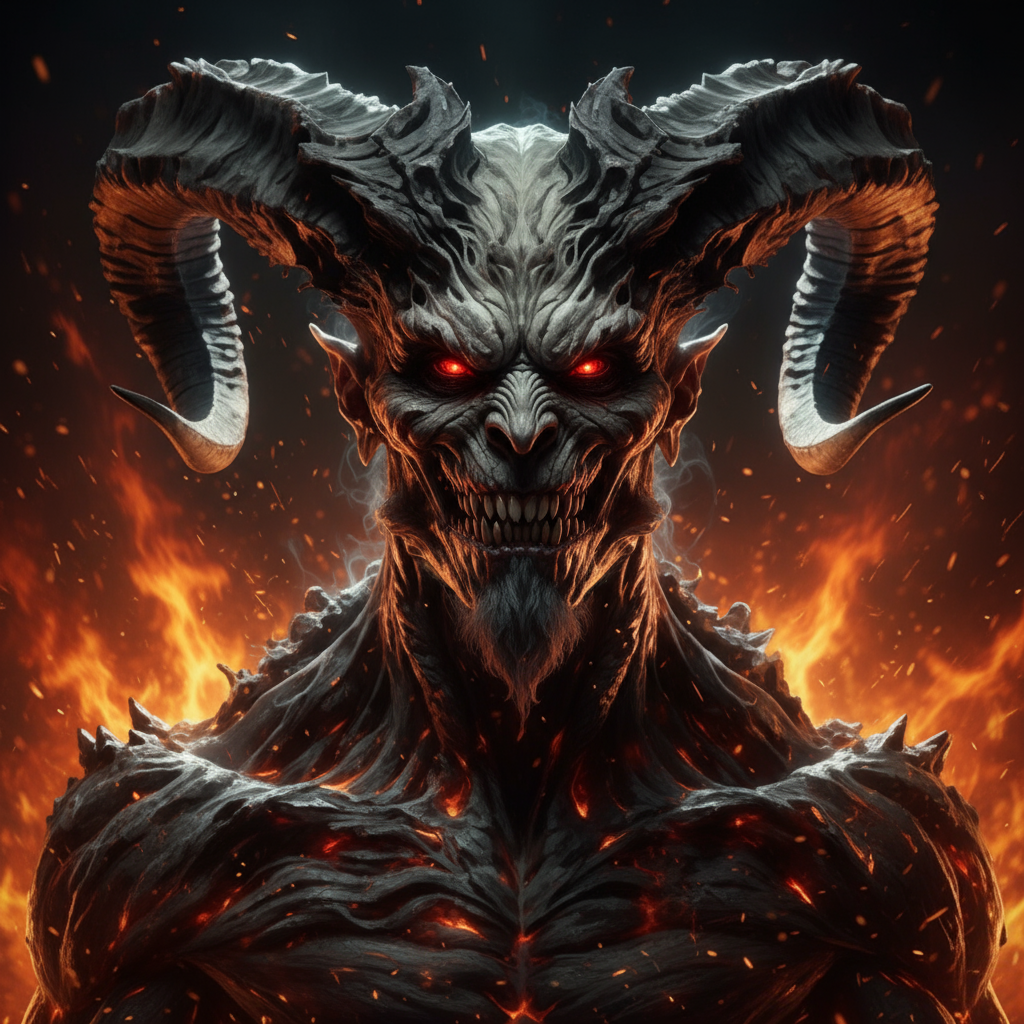
Demon Name Generator
Unleash infernal terror with our demon name generator! Conjure hellish names great for DnD 5e fiends, Pathfinder devils, or dark fantasy antagonists.
Gender Preference
Generating magical names...
Craft Infernal Names That Command Fear
Every unforgettable dark fantasy villain shares one trait: a name that lingers in the mind long after the story ends. Whether you're creating a cunning antagonist for your next Dungeons & Dragons campaign, designing a Pathfinder devil lord, or writing a horror novel that demands authenticity, the right demonic name becomes more than a label—it transforms into an identity that embodies malevolence, power, and ancient terror.
Crafting such names requires understanding what makes certain sounds feel menacing, why legendary demons from mythology continue to captivate us, and how to blend phonetic psychology with cultural etymology. This guide explores the dark art of demon naming, offering practical strategies for generating names worthy of the Nine Hells themselves.
The Psychology Behind Terrifying Names
Research into sound symbolism reveals why certain phonemes trigger visceral reactions. A 2019 study by linguists Haruko Miyakoda and Marina Oshita, presented at the International Congress of Phonetic Sciences, analyzed 224 character names from 68 works of fiction and discovered remarkable patterns in how authors construct "good" versus "evil" identities through sound alone.
Their findings revealed that villain names disproportionately featured voiced plosives—particularly /g/ and /b/—consonants that require a buildup and sudden release of air. These sounds create an auditory sensation of force and aggression. The phoneme /g/ appeared in nine of the most frequently used villain name openings, while /b/ appeared in seven. When participants in their experiment matched character descriptions to names, they overwhelmingly associated /g/ with "bad male" characters with statistical significance.
Contrast this with names beginning with /m/ or /r/, which test subjects strongly linked to "good female" characters. The softer, flowing nature of these consonants creates an entirely different psychological effect—one of warmth rather than threat.
This phenomenon extends beyond academic research into commercial naming strategies. Marketing consultant Itsuko Kurokawa documented how Japanese product names leverage sound symbolism, noting that plosives like /p/, /b/, /t/, and /k/ attract consumer attention through their dynamic, energetic quality. When analyzing monster names specifically, she found /g/ dominated because this sound evokes "badness, strength, and coolness"—precisely the qualities that make a demon memorable.
For demon name creation, these insights translate into practical guidance: harsh consonants (particularly /g/, /k/, /z/, and /th/) convey menace, while sibilants like /s/ and /sh/ suggest serpentine cunning. The fricative /v/ adds a predatory quality, as heard in "vampire" and "venom." Combining these sounds with dark vowels—deep /o/ and /u/ sounds rather than bright /i/ and /e/—amplifies the ominous effect.
Learning from Legendary Demons
The most enduring demon names from mythology and literature offer master classes in infernal nomenclature. Examining their origins reveals naming principles that transcend cultural boundaries.
Asmodeus derives from the Avestan Aēšma-daēva, meaning "Aeshma the deceitful," where aeshma translates to "anger" or "wrath." This ancient Persian demon entered Jewish demonology through the Talmud, where he became king of the shedim (demons), and later appeared in the deuterocanonical Book of Tobit as the primary antagonist. The name's etymology connects directly to the Proto-Indo-European root *eis-, which formed various words denoting passion and rage. The hard /z/ sound in the middle syllable adds a threatening edge, while the name's length (four syllables) conveys gravitas befitting an archdevil.
Lilith presents a different approach. Her name appears once in the Hebrew Bible (Isaiah 34:14), where the word lilit likely refers to a nocturnal creature or night demon. The Hebrew term shares roots with the Akkadian lilītu, meaning "female night being" or "night demon," itself derived from a Sumerian word for spirits. Charles Fossey's 1902 etymological work noted that Mesopotamian cuneiform inscriptions linked these entities to disease-bearing wind spirits. The liquid consonants /l/ that bookend the name, combined with the soft /i/ vowels, create an alluring quality—appropriate for a figure often depicted as dangerously seductive. This demonstrates how demon names need not always sound harsh to be effective; sometimes, deceptive beauty serves evil better than obvious menace.
Mephistopheles was likely invented for the historical Johann Georg Faust (circa 1480–1540) by the anonymous author of the first Faustbuch (1587). Unlike Asmodeus and Lilith, which evolved from ancient traditions, Mephistopheles represents a literary construction—proof that compelling demon names can be created rather than inherited. The name's Greek-influenced structure and multiple syllables suggest sophistication, while the harsh /f/ and /ph/ sounds prevent it from becoming too melodious. Christopher Marlowe's Doctor Faustus (1604) and Goethe's Faust (1808/1832) cemented Mephistopheles as the archetypal cunning devil—coldhearted, cynical, and witty rather than simply brutal.
These examples illustrate three successful naming strategies: grounding names in ancient languages with relevant meanings (Asmodeus), adapting words from mystical or obscure traditions (Lilith), and constructing new names that sound authentic through careful phonetic choices (Mephistopheles).
Cultural Etymology: Infusing Ancient Authenticity
Different linguistic traditions offer distinct flavors for demonic names, each carrying cultural associations that enrich your creation's backstory.
Latin remains the gold standard for Western demon names, thanks to Christianity's historical use of the language and its prevalence in grimoires. Words like malum (evil), tenebrae (darkness), mors (death), and cruor (blood) provide building blocks. The demon name "Malakaroth" could theoretically blend malus (bad) with a Greek-style suffix, suggesting "bringer of darkness." Latin's structured grammar and familiar resonance make it accessible while maintaining gravitas.
Hebrew and Aramaic contribute authenticity to demonic entities rooted in Judeo-Christian tradition. Many historical demon names derive from these sources: Azazel (the scapegoat demon), Belial (worthlessness), and Samael (venom of God). The guttural sounds of Hebrew, particularly the /kh/ and /ts/ phonemes, add a mystical, ancient quality. For originality, consider adapting Hebrew roots like choshech (darkness) or sheol (the underworld) rather than copying established names directly.
Greek offers philosophical depth and complexity. Combining roots like kakos (evil), thanatos (death), chaos (void), and erebos (darkness) with typical Greek name structures creates sophisticated results. The suffix "-os" marks masculine names, while "-a" indicates feminine. "Erebathon" might suggest a lord of primordial darkness, while "Thanasia" could name a female demon of death.
Norse and Germanic languages excel at creating names that sound raw and primal. Old Norse words like myrkr (darkness), dauði (death), eitr (poison), and draugr (undead) provide excellent foundations. The harsh consonant clusters characteristic of Norse—such as the initial /dr/, /gr/, and /kv/—create an aggressive sonic profile. "Myrkdraugr" (dark revenant) or "Eitrgarm" (poison hound) sound immediately threatening.
Arabic and Persian linguistic elements suit demons from Middle Eastern or desert-themed settings. The name Asmodeus itself traces to Persian origins. Arabic terms like shaitan (devil), ifrit (powerful demon), and ghul (ghoul) have already entered Western fantasy. Creating variations on these roots—"Shaytanak" or "Ifrithar"—maintains cultural flavor while avoiding direct appropriation of religious terminology.
When borrowing from non-Western languages, approach with cultural sensitivity. Avoid sacred terms or directly religious names unless your setting specifically engages with those traditions respectfully. Use linguistic elements as inspiration rather than copying religious figures wholesale.
Practical Naming Strategies
With theoretical foundations established, here are actionable techniques for generating demon names that resonate:
Compound Construction combines meaningful words or roots into a single name. "Shadowmaw" (shadow + maw/mouth) immediately suggests a creature that devours light or souls. "Dreadscale" implies a reptilian horror that inspires terror. This approach works particularly well for English-language tabletop games where clarity aids quick comprehension.
Syllable Stacking layers harsh sounds into multi-syllable structures. Start with a strong opening consonant cluster (/gr/, /kr/, /th/), add a dark vowel (/a/, /o/, /u/), then repeat with variation. "Grazmoroth" uses this pattern: /graz/ + /mo/ + /roth/. The result sounds formidable without resembling any specific real-world.
Suffix Variation adapts common demonic endings to create family resemblances. Names ending in "-oth," "-ax," "-ael," "-or," and "-us" all feel appropriately infernal. "Balzeroth," "Malamax," "Korvael," "Thraggor," and "Nefarius" demonstrate this technique. Consistency in suffixes can indicate demonic hierarchies or species in your worldbuilding.
Title Addition transforms simple names into fully realized identities. Rather than just "Vorgrath," present "Vorgrath, Bearer of Plague." This structure follows the pattern of historical demons: "Astaroth, Grand Duke of Hell" or "Baalzebul, Lord of Flies." Descriptive titles like "Eater of Souls," "Whisperer in Darkness," "Corrupter of Hearts," or "Prince of Lies" immediately establish character traits.
Gender Considerations deserve attention, though demons transcend human gender norms. For feminine-coded demons, the research suggests /m/ and /r/ sounds create unexpected sophistication—"Morlitha" or "Ravenna" balance darkness with elegance. Masculine-coded names benefit from those /g/ and /b/ sounds: "Gorgath" or "Balthazar." Neutral or non-binary entities might combine both approaches or avoid gender-typical patterns entirely.
Avoid Common Pitfalls like making names too long or complex. "Xylothoriuzamaranthizon" may look impressive written down, but proves unpronounceable at the gaming table. Aim for two to four syllables maximum unless you're specifically creating an ancient, unpronounceable true name. Similarly, resist simply adding apostrophes randomly—"D'rak'th'ul" reads as trying too hard. Use apostrophes sparingly to indicate glottal stops or syllable breaks in genuinely alien names.
Using the Demon Name Generator
A quality demon name generator should offer more than random syllable combinations. Look for tools that provide:
Filtering Options let you specify name length (short, medium, long), syllable count, gender associations, and phonetic preferences. If you know you want a three-syllable masculine name starting with /g/, filtering saves time scrolling through irrelevant options.
Etymological Transparency reveals what roots or meanings inspired each generated name. Understanding that "Mephithar" derives from "Mephistopheles" + "thar" (a Norse-sounding suffix) helps you decide if the name fits your setting's linguistic logic.
Batch Generation creates multiple options simultaneously, allowing you to compare candidates side-by-side. Generate ten names at once, then mix-and-match elements you like—perhaps combining the opening of one with the ending of another.
When using any generator, treat results as starting points rather than final products. A generated name like "Korthalon" might become "Korthalis" after you tweak it for better flow, or expand into "Lord Korthalon the Undying" after you've developed the character further.
Naming Conventions for Different Demon Types
Not all demons serve the same narrative function, and their names should reflect their roles:
Lesser Demons (imps, minor fiends) often have shorter, simpler names: "Skritch," "Graz," "Vex." These creatures aren't important enough for elaborate titles, and their names should be quickly distinguishable during combat encounters. Adding animalistic or verminous sounds—/sk/, /kr/, /ch/—emphasizes their lower status.
Mid-Tier Demons (succubi, incubi, warrior demons) merit two- to three-syllable names with one or two harsh consonants: "Kalista," "Dravok," "Serathai." These names need enough presence to be memorable without overshadowing major villains. This tier benefits from the title construction: "Captain Dravok" or "Serathai the Temptress."
Demon Lords and Archdevils demand full treatment: long names (three to four syllables), multiple titles, and optional epithets. "Baalzoroth, Dread Prince of the Seventh Circle, He Who Walks in Flame" establishes immediate hierarchy. These names should sound like they carry weight—literally heavy on the tongue.
Unique Greater Demons (campaign antagonists, demon gods) need absolutely distinctive names that don't resemble anything else in your setting. Avoid common fantasy name patterns entirely. Instead of "Shadowlord Darkbane," consider something that sounds genuinely alien: "Nyarlathotep" from Lovecraft's work demonstrates this—utterly unique, vaguely Egyptian-influenced, but not resembling any actual historical name.
Integrating Names into Worldbuilding
The most powerful demon names serve your broader narrative and world design:
Hierarchical Patterns create coherent demonic societies. Perhaps all demons of the House of Flame bear names with hard /k/ sounds (Karanthor, Koraxis, Krakathor), while demons of the Poison Court favor sibilants (Setharia, Ssithrax, Solozar). This linguistic coding helps players and readers intuitively understand relationships.
True Names vs. Spoken Names offers narrative potential. The demon known as "Dreadclaw" to mortals might possess a true name—"Khaztharion Vel'Samithrax"—that grants power over it to anyone who learns and speaks it. This tradition draws from real-world grimoire practices and adds depth to demon encounters.
Evolution Through Corruption shows how names might change. A fallen angel named "Luminael" (light of God) could become "Luminiax" or "Noxlumiel" after their fall, with the name's degradation reflecting their spiritual corruption.
Cultural Translation acknowledges that different in-world cultures might have different names for the same demon. The entity Eastlanders call "Kormatar the Destroyer" might be known as "Vraz'thul" in the Western tongue and "Ashkaroth" in ancient texts. This realistic detail enriches worldbuilding.
FAQ
How do I make sure my demon name doesn't accidentally match a real demon from mythology?
Conduct a quick online search for any name you're considering using, particularly if it draws from Hebrew, Arabic, or Latin roots. Many historical demon names from grimoires like the Ars Goetia remain in use. If you find a match, decide whether you're comfortable using that name knowing its historical baggage, or modify it slightly. Changing one or two letters usually creates sufficient distinction—"Astaroth" becomes "Astaryx" or "Astoroth."
Should demon names be pronounceable?
For tabletop games and collaborative storytelling, yes—prioritize names players can say aloud without stumbling. For written fiction, you have more flexibility, though completely unpronounceable names risk readers mentally replacing them with "the demon" and losing impact. A good test: if you can't say it three times fast without confusion, simplify it.
How many demons in a campaign or story should have elaborate names?
Apply the principle of importance: major antagonists deserve full names and titles, supporting villains get solid two- to three-syllable names, and minor encounters receive simple designations. If every imp has a five-syllable name, nothing feels special. Create a naming hierarchy that reflects narrative hierarchy.
Can I mix linguistic origins within a single demon name?
Absolutely, and this can suggest the demon's complexity or ancient nature. A name like "Kalithraxos" blends Sanskrit-ish "Kali" with Greek "thrax" and "-os"—implying a being that transcends single cultural origins. However, ensure combinations sound cohesive rather than jarring. "Yoshikazu-thoth" probably pushes too far by mixing Japanese and Egyptian elements without a phonetic bridge.
What if I need fifty demon names for an army?
Use patterns and variations. Establish a root (like "Vorg-") and create variations: Vorgath, Vorgul, Vorgrim, Vorzan, Vorthak. This approach suggests a species or legion while keeping names distinct enough for individuality. Alternatively, only name the commanders uniquely and refer to troops by type: "lesser demons," "flame warriors," etc.
How do I avoid making demon names sound too similar to each other?
Vary your phonetic approaches. If you've used several names with hard /k/ sounds, switch to sibilants or liquids for the next demon. Alternate between short and long names, and between compound names and single-word names. Keep a list of all demon names in your project to check for inadvertent similarities before finalizing any new addition.
Should demon names be gendered?
This depends entirely on your setting's cosmology. Some worlds might feature demons that transcend or embody gender fluidity, making gendered naming conventions irrelevant. Others might follow human-like gender presentations for ease of player understanding. Whatever you choose, remain consistent within your world's logic. If gendering demons, remember that research suggests /m/ and /r/ sounds for feminine presentation and /g/ and /b/ for masculine, but feel free to subvert these expectations for unique characters.
Summon Your Perfect Demon Name
Crafting a demon name that resonates requires balancing multiple elements: the psychological impact of harsh phonemes, the gravitas of ancient linguistic roots, the clarity of pronounceable construction, and the narrative appropriateness for your specific demon's role and personality. Whether you draw inspiration from Asmodeus's wrathful etymology, Lilith's nocturnal mystique, or Mephistopheles's literary sophistication, remember that the most memorable infernal names serve character and story first.
The demons that haunt our imaginations decades after we encounter them—from Tolkien's Balrogs to D&D's Demogorgon—succeed not through random dark syllables but through deliberate craft. By understanding sound symbolism, respecting cultural origins, and applying practical naming strategies, you can forge demon names that command the same dark respect.
Your demon name generator serves as a starting point, but your creative judgment makes the final call. Trust your ear, test names aloud, and don't settle until the name feels inevitable—as if that demon could never have been called anything else.