Barbarian Name Generator
Unleash primal fury with our barbarian name generator! Create fierce warrior names perfect for DnD 5e, Pathfinder, or Conan-style campaigns.
Gender Preference
Generating magical names...
Craft the Perfect Barbarian Name
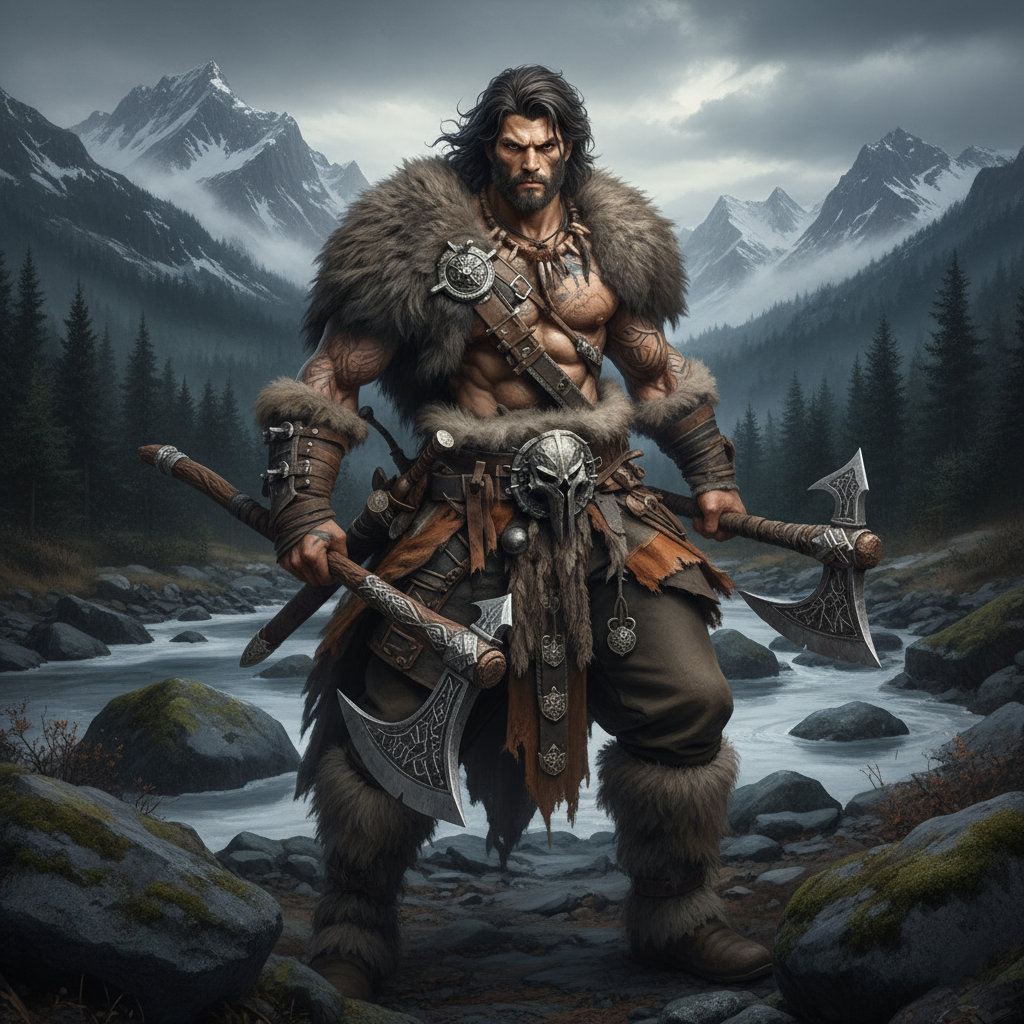
The clang of steel on steel. The roar of battle cries echoes across frost-covered mountains. The legends whispered around campfires of warriors who carved their names into history with axes and raw fury. Whether you're building a character for Dungeons & Dragons, writing an epic fantasy novel, or exploring the brutal landscapes of Conan Exiles, finding the right barbarian name can make the difference between a forgettable character and a legend.
A barbarian name generator solves one of character creation's most challenging puzzles: capturing that perfect blend of primal strength, cultural authenticity, and memorable sound. The best names feel like weapons themselves—sharp, direct, and impossible to ignore. They honor the rich traditions of Norse berserkers, Celtic warriors, and Germanic tribes while fitting seamlessly into modern fantasy worlds.
This guide explores everything you need to know about barbarian names, from their historical roots to practical tips for choosing names that resonate with both authenticity and creativity.
How a Barbarian Name Generator Works
Modern barbarian name generators combine linguistic patterns from historical warrior cultures with fantasy conventions to produce authentic-sounding names at the click of a button. The process typically involves:
Name Element Libraries: Generators draw from databases of syllables, prefixes, and suffixes derived from Old Norse, Germanic, Celtic, and other warrior cultures. Elements like "Thor-" (thunder), "-ulf" (wolf), and "-gar" (spear) carry authentic historical weight.
Phonetic Patterns: The algorithm prioritizes harsh consonants—particularly hard "G" sounds and rolling "R"s—that evoke the visceral nature of warrior life. Short, punchy syllables dominate because they mirror the directness of barbarian culture.
Meaning Integration: Quality generators don't just create random sound combinations. They pair elements that create logical meanings, such as "Ragnar" (warrior/counsel) or "Gunnar" (battle warrior).
Cultural Filtering: Advanced generators allow you to specify cultural influences, whether you want Norse-inspired names like "Bjorn Stormcaller," Celtic options such as "Bran Ironwolf," or Orcish variations like "Gro'ach."
The technology has evolved considerably. Early generators produced awkward combinations that felt artificial. Modern tools analyze thousands of historical names to replicate authentic patterns while maintaining the flexibility that fantasy settings demand.
The History Behind Barbarian Naming Conventions
The word "barbarian" itself carries fascinating etymology. Ancient Greeks used bárbaros to describe foreigners whose language sounded like nonsensical "bar-bar" sounds. Romans adopted the term for Germanic and Celtic tribes beyond their borders. What started as an insult became a badge of honor for warrior cultures that valued strength over Roman "civilization."
Germanic Dithematic Names
Early Germanic tribes developed a sophisticated naming system centered on dithematic construction—names built from two meaningful elements. Research from the University of Bergen's ArcNames project reveals that these weren't arbitrary combinations. Families deliberately recombined elements from parents' and grandparents' names to signal kinship and inheritance.
The system followed specific rules. Germanic names often employed alliteration between siblings to emphasize family bonds. Arminius, the famous Germanic chieftain who defeated three Roman legions in 9 AD, came from a family where this tradition was evident: his father Segimerus and uncle shared the element "-merus" (famous), while relatives bore names with "Seg-" (victory).
Scholar Edward Schröder's 1944 study of 30,000 Germanic individuals found that less than 1% bore names with alliterating first and last elements. This wasn't random—Germanic cultures deliberately avoided combinations like *Baldwald or *Wulfulf because perfect alliteration conflicted with their aesthetic principles. They preferred names that flowed naturally in speech rather than sounding like poetic devices.
Norse Warrior Names
Viking Age naming patterns emphasized prowess and divine favor. Names combined elements meaning "god," "wolf," "bear," and "iron"—animals and attributes that embodied warrior ideals. The element "Thor-" invoked the thunder god's protection, while "-björn" (bear) suggested ferocious strength.
Norse cultures also developed byname traditions, adding descriptive epithets earned through deeds. A warrior might start as "Bjorn" but earn "Bjorn Ironside" after surviving impossible battles. These honorary additions weren't decorative—they replaced birth names in daily use, becoming the identity by which history remembered them.
Celtic Battle Names
Celtic warriors favored names connecting them to nature spirits and ancient powers. Elements like "Bran-" (raven) carried mystical significance, while "-ghal" (battle) appeared frequently. The Celts understood names as living things that grew with the bearer, adapting through life's challenges.
Tips for Choosing the Perfect Barbarian Name
After years of crafting characters across multiple game systems, I've identified key principles that separate memorable barbarian names from forgettable ones:
Embrace Brevity: The most effective barbarian names use one or two syllables per element. "Grom" hits harder than "Gregorovich." Short names feel immediate and primal.
Prioritize Hard Sounds: Consonants like G, K, R, and TH create the aggressive phonetic quality that defines barbarian speech patterns. Compare "Krag" to "Lirian"—the first sounds like someone who splits logs with their bare hands.
Consider Cultural Context: Match your name to your character's background. A Norse-inspired barbarian from frozen mountains needs different naming conventions than a steppe warrior from desert plains. Research the culture you're drawing from, even if only superficially.
Test the Battle Cry: Say the name aloud as if shouting it across a battlefield. Does it carry? Does it intimidate? "Thorgar!" works; "Mellonius" doesn't.
Balance Authenticity and Fantasy: Historical accuracy matters, but you're creating for fantasy settings. Proto-Germanic Ansugaizaz (god-spear) is linguistically correct, but "Ansgar" works better at the gaming table.
Avoid Perfect Alliteration and Rhyme: Germanic naming traditions consciously avoided combinations like *Baldwald or *Hildhelm. These patterns sound awkward and draw attention to the name itself rather than the character. Imperfect alliteration ("Karlkvist") flows more naturally.
Incorporate Meaningful Elements: Names built from elements with clear meanings create deeper character connections. "Bjorn" (bear) immediately suggests ferocity; "Ingrid" (hero's daughter) establishes legacy.
Popular Barbarian Name Categories
Male Barbarian Names with Norse Influence
Norse-inspired names dominate barbarian fantasy because Viking culture so perfectly embodies the archetype. These names combine divine references with natural power:
- Ragnar Bloodaxe: Counsel/warrior + weapon epithet
- Thorvald Ironbeard: Thor's power + iron strength
- Gunnar Wolfheart: Battle warrior + predator spirit
- Bjorn Stormcaller: Bear + elemental mastery
- Erik Thunderstrike: Eternal ruler + divine force
- Hakon Grimfist: High son + fearsome power
Female Barbarian Names
Female warriors earned names reflecting equal prowess. Shield-maidens and berserker women bore names as fierce as their male counterparts:
- Astrid Ironwill: Divine strength + determination
- Freydis Ravenheart: Goddess/noble woman + bird of battle
- Sigrid Wolfbane: Beautiful victory + predator slayer
- Brunhild Shieldmaiden: Armor battle + warrior woman
- Thora Ironside: Thunder + impenetrable defense
- Ragnhild Stormcrow: Strong counsel + battle omen
Celtic Warrior Names
Celtic traditions emphasized mystical connections and natural power:
- Bran Ironwolf: Raven + metal predator
- Connor Stormheart: Lover of hounds/wolves + tempest spirit
- Maeve Stormborn: Intoxicating + elemental emergence
- Fergus Battleborn: Man strength + combat origin
- Brigid Moonwhisper: Exalted one + night magic
Orcish and Fantasy Variants
Pure fantasy names draw from gaming traditions, particularly Warcraft and D&D:
- Grom Hellscream: Thunder + terrifying battle cry
- Gro'ach Bonecrusher: Destroyer + brutal epithet
- Kazzak Doomhammer: Destroyer + apocalyptic weapon
- Goruk Skullsplitter: Wild boar + victory trophy
- Mug'thol Foebreaker: Skull crusher + enemy destroyer
Integrating Barbarian Names into RPGs
Different game systems handle barbarian characters in unique ways, and your naming choices should reflect those distinctions.
Dungeons & Dragons 5e
D&D's Player's Handbook suggests that a barbarian is a class, not a culture. Your character might be a sophisticated city-dweller who taps into primal rage, or a tribal warrior from distant lands. This separation between class and background means naming flexibility—a barbarian named "Sebastian Thornbrook" works as well as "Grom Skullsplitter" if the backstory supports it.
However, players often prefer names that immediately communicate the character concept. When someone introduces their barbarian as "Thorgar the Foebreaker," everyone at the table instantly understands the archetype. This social shorthand has value even when breaking from pure historical accuracy.
Pathfinder
Pathfinder's rage powers and cultural archetypes offer more specialized options. A Mooncursed Barbarian with lycanthropic influences might take a name like "Fenrir Bloodmoon," while an Urban Barbarian from a metropolis could be "Marcus Ironside"—civilized in origin but savage in execution.
World of Warcraft and Video Games
Video game naming conventions face unique constraints. Character names need to be memorable but also available (not already taken by other players). This drives creativity—instead of "Ragnar," you might become "Ragnarr," "Ragnhar," or "Raggnar." The proliferation of variations has actually enriched the naming landscape, creating new traditions that blend historical elements with modern invention.
The Role of Epithets and Earned Names
Historical barbarian cultures understood that a birth name was just the beginning. True identity came through deeds.
Germanic and Norse traditions featured earned names that replaced or supplemented original names. A warrior born "Sten" might become "Sten Sture" after demonstrating exceptional leadership. These additions weren't mere decoration—they became the primary identity.
For RPG characters, this tradition offers excellent storytelling potential. Your character might start with a simple name like "Bjorn," but after surviving their first major battle, the clan bestows "Bjorn Ironside." After defeating a legendary beast, they become "Bjorn Ironside Dragonbane." The accumulating epithets create a living history.
This approach also solves a common problem: starting with an intimidating name like "Kazzak Doomhammer" when your character is level 1 feels presumptuous. Beginning as "Kazzak" and earning "Doomhammer" after proving yourself creates narrative satisfaction.
Common Naming Mistakes to Avoid
Through countless character creation sessions, I've observed patterns in what works and what falls flat:
Overcomplication: Names with three or more elements ("Thorvald Ironbeard Stormcaller Dragonbane") become cumbersome. Real historical warriors rarely accumulated more than two elements.
Mixing Cultures Carelessly: Combining Norse, Celtic, and Orcish elements randomly creates confusion. "Bjorn MacGregor Gro'ach" signals unclear character identity.
Ignoring Pronunciation: If your fellow players can't pronounce your character's name, they'll invent nicknames or avoid using it. Test pronunciation before committing.
Generic Fantasy Tropes: Names like "Conan" or "Ragnar" are iconic but overused. A barbarian name generator helps you find similar-feeling options with more originality.
Perfect Alliteration: As discussed in historical context, names like *Baldwald or *Wulfulf were avoided in actual Germanic naming traditions because they sounded awkward. Modern fantasy sometimes forgets this principle.
Building Your Character's Story Through Names
The best barbarian names don't exist in isolation—they connect to broader character identity. Consider:
Family Legacy: Does your character continue a naming tradition? Perhaps all firstborn daughters in their clan receive names beginning with "Astrid-" or "Sigrid-"?
Tribal Affiliation: Some clans favor particular elements. The Thunderspear tribe might use "-gar" (spear) in most male names, while the Ironwolf clan prefers "-ulf" (wolf) variations.
Personal Transformation: Has your character rejected their birth name? A barbarian who fled their tribe might adopt a new identity entirely, signaling their break from the past.
Spiritual Significance: Names can also hold deep spiritual or religious meaning within barbarian societies. A name might be bestowed during a sacred ritual or serve as an invocation of a clan's totemic spirit or deity. For instance, a warrior blessed under the Bear Totem may bear a name like "Varrok" (meaning bear's strength) as a reflection of their connection to their ancestral protector.
Achievements and Epithets: Over time, barbarians might earn new names or titles based on their feats and accomplishments. A fearless fighter who defended their tribe single-handedly against invaders might gain an epithet like "Ironskin" or "Stormbringer," symbolic of their courage and prowess in battle. These names not only honor their deeds but also serve as inspiration to future generations.
Cultural Exchange: Finally, consider how encounters with other cultures influence naming conventions. A barbarian who travels far beyond their homeland might adopt names or phrases borrowed from the languages and traditions they encounter, blending their heritage with new experiences and marking them as a bridge between worlds.
Frequently Asked Questions (FAQs)
Yes, all random names created through our Barbarian Name Generator are randomly generated combinations free for any purpose you need. The names created belong to you with full rights to incorporate them into D&D campaigns, Pathfinder adventures, creative writing, or any RPG project. We do recommend verifying that your chosen name hasn't been trademarked by existing franchises before commercial publication, and you're welcome to use elsewhere across all your gaming endeavors.
Our Barbarian Name Generator is completely free with unrestricted access to generate as many cleric names as you need. You can use every feature—gender preferences, multiple generations. We keep it free so every player can channel divine power into their character creation.
Our random Barbarian Name Generator stands out with extensive customization options and a larger pool of name elements drawn from divine, historical, and fantasy sources. The algorithm delivers results faster than competing tools, meeting your creative demand instantly. This makes our generator better suited for DnD 5e priests, Pathfinder healers, and RPG champions of faith alike.
Absolutely—you can customize which types of Barbarian Names get generated through our intuitive option controls. Simply select your preferred gender, adjust lengths, apply specific naming conventions that match your deity or religious order, and click Generate Names to receive tailored holy names for your character.
Our system minimizes duplicates by drawing from vast divine naming databases with randomized combinations. Each generation produces different Barbarian Names, and if you ever see repeated results, simply regenerate to receive fresh results perfect for your DnD 5e or Pathfinder character.
Generated Barbarian Names are available for commercial purposes, allowing you to use them commercially in published adventures, game modules, or merchandise. We recommend checking for existing trademarks and reviewing any usage restrictions before finalizing names for commercial products to ensure your holy warrior's identity remains legally protected.