Italian Name Generator
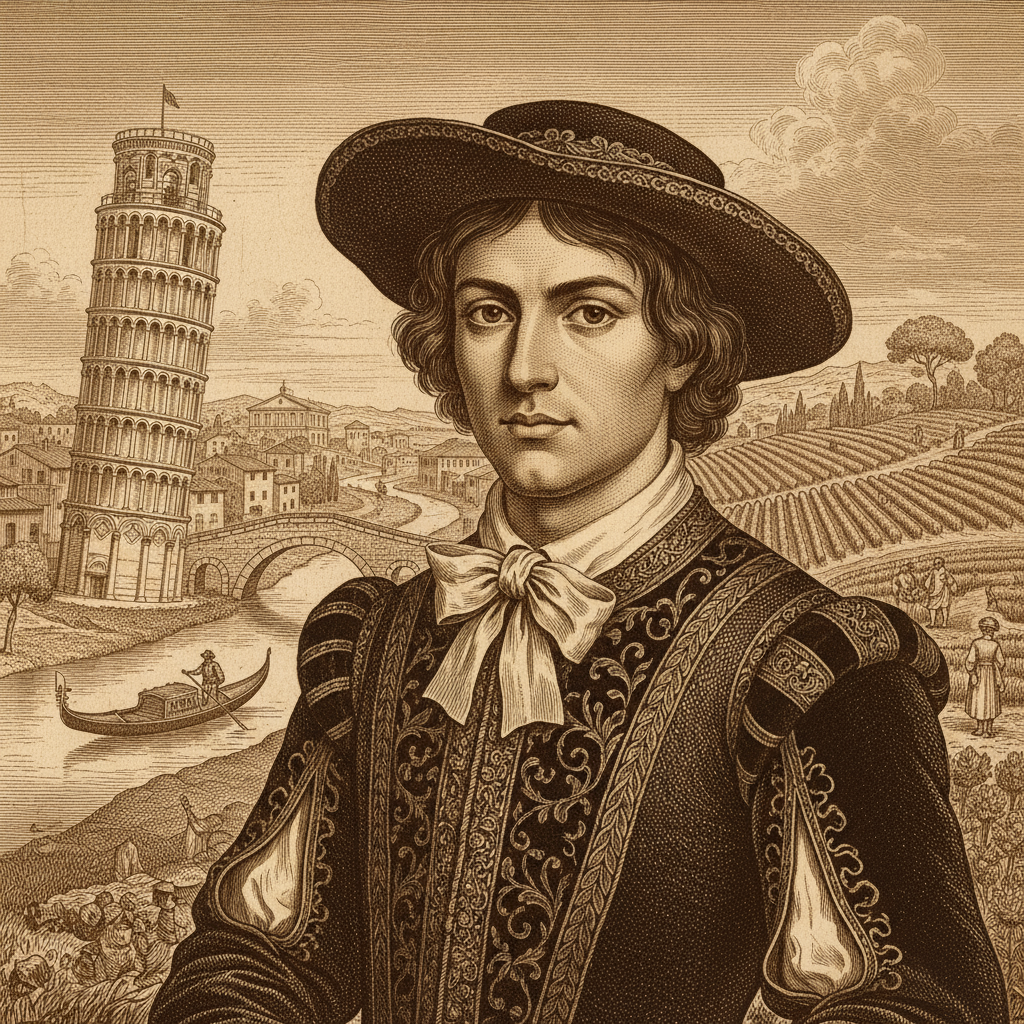
Embrace Renaissance beauty with our Italian name generator! Create passionate names ideal for Venetian fantasy, Assassin's Creed campaigns, or Mediterranean stories.
Gender Preference
Generating magical names...
Find Your Perfect Italian Name
Choosing a name is more than picking syllables that sound pleasant together. It's a decision that echoes through generations, carrying the weight of family history, cultural identity, and personal meaning. Italian names possess a unique magnetism—they roll off the tongue with musical elegance while connecting you to centuries of art, literature, and tradition that have shaped Western civilization.
Whether you're expecting a baby and want to honor your Italian heritage, developing a character for your novel set in Renaissance Florence, or simply curious about the names that grace the streets of Rome and Venice, an Italian name generator offers a gateway into this rich naming tradition. These tools do more than produce random combinations; they help you discover names steeped in meaning, regional character, and authentic Italian style.
What Is an Italian Name Generator?
An Italian name generator is a digital tool designed to create authentic Italian names based on your specific preferences and requirements. Unlike simply browsing alphabetical lists, these generators use algorithms informed by Italian naming conventions, regional variations, and historical patterns to produce names that feel genuinely Italian rather than merely Italian-sounding.
Modern generators offer sophisticated filtering options that let you customize your search. You can specify gender preferences, control the number of syllables, set name length parameters, and even choose how a name begins or ends. This level of precision proves invaluable when you need a name that fits specific criteria—perhaps a three-syllable feminine name ending in "-ella" for a character from Tuscany, or a short, punchy masculine name suitable for a Venetian merchant.
The best generators provide more than just the name itself. They include etymological information, explaining what each name means and where it originated. This context helps you understand the cultural weight behind choices like Francesca (meaning "free one"), Giovanni (signifying "God is gracious"), or Vittorio (declaring "conqueror"). Armed with this knowledge, you can select names that align with the personality, background, or story you're creating.
How to Use an Italian Name Generator
Using an Italian name generator effectively requires understanding the filters and options available to you. Start by considering your primary need: Are you looking for a boy's name, a girl's name, or are you open to either? Most generators offer three gender settings—male, female, and "any"—that immediately narrow your results to the appropriate pool of names.
The syllable filter controls the rhythmic quality of the name. Single-syllable names like Gio or Luz feel sharp and modern. Two-syllable names such as Marco or Sofia provide classic balance. Three-syllable names like Gabriella or Raffaele carry the traditional Italian cadence that sounds inherently musical. Names with four or more syllables—think Alessandra or Massimiliano—convey aristocratic grandeur and formal elegance.
Length settings work hand-in-hand with syllable counts but focus on character count rather than sound units. Short names (3-5 letters) offer simplicity and memorability. Medium names (6-8 letters) strike a balance between substance and brevity. Long names (9+ letters) make bold statements and often suggest noble lineage or religious significance.
The "starts with" and "ends with" filters provide phonetic precision. If you want names with the soft "Gi-" sound (Gianna, Giorgio, Giulia), you can filter accordingly. If you prefer the lyrical "-ella" or "-ello" endings (Antonella, Donatello, Gabriella), you can specify that suffix. These targeted searches help when you're matching names to siblings, ensuring a cohesive sound within a family, or capturing a specific regional accent.
Combine multiple filters for laser-focused results. A search for "female names, 3 syllables, ending in -ia" might yield Alessia, Claudia, or Lucrezia—each carrying distinct meanings and regional associations that you can evaluate against your needs.
Italian Naming Traditions and Their Deep Roots
Italian naming conventions emerged from a sophisticated system that valued family continuity, religious devotion, and regional identity. Unlike many cultures where parents enjoy complete freedom in naming choices, traditional Italian families followed strict patterns that honored ancestors and maintained lineage clarity.
The cornerstone of Italian naming tradition dictated that the first son received his paternal grandfather's name, while the first daughter took her paternal grandmother's name. The second son honored the maternal grandfather, and the second daughter the maternal grandmother. This pattern created a rhythmic repetition of names through generations, making family trees both predictable and deeply connected across time.
This system had practical implications beyond sentiment. When you encountered Giovanni Basso in medieval records, you knew immediately that Giovanni was probably the firstborn son, and "Basso" (meaning "short") likely described an ancestor's physical characteristic. Surnames themselves told stories—Ferrari indicated a family of blacksmiths, Conti pointed to noble connections, and place-based names like Romano or Napolitano revealed geographic origins.
The tradition extended to naming subsequent children after parents themselves (creating junior designations), great-grandparents, or particularly beloved aunts and uncles. If a child died in infancy—tragically common in earlier centuries—parents often bestowed the same name on the next child born of that gender, ensuring the name survived in the family line.
Regional variations added layers of complexity. In Sicily, Greek and Arabic influences shaped naming patterns differently than in northern regions. Tuscany's Etruscan heritage left phonetic markers in surnames ending with suffixes like "-ai" and "-ucci." Venetian names carried sounds and structures distinct from those found in Rome or Naples.
Religious significance permeated naming choices. Saints' names dominated baptismal records, with children often receiving multiple names to honor various religious figures. Maria appeared so frequently that it functioned almost as a universal middle name, while biblical names like Giuseppe, Antonio, and Giovanni remained perpetually popular across centuries.
Understanding these traditions helps you appreciate why certain names cluster in Italian families and regions. It also explains why an Italian name generator that accounts for regional influences produces more authentic results than one that treats all Italian names as interchangeable.
The Most Popular Italian Names for Boys and Girls
According to ISTAT (Italy's National Institute of Statistics), which tracks naming patterns across the country, certain names have dominated Italian birth registries in recent years. The top male names for 2024 included Leonardo, Edoardo, Tommaso, Mattia, and Alessandro—each representing a blend of classical Italian sound and contemporary appeal.
Leonardo carries artistic weight thanks to da Vinci, while also meaning "brave lion"—a combination of cultural cachet and strong symbolism that appeals to modern parents. Edoardo offers a sophisticated alternative to the more common Eduardo, with its meaning of "wealthy guardian" suggesting both protection and prosperity. Tommaso, the Italian form of Thomas, means "twin" and maintains steady popularity across generations.
For girls, Sofia claimed the top position, followed by Aurora, Ginevra, Vittoria, and Giulia. Sofia's meaning of "wisdom" gives it timeless philosophical depth, while Aurora ("dawn") evokes natural beauty and new beginnings. Ginevra, the Italian equivalent of Guinevere, connects to the Arthurian legend while sounding distinctly Italian. Vittoria ("victory") and Giulia (from the ancient Roman family name Julius) blend historical gravitas with melodic pronunciation.
Beyond these contemporary favorites, classic Italian names maintain a strong presence. Francesco remains beloved by boys, honoring both Saint Francis of Assisi and carrying the meaning "free one." Lorenzo ("laurel-crowned") references ancient Roman victory symbols. For girls, Chiara ("clear, bright") offers luminous simplicity, while Alessandra ("defender of the people") provides a powerful feminine form of Alessandro.
Regional preferences create variation within these national trends. Northern Italian parents gravitate toward names with Germanic roots—Matteo, Luca, Marco. Southern regions show a stronger preference for traditional religious names—Giuseppe, Antonio, Maria. Coastal areas, particularly around Venice, favor names with maritime or merchant-class associations.
Some beautifully Italian names remain underutilized by contemporary standards but carry significant cultural weight. Consider Dante, which means "enduring" while connecting to Italy's greatest poet. Or Beatrice, meaning "she who brings happiness," immortalized in Dante's Divine Comedy. These names offer the advantage of recognition without overuse, perfect for parents seeking something familiar yet distinctive.
Regional Influences: How Italian Names Vary Across the Peninsula
Italy's fragmented political history—unified as a nation only in 1861—created distinct regional cultures that still influence naming patterns. A name that feels perfectly natural in Sicily might sound foreign in Milan, and understanding these regional characters adds authenticity when selecting Italian names.
Northern Italy, particularly Lombardy and Piedmont, absorbed Germanic influences during Lombard rule in the early medieval period. This heritage appears in names like Alberto, Bernardo, and Guglielmo (the Italian form of William). Surnames in these regions often feature suffixes like "-etti" and "-ini," creating names like Martinelli and Rossini that sound crisp and distinct from southern variations.
Tuscany, the birthplace of the Modern Italian language through Dante, Petrarch, and Boccaccio, developed naming patterns that became templates for standard Italian usage. Names here carry literary associations—Beatrice, Laura, Francesca recall characters from Renaissance literature. Etruscan heritage surfaces in surnames ending with "-ai" and "-ucci," like Bolai and Balducci, marking families with roots predating Roman conquest.
Central Italy, around Rome, maintains the strongest connection to ancient Roman naming conventions. The "tria nomina" system (three-name structure) of ancient Rome evolved into the modern first-name-surname pattern, but Roman surnames often preserve echoes of the ancient "cognomen" that indicated family branches or personal characteristics. Names like Giulio (from Julius) and Marco (from Marcus) maintain direct lines to Imperial Rome.
Southern Italy and Sicily showcase Mediterranean complexity, blending Greek, Arab, Norman, and Spanish influences from successive waves of conquest and trade. Greek heritage appears in names like Filippo (lover of horses) and Giorgio (farmer/earth-worker). Arabic influence shows in names like Salvatore (savior) and surnames like Giuffrida. The southern tradition also embraced elaborate religious naming, with children receiving multiple saints' names at baptism.
Coastal regions developed names reflecting maritime culture. Venetian names often carried associations with trade, wealth, and naval power—Andrea (from the Greek for "manly") became particularly popular in Venice. Genoese naming patterns showed similar commercial influences, with surnames like Colombo (dove, but also suggesting exploration and navigation) becoming prominent.
Island communities, particularly Sardinia, maintained naming traditions influenced by Spanish rule and distinct local languages. Sardinian names often preserve pre-Roman roots, creating sounds and structures that feel noticeably different from mainland Italian names.
These regional variations matter when creating authentic characters or honoring specific family heritage. A generator that accounts for regional influences can help you select names that accurately reflect a character's supposed origins or a family's particular Italian background.
Choosing the Perfect Italian Name: Tips and Considerations
Selecting an Italian name requires balancing multiple factors: sound, meaning, cultural authenticity, and personal connection. Start by considering the name's purpose. A name for your child carries a different weight than a character name for creative writing, though both benefit from thoughtful selection.
For babies, consider how the name functions in your current culture while honoring Italian heritage. Names like Sofia, Marco, and Lucia translate smoothly across languages and cultures, avoiding pronunciation struggles while maintaining a clear Italian identity. More distinctly Italian names like Giacomo or Costanza make bolder statements about heritage but may require frequent spelling and pronunciation corrections in non-Italian-speaking environments.
Meaning matters more than many people initially realize. Children eventually learn what their names signify, and that knowledge shapes their self-perception. A name meaning "strong" or "wise" carries different psychological weight than one meaning "wealthy" or "beautiful." Italian names offer rich symbolic options—Aurora suggests hope and new beginnings, Valentino implies strength and health, while Serena promises calm and peace.
Consider the surname alongside the first name. Italian names should flow together melodically, with attention to how syllables and vowel sounds interact. A multisyllabic first name like Alessandro pairs elegantly with a shorter surname like Rossi, while a shorter first name like Gio works better with a longer surname like Benedetti. Avoid combinations where the ending of the first name and the beginning of the surname create awkward sound clusters.
Family tradition plays a significant role in Italian naming, even outside Italy. If you're honoring a grandparent or other relative, using an Italian name generator can help you find variations or related names that maintain the connection while creating individuality. Giuseppe can become Giuseppina for a girl, Lorenzo can become Lorenza, and traditional names can acquire modern forms that preserve their roots while feeling contemporary.
For character development in creative projects, align names with personality and background. A character from an aristocratic Florentine heritage might carry a name like Cosimo or Caterina, while a working-class Roman character might suit something like Rocco or Stella. A character's birth era also matters—names popular in Renaissance Italy differ from those favored in the twentieth century or today.
Test the name's versatility. Most Italian names have built-in nickname potential—Alessandro becomes Ale or Sandro, Francesca becomes Franci or Cesca. These familiar forms create intimacy in relationships while maintaining formality when needed. A name that doesn't lend itself to easy shortening might feel stiff in everyday use.
FAQ: Italian Name Generator
What makes a name authentically Italian versus just Italian-sounding?
Authentic Italian names follow specific linguistic patterns, including characteristic suffixes (-o for masculine, -a for feminine, -i for plural/family names), Latin or Greek roots, and connections to Italian saints, historical figures, or regional traditions. Italian-sounding names might approximate these qualities without having genuine etymological roots in Italian culture or language.
Can Italian names be used for people who don't have Italian heritage?
Absolutely. Names transcend ethnic boundaries, and Italian names have gained popularity worldwide due to their musical quality and cultural associations with art, romance, and style. However, choosing a name with awareness of its meaning and cultural significance shows respect for the tradition you're borrowing from.
Do Italian naming traditions still apply in modern Italy?
While many Italian families maintain traditional naming patterns (honoring grandparents with firstborns' names), modern Italian parents exercise more freedom than previous generations. The tradition remains influential but not absolute, with contemporary parents balancing family expectations against personal preference and modern naming trends.
How do I know if an Italian name suits my family's surname?
Test the combination aloud, paying attention to rhythm, flow, and how syllables interact. Italian names work best with surnames that allow clear pronunciation without awkward consonant clusters or vowel collisions. Consider whether the cultural origins match—a strongly Italian first name paired with a surname from a different cultural tradition creates an interesting contrast, but may feel mismatched to some.
Are there Italian names that work well in multiple languages?
Many Italian names translate smoothly across languages: Sofia, Marco, Lucia, and Leonardo maintain their Italian character while being easily pronounced in English, Spanish, French, and other languages. These internationally accessible names offer the benefit of Italian elegance without potential pronunciation struggles.
Can I combine multiple Italian names, or is that inauthentic?
Italians traditionally receive multiple baptismal names (a practice especially common in southern Italy), so combinations like Maria Francesca or Giovanni Paolo are entirely authentic. However, be mindful of length and flow—overly elaborate combinations can become unwieldy in everyday use.
How do regional accents affect Italian name pronunciation?
Italian regional accents create significant pronunciation variation. A name pronounced one way in Milan might sound noticeably different in Naples or Palermo. Standard Italian pronunciation (based on Tuscan dialect) provides the most recognized reference point, though regional variations add authentic local flavor if you're familiar with specific dialects.
What if the Italian name I love has a meaning I don't like?
Name meanings held greater significance in historical contexts than they typically do today. If you love a name's sound and cultural associations, the literal meaning matters less than your personal connection to it. However, since some people do research name meanings, being aware allows you to address questions if they arise.
Connecting to Italian Heritage Through Names
Names serve as bridges across generations, linking children to ancestors they may never meet while carrying forward family stories embedded in syllables. For families with Italian heritage, selecting an Italian name becomes an act of cultural preservation and personal identity formation.
This connection operates on multiple levels. At its most obvious, an Italian name signals ethnic heritage, creating immediate recognition of cultural background. But the connection goes deeper than surface identification. Traditional naming patterns embedded family structure into identity itself—when the first grandson bore his grandfather's name, he carried not just syllables but expectations, stories, and the weight of family continuity.
Many Italian-Americans, separated from the language and daily customs of their immigrant ancestors, find that names provide one of their strongest remaining links to Italian culture. A child named Giancarlo or Gabriella grows up with daily reminders of their heritage, prompting questions about family history and cultural traditions that might otherwise fade across generations.
For those without direct Italian heritage but drawn to Italian culture through its art, cuisine, literature, or aesthetic sensibilities, Italian names offer a way to express that cultural affinity. Character names in novels, pen names for creative work, or even pet names become vehicles for celebrating a culture you admire, creating personal connections that honor rather than appropriate.
An Italian name generator facilitates these connections by revealing options you might never encounter through casual research. It introduces you to names preserving regional traditions, historical periods, or specific cultural elements that resonate with your particular interests or family story. The generator becomes a tool for cultural exploration, each generated name a door opening onto Italian history, language, and tradition.
Discover Your Italian Name Today
The right name exists somewhere in the rich tapestry of Italian naming tradition—a name that captures the musicality, cultural depth, and timeless elegance that make Italian names so compelling. Whether you're welcoming a new child, breathing life into a fictional character, or simply exploring your connection to Italian heritage, an Italian name generator provides the key to discovery.
These tools offer more than convenience; they provide informed guidance through centuries of naming history, regional variations, and cultural significance. They help you move beyond the obvious choices to find names that reflect your specific needs, whether that's honoring family tradition, capturing regional character, or finding a name with particular symbolic meaning.
Start your exploration by considering what matters most to you: Sound? Meaning? Family connection? Regional authenticity? Historical period? Define your priorities, then let the generator introduce you to possibilities that match your vision. Try different filter combinations, explore names outside your initial assumptions, and pay attention to the meanings and etymologies provided.
Remember that choosing a name is ultimately a personal decision guided by your own taste, values, and circumstances. Use the generator as a tool for exploration rather than a final authority, letting it expand your awareness of options while trusting your instincts about what feels right.
The perfect Italian name awaits discovery—one that sounds beautiful, carries meaningful heritage, and creates a lasting connection to one of the world's most influential cultures. Begin your search today and find the name that speaks to you across centuries of Italian tradition.