
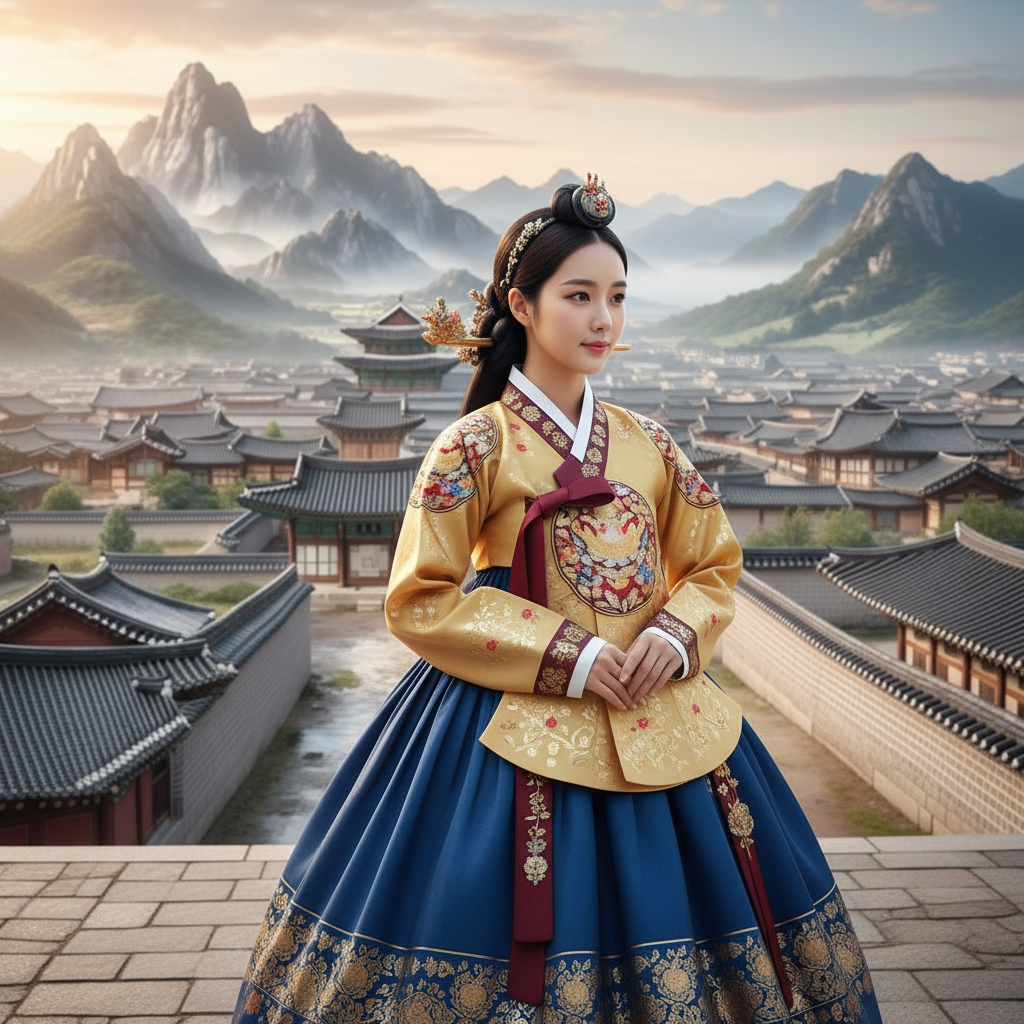
Korean Name Generator
Discover K-drama magic with our Korean name generator! Create authentic names perfect for modern fantasy, historical RPG, or Korean-inspired character stories.
Gender Preference
Generating magical names...
Create Authentic Names With Meaning
Korean names carry centuries of cultural significance compressed into just a few syllables. Unlike Western naming conventions, where first names often function as standalone identifiers, Korean names operate as carefully constructed vessels of meaning—each syllable chosen to reflect family heritage, parental aspirations, and personal identity.
Whether you're crafting a K-drama character, building a fantasy world inspired by Korean culture, or simply exploring authentic naming traditions, understanding the structure and philosophy behind Korean names transforms them from pleasant sounds into meaningful expressions of identity.
This guide explores how Korean names work, their historical roots, and how to select or generate names that honor this rich tradition.
The Structure of Korean Names
Korean names follow a distinctive three-syllable pattern that places family identity before individual distinction. The family name (성, seong) comes first, typically consisting of a single syllable, followed by the given name (이름, ireum), which usually spans two syllables.
This ordering isn't arbitrary—it reflects a cultural philosophy where collective identity precedes individual expression. When you encounter the name Kim Minji, "Kim" represents the family lineage, while "Minji" carries the personal meaning chosen by parents.
Common Korean Surnames
Despite Korea's population of over 75 million people across both North and South Korea, fewer than 300 surnames remain in active use. The five most common surnames—Kim (김), Lee/Yi (이), Park/Bak (박), Choi (최), and Jung/Jeong (정)—account for over half the population.
According to data from South Korea's 2015 census, these five surnames alone represented 44.6% of the country's residents. This concentration creates a unique naming landscape where given names carry the primary burden of individual differentiation.
Other prevalent surnames include:
- Kang (강) – river
- Cho/Jo (조) – ancestor, assist
- Yoon/Yun (윤) – govern, rule
- An (안) – peace, safe
- Han (한) – Korea
Given Name Construction
Given names typically consist of two syllables, though single-syllable and three-syllable variations exist. Each syllable carries a specific meaning, often derived from Hanja (한자)—Chinese characters adapted to Korean use.
Parents traditionally select syllables that combine to express desired qualities or aspirations:
- Seojun (서준): "Seo" (auspicious) + "Jun" (talented, handsome)
- Jisoo (지수): "Ji" (wisdom) + "Soo" (excellence, long life)
- Hyunwoo (현우): "Hyun" (bright, virtuous) + "Woo" (divine, protection)
This deliberate pairing creates names that function almost like compressed poetry—each element contributing to a larger meaning while maintaining phonetic harmony.
The Evolution of Korean Naming Traditions
Korean naming conventions developed through centuries of cultural exchange and indigenous innovation. While Hanja provided the semantic framework for most traditional names, the Korean language itself demanded brevity and elegance that differed from Chinese naming patterns.
Historical Development
Surnames emerged in Korea before many European countries formalized their own hereditary naming systems. Initially exclusive to royalty and nobility, surnames gradually spread to the general population during the Goryeo era (918-1392). By the time Korea officially abolished its class system in 1894, nearly all Koreans had adopted family names.
The number of surnames has actually increased over time. As of 2000, there were 286 surnames and 4,179 clan distinctions recorded. A 2015 census revealed over 4,800 new surnames registered between 2000 and 2015, bringing the total to 5,582 distinct surnames—though 73% of these lack corresponding Hanja characters.
Generational Names
Traditional Korean families often employ generational names (항렬, hangnyeol)—a practice borrowed from Chinese tradition. One of the two syllables in a given name is shared among siblings or cousins within the same generation.
For example, siblings might be named:
- Kim Junsu (김준수)
- Kim Junho (김준호)
Both share "Jun" (준), marking them as part of the same generation. While this practice remains common among siblings in both North and South Korea, it's less frequently extended to cousins in contemporary families.
Modern Naming Trends
Since the late 1970s, an increasing number of Korean parents have chosen pure Hangul names—native Korean words rather than Hanja-derived constructions. These names often draw from nature or abstract concepts:
- Haneul (하늘) – sky, heaven
- Bada (바다) – sea
- Dasan (다산) – love
The proportion of pure Hangul names among South Korean newborns rose from 3.5% in 2008 to 7.7% in 2015, reflecting a growing appreciation for linguistic heritage alongside traditional Hanja meanings.
Understanding Hanja and Meaning
Many Korean names can be written in Hanja, which adds layers of meaning beyond phonetic sound. The same pronunciation can represent different concepts depending on which Hanja character is used.
For instance, "ji" (지) might represent:
- 智 – wisdom, intelligence
- 地 – earth, land
- 志 – will, ambition
- 枝 – branch
This ambiguity means you cannot always determine a name's intended meaning from romanization alone. Two people named "Minji" might carry entirely different semantic intentions based on their parents' chosen Hanja.
Regulated Hanja for Names
South Korea maintains an official "List of Hanja for Use in Personal Names" (인명용 한자표). Originally published in 1991 with 2,854 characters (plus 61 variant forms), the list has expanded to over 8,000 permitted Hanja as of 2022.
This regulation ensures names can be officially registered while maintaining cultural authenticity and preventing confusion in legal documents.
Romanization: Writing Korean Names in Latin Letters
Converting Korean names to the Latin alphabet presents unique challenges, as different romanization systems produce varying results from the same Hangul.
Revised Romanization
South Korea officially uses the Revised Romanization (RR) system, released in 2000. This system aims to represent Korean pronunciation using only the 26 letters of the basic Latin alphabet—no special marks or diacritics.
Key characteristics include:
Consonants:
- ㄱ becomes "g" at the start of a syllable, "k" at the end
- ㄷ becomes "d" at the start, "t" at the end
- ㅂ becomes "b" at the start, "p" at the end
- ㄹ becomes "r" before vowels, "l" elsewhere
Vowels:
- ㅓ is written as "eo."
- ㅡ is written as "eu."
- ㅐ is written as "ae."
Personal Name Variations
For passport romanization, South Korea recommends (but doesn't strictly require) modifications to standard RR. These allowances acknowledge that personal names carry greater cultural weight than geographic terms.
Permitted variations include:
- Avoiding romanizations with negative meanings in other languages (e.g., 신 as "SHIN" rather than "SIN")
- Using concatenated given names without hyphens (e.g., "GILDONG" rather than "GIL-DONG")
- Retaining established spellings used abroad
This flexibility explains why you'll see "Lee," "Yi," and "Rhee" all representing 이, or "Park," "Pak," and "Bak" all representing 박.
Gender and Korean Names
Korean names don't operate with the same gender distinctions found in many Western naming traditions. While certain syllables lean masculine or feminine, many remain genuinely unisex.
Masculine-Leaning Names
Names perceived as masculine often incorporate syllables suggesting strength, brightness, or achievement:
- Minho (민호) – clever, bright
- Taeyang (태양) – sun
- Seok (석) – rock, stone
- Jaehoon (재훈) – talented, teaching
Feminine-Leaning Names
Feminine names frequently feature syllables evoking grace, beauty, or natural imagery:
- Nari (나리) – lily
- Haeun (하은) – grace, summer
- Sujin (수진) – excellent pearl
- Yeji (예지) – artistic wisdom
Unisex Names
Many Korean names function comfortably across gender lines:
- Jisoo (지수) – wisdom, excellence
- Hyeon (현) – virtuous, wise
- Min (민) – clever, quick
- Yeong (영) – flower, brave
Context, tone, and accompanying syllables often determine whether a name feels masculine, feminine, or neutral—distinctions that native speakers intuitively recognize but that don't map neatly to rigid categories.
How to Choose an Authentic Korean Name
Selecting a Korean name requires more than assembling pleasant-sounding syllables. Authentic names emerge from understanding the cultural principles that have guided naming for generations.
Consider Family Name First
Your surname establishes the foundation. If you're creating a fictional character, research which surnames fit their background—regional variations exist, and certain surnames carry historical associations.
For personal use, some non-Koreans adopt Korean surnames through cultural connection or marriage. This decision carries weight and deserves thoughtful consideration of its implications.
Research Syllable Meanings
Each syllable in your given name should contribute meaningful resonance. Don't simply choose sounds you find aesthetically pleasing—investigate what each element represents.
A name like "Minji" (민지) works because "Min" (clever, quick) and "Ji" (wisdom) create complementary layers of meaning. Random syllable combinations often produce awkward or nonsensical results to native speakers.
Test Phonetic Flow
Korean names should flow smoothly when spoken aloud. The combination of surname and given name creates a rhythmic unit—harsh consonant clusters or awkward vowel sequences disrupt this natural musicality.
Say the full name repeatedly. Does it roll off the tongue? Would it work in both formal and casual contexts?
Verify Cultural Appropriateness
Certain syllables or combinations carry associations you might not recognize without cultural familiarity. Some names reference historical figures, while others might inadvertently suggest negative qualities.
If possible, consult with Korean speakers to ensure your chosen name doesn't produce unintended meanings or awkward connotations.
Consider Time Period and Setting
Historical Korean dramas require different naming conventions than contemporary stories. Traditional names often drew exclusively from Hanja, while modern names might use pure Hangul or unconventional constructions.
Geographic setting matters too—names common in Seoul might differ from those prevalent in other regions or among Korean diaspora communities.
Using a Korean Name Generator
A Korean name generator serves as a starting point rather than a final authority. These tools excel at introducing you to authentic combinations you might never have encountered otherwise.
Quality generators incorporate:
- Authentic surname-given name pairings that respect traditional patterns
- Proper syllable construction following Korean phonetic rules
- Meaningful combinations drawn from actual naming traditions
- Gender flexibility, acknowledging how Korean names transcend rigid categories
However, generators cannot fully capture the nuanced cultural knowledge that native speakers bring to naming decisions. Use generated names as inspiration, then research their meanings and verify their appropriateness for your specific context.
Frequently Asked Questions
How many syllables do Korean given names typically have?
Most Korean given names consist of two syllables, creating a three-syllable full name when combined with the single-syllable surname. However, one-syllable given names (like "Jun" or "Min") and three-syllable given names (though rare) also exist within traditional naming patterns.
Can I have the same Korean name as someone else?
Absolutely. Given the limited number of surnames and the popularity of certain given name syllables, many Koreans share identical names. The 2015 South Korean census revealed thousands of people with combinations like "Kim Minji" or "Lee Seojun." This commonality is why additional identifiers become important in formal contexts.
Do Korean names have nicknames or shortened forms?
Nicknames exist but function differently than in Western cultures. Rather than shortening the given name, Koreans often use terms of endearment, honorifics based on relationship, or playful variations of the name's meaning. Close friends might create unique nicknames based on personality traits rather than the formal name itself.
How do Korean names work in English-speaking countries?
Koreans living in Western countries face practical challenges with name order and pronunciation. Many adopt the Western convention of placing the given name first, while others maintain the traditional order. Some choose English names for professional contexts while keeping their Korean names for personal use—a pragmatic approach to navigating different cultural systems.
Should I use hyphens when writing Korean given names in English?
Hyphenation practices vary. The South Korean government's Revised Romanization guidelines discourage hyphens between given name syllables, preferring concatenated forms (e.g., "Minji" rather than "Min-ji"). However, hyphens remain acceptable for disambiguating pronunciation or maintaining personal preference. Neither approach is incorrect—choose based on your specific needs and how the name will be used.
Are there Korean names I should avoid for cultural sensitivity reasons?
Certain considerations matter. Avoid names that might inadvertently reference controversial historical figures, and be cautious with names carrying strong generational associations unless you understand their context. Additionally, some syllable combinations—while grammatically correct—might produce awkward or humorous meanings to native speakers. Research and, when possible, consultation help prevent unintended missteps.
How do I know if my chosen Korean name sounds authentic?
Authentic names balance meaning with phonetic harmony. Each syllable should carry clear significance (whether through Hanja or pure Korean meaning), and the full name should flow naturally when spoken. Names that sound forced or awkward often result from random syllable combinations rather than thoughtful construction. Testing your name with Korean speakers provides the most reliable authenticity check.
Finding Meaning in Every Syllable
Korean names represent more than identification—they're compressed vessels of aspiration, heritage, and identity. The careful selection of each syllable reflects a cultural tradition that views naming as both art and responsibility.
Whether you're using a Korean name generator for character creation, exploring names for personal reasons, or simply appreciating this rich naming tradition, remember that authenticity emerges from respecting the philosophy behind these choices. Each name tells a story, carries meaning, and connects to centuries of cultural evolution.
Take time to understand not just how Korean names work structurally, but why they matter culturally. That deeper appreciation transforms naming from a technical exercise into a meaningful act of cultural engagement.