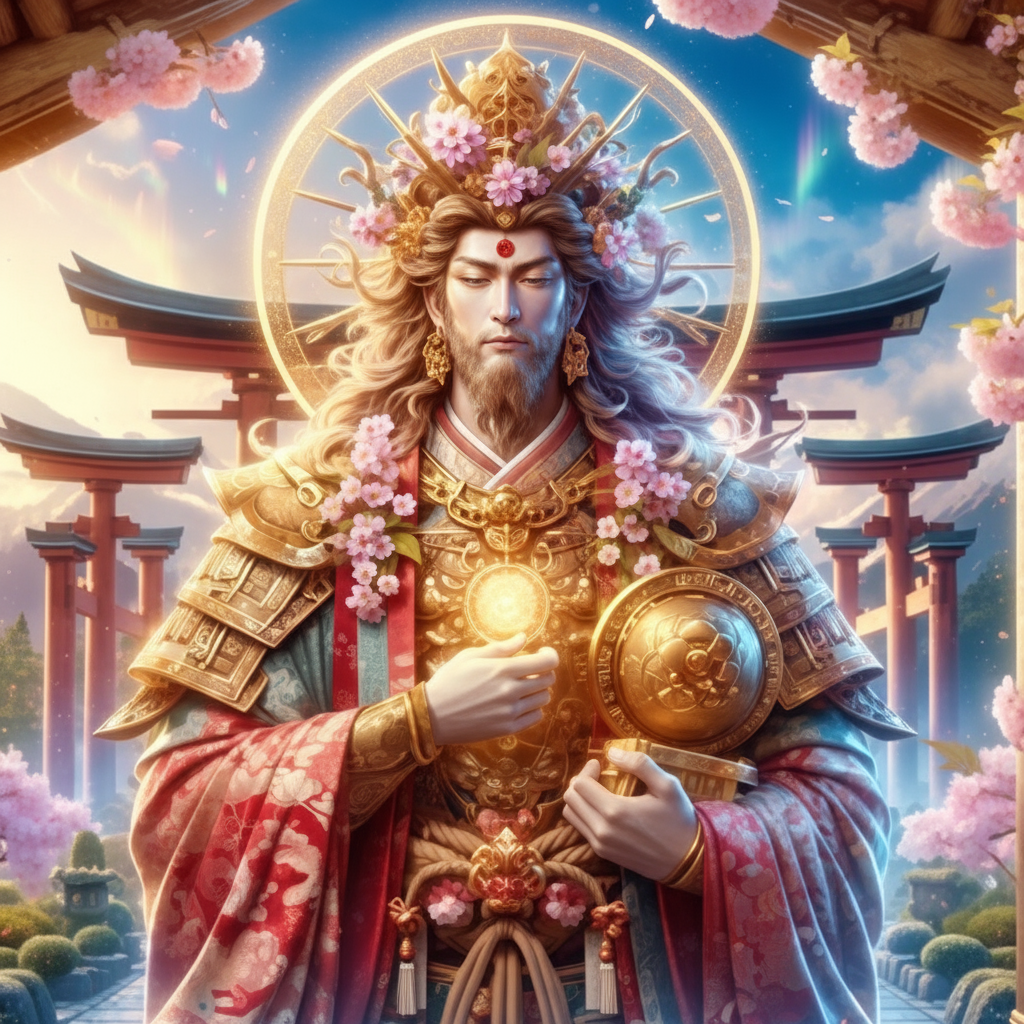
Japanese Gods Name Generator
Honor Shinto traditions with our Japanese god name generator! Create kami deity names perfect for Eastern fantasy RPG, Legend of the Five Rings, or anime-inspired stories.
Gender Preference
Generating magical names...
Create Authentic Kami Deity Names
Shinto belief recognizes spirits in everything—the wind through cedar branches, the crash of ocean waves against coastal rocks, the silent presence within ancient mountains. These aren't distant gods ruling from celestial thrones but kami dwelling within the world itself, making Japanese mythology fundamentally different from the pantheons most Western audiences know.
Understanding how to craft authentic Japanese deity names requires more than randomly combining syllables. It demands recognizing how each kanji character carries layers of meaning, how gender influences naming patterns, and why certain elements appear repeatedly across Shinto tradition. Whether you're building characters for tabletop RPGs like Legend of the Five Rings, writing anime-inspired fiction, or developing a Japanese fantasy setting, knowing the underlying principles transforms generic names into culturally resonant identities.
This guide explores the spiritual foundations of kami, examines what makes Japanese deities distinct from Western gods, and provides practical strategies for using a Japanese god's name generator effectively.
Understanding Kami: Spirits Within Nature
The concept of kami shapes everything about Japanese mythology. Unlike Western deities, who typically exist separately from the world they govern, kami are inseparable from nature itself.
Kami are not separate from nature, but are of nature, according to Shinto teaching. They possess both positive and negative characteristics, good and evil qualities. This fundamental difference means that rocks, trees, rivers, animals, places, and even people can possess the nature of kami. The divine and the human exist within the same world, sharing its complexity rather than occupying separate realms.
The term kami translates roughly to "spirits," "essences," or "gods," referring to the energy-generating phenomena. Since Japanese doesn't distinguish between singular and plural, kami can reference a single divinity or countless spirits simultaneously. This multiplicity appears in the expression yaoyorozu no kami (八百万の神), literally "eight million kami" but interpreted as "myriad"—a way of acknowledging the countless spirits dwelling within all things.
Certain objects and places serve as designated interfaces between people and kami: yorishiro, shintai, shrines, and kamidana (household shrines). Natural places with unusually sacred spirits—mountains, trees, unusual rocks, rivers, waterfalls—become objects of worship. The shrine itself creates sacred space, a separation from the ordinary world where the kami spirit actually dwells.
This embedded divinity explains why Japanese god names often reference natural phenomena directly. The naming isn't metaphorical—it describes the actual domain where that kami resides.
Japanese Deities vs. Western Pantheons: Key Differences
Greek, Roman, and Norse mythologies present gods as powerful beings who rule over domains from positions of authority. Zeus commands lightning from Mount Olympus. Poseidon governs the seas from his underwater palace. These deities exist above and apart from nature, wielding it as their tool.
Japanese mythology operates differently. Shinto kami are manifestations of natural forces themselves, not rulers standing separate from what they control. Susanoo-no-Mikoto doesn't merely command storms—he embodies the storm's violent, unpredictable nature. Ryūjin isn't just a king who happens to rule the sea; as the dragon god of waters, he represents the ocean's depth, power, and mystery.
This distinction extends to how kami interact with humans. Western gods often demand worship, punish transgressions, or grant favors from positions of superiority. Kami, by contrast, exists in a relationship with people. They can nurture and love when respected, or cause destruction and disharmony when disregarded. Traditionally, kami possess two souls: one gentle (nigi-mitama) and one assertive (ara-mitama). This duality means the same spirit can bring both blessing and calamity depending on circumstances.
The Shinto worldview also lacks the strict hierarchy common in Western pantheons. While deities like Amaterasu (sun goddess) hold prominent positions, and the mythological texts distinguish between Amatsukami (heavenly deities) and Kunitsukami (earthly gods), the system remains more fluid. Ancestral spirits, local land kami, and major cosmic forces all deserve reverence. Even pitiable or weak spirits can be considered kami worthy of worship.
Finally, kami don't require formal belief systems or conversion. Shinto practice focuses on ritual and relationship rather than doctrine. A person doesn't need to "believe in" kami to participate in shrine visits or seasonal festivals. This practical, embedded spirituality contrasts sharply with Western religious traditions built around creeds and theological positions.
The Art of Japanese Divine Names: Kanji and Meaning
Every authentic Japanese god name functions as compressed poetry, with each character conveying a specific meaning. Understanding this principle transforms name creation from random generation into intentional craft.
How Kanji Shapes Divine Identity
Kanji characters carry semantic weight that alphabetic letters don't. When you see Amaterasu written as 天照 (Amaterasu), the characters literally mean "heaven" (天, ama) and "illuminate" (照, terasu)—she who illuminates from heaven. This isn't a label applied after the fact; the name is the description.
Similarly, Susanoo (須佐之男命) contains characters suggesting swift, impetuous masculinity. Tsukuyomi (月読), the moon deity, carries characters for "moon" (月) and "reading/counting" (読). Ryūjin (龍神) combines "dragon" (龍) with "god/spirit" (神). The name tells you exactly what the deity represents.
This descriptive naming convention means that generating authentic Japanese god names requires thinking backwards from Western naming practices. Instead of inventing a cool-sounding name and then deciding what the character represents, you should:
- Determine the deity's domain (ocean, storm, harvest, war, etc.)
- Identify the qualities or phenomena associated with that domain
- Find kanji that capture those meanings
- Combine them following Japanese phonetic patterns
This approach ensures your generated names carry the semantic depth that makes Japanese mythology distinctive.
Multi-Syllabic Structure and Honorifics
Japanese deity names typically contain multiple syllables, creating a rhythm suitable for ceremonial invocation. Names like Konohanasakuya-hime (木花咲耶姫) or Amenominakanushi (天御中主) flow with deliberate cadence.
Honorifics modify meaning in crucial ways:
- -no-Mikoto (命): An exalted title meaning "Augustness" or "Exalted One," appearing in names like Susanoo-no-Mikoto or Ninigi-no-Mikoto
- -no-Kami (神): Means "god" or "deity," often indicating territorial or governmental authority over a domain, as in Ōkuninushi-no-Kami
- -hime (姫 or 比売): "Princess" or "female deity," seen in Kushinadahime or Toyotama-hime
- -hiko (彦): "Prince" or "male deity."
- -ten (天): "Heaven" or "celestial," common in Buddhist-influenced names like Bishamonten or Benzaiten
These suffixes don't just indicate gender—they convey the relationship between the deity and their domain. A kami bearing -no-kami holds different authority than one designated with -sama (suggesting devotional respect rather than territorial claim).
Gendered Naming Patterns
Male deity names frequently incorporate action-oriented prefixes and aggressive descriptors:
- Take- (建/武): "Brave," as in Takemikazuchi
- Haya- (速): "Swift"
- Kamu- (神): "Divine."
Female deity names often emphasize grace, beauty, or celestial qualities:
- Ame- (天): "Heavenly," as in Ame-no-Uzume
- -hime (姫): "Princess," appearing in dozens of goddess names
- Names referencing natural beauty: Konohanasakuya means "tree-flower-blossom-princess."
That said, Japanese mythology doesn't enforce rigid gender boundaries. Inari, the rice deity, appears as male, female, or gender-neutral depending on regional tradition. This fluidity reflects Shinto's practical approach to divine identity.
Elemental Gods: Storm, Sea, and Mountain
Three deities exemplify how Japanese mythology embeds spirits within natural forces: Susanoo (storms), Ryūjin (sea), and Ōyamatsumi (mountains).
Susanoo-no-Mikoto: The Storm God's Fury
Susanoo-no-Mikoto (須佐之男命) stands as one of Japanese mythology's most complex figures. Born when the creator deity Izanagi washed his nose after returning from the underworld, Susanoo embodies the chaotic, violent nature of storms and tempests.
His domain encompasses the sea and storms, but his character reveals deeper complexity. The Kojiki (Records of Ancient Matters) and Nihon Shoki (Chronicles of Japan) describe how Susanoo's disruptive behavior—destroying rice fields, defiling sacred spaces, flaying a heavenly horse—drove his sister Amaterasu, the sun goddess, into hiding. This myth explains solar eclipses through divine family conflict rather than astronomical mechanics.
Yet Susanoo also acts heroically. His most famous exploit involves rescuing Kushinadahime from the eight-headed serpent Yamata no Orochi. After making the monster drunk on sake, Susanoo slew it and discovered the sacred sword Kusanagi-no-Tsurugi (草薙剣) in its tail—one of Japan's three Imperial Regalia.
This duality—destructive chaos and heroic violence—captures the storm's nature perfectly. Typhoons destroy crops and villages, yet seasonal rains sustain life. Susanoo's name reflects this contradiction, possibly derived from susabu ("to be impetuous" or "to be violent") or susumu ("to advance").
Ryūjin: Dragon God of the Sea
Ryūjin (龍神), also called Watatsumi, rules the ocean from Ryūgū, a magnificent palace built of fish scales and coral. Different traditions place this palace at the bottom of Lake Biwa, on the ocean floor, or across the distant horizon.
As the dragon god of the sea, Ryūjin commands all marine life and controls the tides through two mystical jewels: kanju (干珠), which makes tides recede, and manju (満珠), which makes them rise. These tide jewels appear in multiple legends, including Empress Jingū's third-century invasion of Korea, where she used them to manipulate ocean levels and destroy enemy fleets.
Ryūjin's palace hosts a royal court where sea creatures serve him like human nobles would serve an emperor. His emissaries—often turtles or other sea animals—deliver messages to the surface world, including prophecies about harvests and warnings about disasters. His daughters, including Toyotama-hime (Luminous Jewel Princess), occasionally interact with humans, creating lineages that connect imperial bloodlines to oceanic divinity.
The name Ryūjin combines "dragon" (龍, ryū) with "god" (jin), directly stating his nature. This straightforward naming exemplifies how Japanese deity names function as descriptive labels rather than arbitrary titles.
Ōyamatsumi: God of Mountains
Ōyamatsumi (大山津見神 or 大山祇神) governs mountains, but also extends his domain over the sea and war. Born from the creator deities Izanagi and Izanami, he represents the stable, enduring power of the land itself.
His name combines characters for "great" (大, ō), "mountain" (山, yama), and "seeing/looking" (見, mi) with the divine suffix. He quite literally embodies "great mountain seeing"—the spirit of peaks that have witnessed ages pass.
Ōyamatsumi's mythological role extends beyond simple mountain veneration. His daughters include Konohanasakuya-hime (blossom princess, kami of Mount Fuji) and Iwanaga-hime (rock-long princess). When the heavenly grandson Ninigi-no-Mikoto chose the beautiful Konohanasakuya-hime over the plain but sturdy Iwanaga-hime, Ōyamatsumi cursed the imperial line with mortality. Beauty without endurance meant that emperors, like blossoms, would fade and die rather than last eternally like stone.
This myth demonstrates how kami names encode entire philosophical concepts. Konohanasakuya (木花咲耶) means "tree-flower-blossom-princess"—ephemeral beauty. Iwanaga (石長) means "rock-long"—enduring stability. The names aren't decorative; they're the foundation of the story's meaning.
The Seven Lucky Gods: Blended Traditions
The Shichifukujin (七福神), or Seven Lucky Gods, demonstrate how Japanese mythology absorbed Buddhist and Taoist influences while maintaining Shinto's core approach. These deities of good fortune reflect the syncretic nature of Japanese spirituality.
Ebisu: The Only Native Deity
Ebisu (恵比寿) stands as the only purely Japanese member of the Seven Lucky Gods. As patron of fishermen and god of prosperity in business, he represents the bounty drawn from Japanese waters and the honest work of those who depend on the sea.
Often depicted holding a fishing rod and a large tai (red snapper), Ebisu embodies the connection between labor and fortune. His name possibly derives from a word meaning "foreigner" or "barbarian," though this etymology remains debated. Unlike imported deities, Ebisu's worship stems from indigenous Japanese fishing communities.
Daikokuten: God of Wealth and Agriculture
Daikokuten (大黒天) originated in Indian Buddhism as Mahākāla, a fierce protective deity. Japanese tradition transformed him into a benevolent god of wealth, commerce, and agriculture. His name—a direct translation of the Sanskrit "Mahākāla," meaning "Great Blackness"—carries over despite his function changing dramatically.
Often shown with a magic mallet and sitting on rice bales, Daikokuten protects crops and grants prosperity. He can manifest as female forms (Daikokunyo or Daikokutennyo), demonstrating the fluid gender boundaries within Japanese divine tradition. His conflation with the Shinto deity Ōkuninushi further illustrates how separate traditions merged in popular worship.
Bishamonten: Warrior Guardian
Bishamonten (毘沙門天), derived from the Hindu deity Vaiśravaṇa, serves as the god of warriors and protector of righteous authority. Unlike Ebisu's homegrown origins, Bishamonten entered Japanese culture through Buddhist transmission, yet became thoroughly integrated into Japanese military culture.
Depicted in armor and often trampling demons, Bishamonten represents disciplined strength and the protection of holy sites. His presence among fortune gods reminds practitioners that prosperity requires defense—agricultural abundance means nothing if marauders can steal it.
Benzaiten: Goddess of Arts and Eloquence
Benzaiten (弁才天 or 弁財天) stands as the only female among the Seven Lucky Gods. Adapted from the Hindu goddess Saraswati, she governs music, arts, beauty, wisdom, and eloquent speech.
Often shown playing a biwa (Japanese lute), she serves as patron of artists, writers, dancers, and geisha. The kanji can be written emphasizing either "talent/ability" (才) or "wealth" (財), reflecting her dual association with artistic skill and the prosperity that follows from it. Alternative names include Benten or Benzaitennyo.
Her connection to water—many Benzaiten shrines stand on islands or near water—links her to both the flowing nature of music and the purifying qualities Shinto associates with rivers and seas.
Fukurokuju and Jurōjin: Gods of Longevity
Fukurokuju (福禄寿) and Jurōjin (寿老人) both derive from the Chinese Taoist tradition and share remarkably similar characteristics. Both represent longevity, wisdom, and the respect due to elders. This overlap stems from their common origin in the Chinese deity Nánjílǎorén (南极老人), the Old Man of the South Pole star.
Fukurokuju's name combines characters for happiness (福), prosperity (禄), and longevity (寿). Jurōjin means "Old Man Longevity." Both appear as elderly men, often accompanied by animals (deer, crane, or tortoise) that symbolize long life in East Asian culture.
Some traditions replace Fukurokuju with Kichijōten (吉祥天), goddess of beauty, happiness, and fertility, adapted from the Hindu goddess Lakshmi. This substitution highlights how the "seven" remains somewhat flexible depending on regional practice.
Hotei: The Laughing Buddha
Hotei (布袋) represents contentment, abundance, and guardian protection of children. Based on a historical Chinese Zen monk named Kaishi, he became perceived as a manifestation of Miroku (Maitreya, the future Buddha).
His distinctive appearance—a large belly, wide smile, and a cloth sack—makes him instantly recognizable. That sack supposedly contains endless gifts for children and those in need, making him a patron of prosperity through generosity rather than accumulation.
His name, meaning "cloth sack," derives directly from his iconographic attribute, following the descriptive naming pattern seen throughout Japanese mythology.
Using a Japanese God's Name Generator Effectively
A Japanese god's name generator serves as a creative tool, but understanding the underlying principles makes the difference between generic output and culturally resonant names.
Start With Domain and Meaning
Before clicking generate, determine what your deity represents. Does this kami govern:
- Natural phenomena: Storm, ocean, mountain, wind, fire, moon, sun
- Agricultural concerns: Rice, harvest, rain, and fertility
- Human endeavors: War, craftsmanship, learning, music, healing
- Abstract concepts: Fortune, longevity, beauty, chaos, order
Once you know the domain, consider what qualities or imagery are associated with it. Storm gods suggest violence and unpredictability (like Susanoo). Sea deities connect to depth and mystery (like Ryūjin). Mountain kami embody endurance and ancient wisdom (like Ōyamatsumi).
This conceptual foundation helps you recognize which generated names feel authentic and which seem arbitrary.
Consider Syllable Count and Structure
Japanese deity names vary in length based on formality and function:
- 2-3 syllables: Quick, punchy names like Raijin (雷神, thunder god), Fujin (風神, wind god), or Inari (稲荷, rice deity)
- 4-5 syllables: Balanced names offering more descriptive room, like Amaterasu, Tsukuyomi, or Susanoo
- 6+ syllables: Formal, ceremonial names including full honorifics, such as Susanoo-no-Mikoto or Konohanasakuya-hime
Shorter names work well for elemental forces and frequently invoked kami. Longer names suit major mythological figures or formal ritual contexts.
Generator tools often include syllable filters. Use them strategically: pick shorter counts for minor spirits or elemental forces, longer counts for prominent pantheon members.
Apply Gender-Appropriate Elements
While gender fluidity exists in Japanese mythology, traditional patterns provide useful guidelines:
For male deities, look for:
- Action prefixes: take- (brave), haya- (swift), kamu- (divine)
- Ending patterns: -no-Mikoto, -hiko (prince)
- Strong consonants and decisive syllables
For female deities, consider:
- Celestial prefixes: ame- (heavenly), toyo- (abundant)
- Princess suffix: -hime
- Softer phonetics and graceful imagery (blossom, jewel, illumination)
For non-binary or neutral kami, draw from:
- Pure elemental descriptors (like Inari's rice association)
- Abstract concept names (fortune, longevity, wisdom)
- Names emphasizing function over gender
Customize With Starts/Ends Filters
Advanced generator options let you specify opening or closing elements. Use these to create thematic consistency:
Common name openings:
- Ama-/Ame-: Heavenly, celestial
- Ō-: Great, grand
- Kamu-: Divine
- Izu-: As in Izanagi/Izanami, associated with creation
Common name endings:
- -no-kami: Indicates divine governance
- -hime: Princess/goddess
- -ten: Heaven, often in Buddhist-influenced names
- -jin: God/spirit, as in Ryūjin or Raijin
Experiment with these elements to generate names that follow authentic patterns while meeting your specific creative needs.
Generate Multiple Batches
Don't settle on the first result. Click generate repeatedly, creating pools of options. Look for names that:
- Sounds natural when spoken aloud
- Suggest their meaning even before translation
- Fit your character's personality and role
- Balance familiarity and uniqueness
Save promising candidates, then research whether similar real kami exist. If you've accidentally replicated an actual deity name, you can either embrace that connection or modify it slightly.
Verify Cultural Appropriateness
While generator tools create fantasy names for creative projects, maintaining respectful awareness matters. Consider:
- Avoiding names of currently worshiped major kami (Amaterasu, Inari) for frivolous or villainous characters
- Understanding that adding -no-Mikoto or -no-Kami creates formal divine titles, not casual epithets
- Recognizing that some names carry deep cultural significance beyond their aesthetic appeal
This doesn't mean you can't use Japanese deity names in fiction, games, or creative work—millions do. It means approaching the material with the same thoughtfulness you'd apply to any cultural tradition.
Frequently Asked Questions
What makes Japanese god names different from Western deity names?
Japanese kami names function as descriptive poetry, with each kanji character carrying a specific meaning about the deity's domain and nature. Western god names often serve as labels—Zeus, Athena, Thor—without the name itself describing what the deity represents. Amaterasu literally means "illuminating heaven," immediately identifying her as a sun deity. This semantic embedding makes Japanese names more informative but also requires understanding kanji meanings for full appreciation.
Can I create authentic-sounding names without knowing Japanese?
Yes, with proper research and generator tools. Focus on understanding common patterns: multi-syllable structures, gender-appropriate prefixes and suffixes (-hime for goddesses, -no-Mikoto for exalted deities), and domain-specific elements. A good generator incorporates these patterns automatically. Study existing deity names to internalize the rhythm and phonetic flow, then use filters to guide output toward authentic-sounding results.
Why do some kami have multiple names?
Japanese deities often carry several names reflecting different aspects, regional variations, or historical changes. Susanoo-no-Mikoto appears in texts as simply Susanoo, while Ryūjin also goes by Watatsumi. These variations emerged as different communities worshiped the same fundamental kami, or as oral traditions were codified into written records. When using generators, this precedent means you can create primary names and alternative titles for the same character.
How important are honorifics like -no-Mikoto or -no-Kami?
Extremely important for formal contexts. These suffixes indicate the relationship between the deity and its domain. -No-Mikoto suggests exalted status worthy of ceremonial reverence. -no-Kami indicates governmental authority over a specific realm. Casual or informal invocations might drop these (saying "Susanoo" instead of "Susanoo-no-Mikoto"), but formal ritual, written mythology, and respectful address require them. For creative projects, using full titles adds gravitas; shorter forms feel more accessible.
Should I always use real kanji when creating Japanese god names?
For practical purposes in Western creative projects, no. Most readers can't parse kanji anyway. What matters is that the sound follows authentic patterns and the meaning remains clear in context. However, researching appropriate kanji deepens your understanding and helps verify that the generated names make semantic sense. If you plan to include Japanese text in your work or market to Japanese audiences, consulting native speakers about kanji choice becomes essential.
Can the same name work for both male and female deities?
Sometimes. Inari serves as the prime example—worshiped as male, female, or neutral depending on regional tradition. This flexibility reflects Shinto's practical approach to divine identity. However, names using gendered suffixes (-hime for princesses, -hiko for princes) clearly indicate one gender. When generating names, you can create gender-neutral options by avoiding these markers and focusing on elemental or abstract descriptors instead.
How do Buddhist and Shinto naming conventions differ?
Shinto names emphasize natural phenomena and descriptive kanji, while Buddhist-influenced names often end in -ten (heaven) and reference foreign deities adapted into Japanese culture. Compare Susanoo-no-Mikoto (pure Shinto) with Bishamonten (Buddhist origin). The Seven Lucky Gods demonstrate this blend, mixing indigenous kami like Ebisu with imported figures like Benzaiten. For generators, this means you can draw from both traditions depending on your setting's religious influences.
The Living Legacy of Kami Names
Japanese mythology names carry centuries of cultural weight compressed into each syllable. When you understand that Konohanasakuya-hime means "tree-flower-blossom-princess," you recognize her entire mythological function in four words. When Ōyamatsumi's name reveals "great mountain seeing," you grasp his enduring, ancient nature.
These aren't arbitrary fantasy names. Their encoded philosophy reflects how Shinto tradition sees divinity dwelling within nature rather than ruling above it. The storm doesn't belong to Susanoo—Susanoo is the storm's violent soul. The ocean depths don't merely house Ryūjin—they are his body and palace simultaneously.
Modern name generators let you tap into these patterns without years of studying classical Japanese. By understanding the principles—descriptive kanji, multi-syllabic rhythm, gendered elements, domain-specific imagery—you create names that resonate with authentic cultural depth.
Whether you're building a Japanese-inspired fantasy world, creating kami NPCs for a Legend of the Five Rings campaign, or developing anime characters, these naming conventions provide both structure and inspiration. Start with meaning, consider domain and gender, apply traditional patterns, and generate until something clicks.
The kami themselves emerged from observation of nature's forces. Your creative deities can emerge the same way—not as arbitrary inventions but as spirits crystallized from the elements they represent.