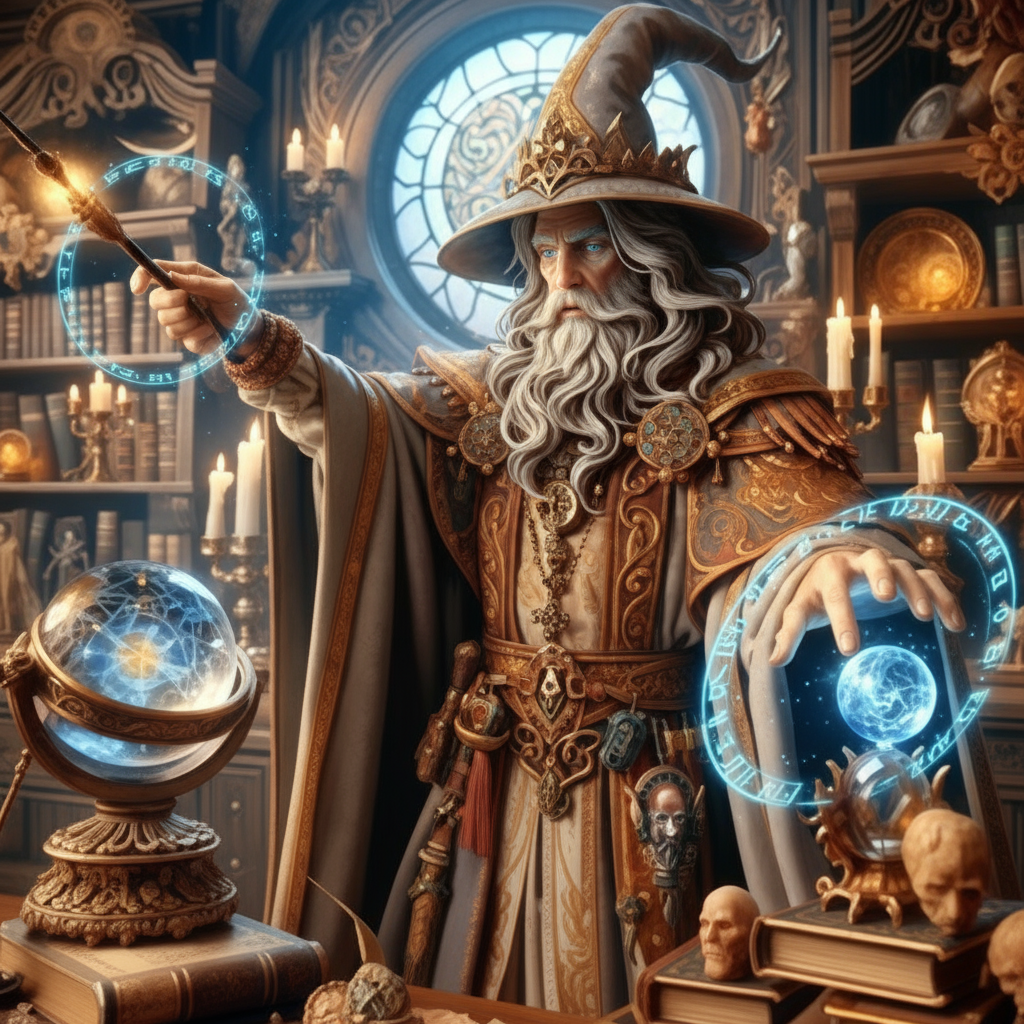
Wizard Name Generator
Unleash the force of the arcane with our wizard name generator! Summon spellbinding names great for DnD 5e, Pathfinder, or Forgotten Realms characters.
Gender Preference
Generating magical names...
Conjure the Perfect Name for Your Mage
Every wizard carries a name that echoes with arcane power. Whether you're rolling dice at a D&D table, crafting the next chapter of your fantasy novel, or building a world where magic runs deeper than rivers, the right name transforms your spellcaster from a collection of stats into a character who feels real.
A wizard's name isn't decoration—it's the first spell they cast, the verbal component that shapes how audiences perceive them before they've turned a single page or thrown a single fireball. After years of helping players and authors build memorable mages, I've learned that the difference between "Darkflame the Mysterious" and "Morgana le Fay" comes down to understanding the craft behind magical naming.
This guide explores how wizard name generators work, why certain names resonate across centuries of storytelling, and how you can summon appellations worthy of your most powerful characters. We'll examine the linguistic roots that give names their weight, analyze famous wizards whose names have become legends, and provide practical steps for crafting identities that belong to the worlds you're building.
The Arcane Art of Naming: Where Magic Meets Language
The moment you encounter a name like Merlin or Gandalf, something shifts. These aren't arbitrary labels—they're compressed histories carrying ancient wisdom within their syllables. What separates legendary wizards from forgettable mages isn't just their deeds; it's how their names carry resonance.
Modern wizard name generators blend mythology, linguistics, and fantasy traditions to produce names that feel authentic rather than random. The best tools don't simply mash syllables together—they apply knowledge of phonotactics (how sounds combine in language) and cultural naming patterns to create results that sound like they emerged from established worlds.
Sound and Meaning Work Together
Phonetics matter tremendously. A harsh, guttural language uses consonant-heavy constructions with stops and back-of-mouth sounds like /k/, /g/, and /x/—perfect for wizards from rugged northern cultures or those practicing darker arts. Names like "Kazdreth" or "Qorthak" feel fundamentally different from lighter, flowing appellations.
Conversely, a melodious name employs front vowels (/i/, /e/), sonorants (nasals, liquids), and fricatives (/f/, /s/, /h/). Think "Seraphina," "Aletheia," or "Lirielle"—these names suggest grace, elegance, and perhaps celestial magic. The contrast isn't accidental; it's linguistic texture doing narrative work.
Cultural and Mythological Roots
Strong wizard names often draw from real linguistic traditions. Latin and Greek roots provide instant scholarly credibility—"Magistus" evokes mastery, while "Theron" means "hunter." Celtic languages offer lyrical qualities with names like "Gwydion" (born of trees) or elements like "Caer-" and "-wyn." Norse traditions contribute harsh consonant clusters and compounds that feel ancient and powerful.
The trick is understanding that these aren't just aesthetic choices. When you name a wizard "Prospero," you're invoking Italian roots meaning "fortunate"—a name Shakespeare chose deliberately for The Tempest. When you select "Hecate," you're drawing on the Greek goddess of witchcraft, whose name means "worker from afar."
How Our Wizard Name Generator Works
Quality wizard name generators offer more than randomization—they provide structured customization that lets you shape results to match your creative vision.
Gender and Identity Options
Most generators allow you to specify gender preferences (male, female, or neutral), ensuring the phonetic patterns and cultural associations align with your character concept. This matters because many naming traditions carry gendered elements—Latin "-us" versus "-a" endings, for instance, or the tendency for certain vowel patterns to cluster by gender across European languages.
Length and Syllable Control
Control over name length proves essential for different contexts. Short, punchy names (one to two syllables) work well for powerful, direct characters—"Zar," "Kael," "Nyx." Medium-length names (two to three syllables) offer the sweet spot of memorability and gravitas—"Aldric," "Morgana," "Cassius." Longer names (four or more syllables) suggest nobility, ancient lineage, or formal titles—"Theodosius," "Evangeline," "Malachai Shadowmere."
Syllable count directly impacts how a name sounds when spoken aloud at the gaming table or read in prose. A one-syllable name delivers impact; a four-syllable construction creates rhythm and flow.
Prefix and Suffix Customization
Advanced generators let you specify starting or ending patterns. Want all your wizard names to begin with "Mor-" to suggest a shared cultural origin? Need appellations ending in "-ius" for that classical Roman flavor? These constraints help maintain consistency across your world-building while still generating variety within defined parameters.
Style and Theme Selection
The most sophisticated tools offer style presets that fundamentally change the naming algorithm:
Regal Style produces lyrical endings suited for noble wizards and epic narratives—think "Aldric Thornweave" or "Elara Moonwhisper."
Grim Style generates names perfect for dark fantasy settings, with harsh consonants and ominous tones—"Malakar Shadowend" or "Dravok Bonechill."
Astral Style creates cosmic appellations infused with celestial energy—"Stellaris Voidwalker" or "Astraea Starweaver."
Eldritch Style ventures into Lovecraftian territory with cryptic, uncanny constructions—"Yth'zaran" or "Kal'thuros."
Classical Style draws from Greek and Roman traditions—"Octavius Aurelius" or "Cassandra Heliodor."
Each style applies different phonological rules and cultural references, producing names that feel cohesive within their category while remaining distinct from other approaches.
Regional and Stylistic Variations: Matching Names to Worlds
A wizard from frost-bitten tundras shouldn't sound like one from sun-scorched deserts. Regional variation adds depth to world-building and helps players immediately understand cultural context.
Northern and Runic Traditions
Names drawing from Norse, Germanic, and Celtic roots employ harsh consonant clusters and compound constructions. "Bjorn Frosthammer," "Ragnar Ironrune," or "Thorvald Stormcaller" signal northern heritage. These names often include nature elements (ice, stone, storm) and warrior qualities (iron, hammer, shield).
The phonetic texture—heavy on stops, fricatives, and back vowels—creates a sense of ancient power and harsh landscapes. Even female names in this tradition maintain strength: "Astrid Wintermoon," "Freya Shieldmaiden," "Sigrid Snowveil."
Mediterranean and Classical Influences
Greco-Roman naming patterns offer smoother phonetics and direct meaning. "Marcus Flamekeeper" or "Helena Starborn" feel immediately familiar yet distinct. Latin endings (-us, -a, -ius, -ia) signal scholarly traditions and empire-building cultures.
These names work particularly well for wizard academies, magical libraries, and characters steeped in formal study. They suggest order, civilization, and structured magical systems rather than wild, intuitive power.
Eastern Mythic Traditions
Names adapted from East Asian fantasy traditions require cultural sensitivity and authenticity. Rather than appropriating real names, quality generators create appellations that honor linguistic patterns—tonal qualities, character-based meanings, compound constructions—without direct copying.
"Li Fengxian" or "Haruka Moonshadow" can work if you understand the cultural framework you're drawing from and treat it with respect rather than as exotic decoration.
Desert and Mystical Styles
Middle Eastern and North African naming traditions offer rich phonetic textures. Names like "Khalid Sandwhisper" or "Zara Miragecaller" employ different consonant clusters and vowel patterns than European traditions. They evoke djinn, ancient sands, and desert magic—heat, illusion, and hidden oases.
Case Studies in Naming: Analyzing Memorable Wizards
Let's examine specific examples to understand what makes certain wizard names work.
Silas Thorne
Breakdown: "Silas" derives from Latin "silva" (forest/wood), while "Thorne" directly references the defensive plant. Together, they suggest a nature-connected wizard with protective instincts and perhaps a prickly personality. The alliteration (S-sounds) creates pleasing rhythm.
Why it works: Two syllables + one syllable provides punch without being forgettable. The name feels grounded—not overly fantastical—making it suitable for low-magic or gritty fantasy settings.
Seraphina Croft
Breakdown: "Seraphina" references seraphim (the highest order of angels), suggesting celestial connection and divine magic. "Croft" is an Old English surname meaning small farm or enclosed field—humble origins contrasting with angelic first name.
Why it works: The juxtaposition between the ethereal "Seraphina" and earthy "Croft" creates character tension before you've written a single scene. Four syllables + one syllable balances elegance with strength.
Malakar Shadowend
Breakdown: "Mal-" prefix carries negative connotations across multiple languages (Latin "malus" = bad). "Akar" sounds harsh. "Shadowend" literally describes ending shadows—either destroying darkness or being the final shadow (death).
Why it works: This is clearly a dark wizard or antagonist. The phonetics (hard consonants, low vowels) support the thematic content. It's obvious without being subtle, which works for certain story roles.
Aldric Stormweaver
Breakdown: "Aldric" comes from Old English, meaning "old/wise ruler." "Stormweaver" directly describes magical ability—controlling weather through weaving spells.
Why it works: The compound surname tells readers exactly what this wizard does while maintaining a fantasy flavor. "Weaver" implies skill and craft rather than raw power, suggesting a sophisticated magic user.
Historical and Mythological Roots: Drawing from Deep Wells
The most resonant wizard names often pull from actual mythology and historical linguistic patterns.
Morgana: The Sea-Born Enchantress
"Morgana" derives from Welsh "Morgan," meaning "sea-born," "sea-circle," or "bright sea." The name appears in Arthurian legend as Morgan le Fay (Morgan the Fairy), though the epithet "le Fay" is a pseudo-French phrase coined by Thomas Malory in the 15th century from the original French descriptive "la fée."
The name connects to Celtic water spirits called Morgens (or Mari-Morgans)—fairy beings associated with the sea. Some scholars link it to the Irish goddess Morrigan ("Great Queen"), a shapeshifting deity of war and fate. This depth of meaning makes "Morgana" feel weighted with history even in modern fantasy contexts.
Application: Use "Morgana" or variations for water-magic specialists, shapeshifters, or characters with ambiguous morality (as Morgan le Fay's role shifted from healer to antagonist across Arthurian retellings).
Hecate: Worker from Afar
"Hecate" comes from the Greek "Hekate," meaning "worker from afar" (from hekatos). She's the ancient Greek goddess of magic, witchcraft, the night, moon, ghosts, and necromancy. The masculine form, Hekatos, was an epithet of Apollo.
Hecate was typically depicted holding twin torches and associated with crossroads—liminal spaces between worlds. She connected with Artemis (wilderness), Selene (moon), and various underworld deities, making her a goddess of transitions and boundaries.
Application: "Hecate" or derivatives work for moon magic, necromancy, divination, or any wizard who operates at boundaries (life/death, mortal/divine, known/unknown). The three-syllable structure (HEH-kah-tee) has inherent rhythm.
Other Mythological Examples
Thoth (Egyptian): God of wisdom, writing, and magic. Single syllable, exotic phonetics.
Merlin (Welsh/Latin): Possibly from "Myrddin," a Welsh legendary figure. The Latinized form became synonymous with the archetypal wizard.
Circe (Greek): Enchantress who transformed Odysseus's men into animals. Means "bird." Short, sharp, memorable.
Prospero (Italian/Latin): Shakespeare's wizard in The Tempest. Means "fortunate" or "prosperous."
Gandalf (Norse): Tolkien took this from Old Norse, where it appears in lists of dwarf names meaning "wand-elf."
Understanding these roots lets you create new names that feel authentic because they follow established linguistic patterns.
Creative World-Building: Matching Names to Magical Traits
Your wizard's name should reflect their magical specialty, personality, and role in your narrative.
Elemental Specialists
Fire wizards benefit from sharp, explosive phonetics: "Pyraxis," "Ignis Flameheart," "Scorch." Water mages suit flowing, liquid sounds: "Marina," "Caspian Tidecaller," "Nerida." Earth wizards ground themselves in solid consonants: "Granite," "Petra Stoneshield," "Terran."
The phonetic texture supports the thematic content, making the character feel cohesive before they cast their first spell.
School of Magic Alignment
Necromancers need names that evoke death, darkness, or the thin veil between worlds: "Mortis," "Shade," "Raven Gravesong." Healers require softer, gentler constructions: "Solace," "Amara Lighttouch," "Caelum." Illusionists play with perception and trickery: "Mirage," "Veil," "Phantasius."
Personality Through Phonetics
Aggressive, confrontational wizards suit hard stops and plosives: "Krag," "Drak," "Zothar." Scholarly, introspective types benefit from smoother constructions: "Lucian," "Thales," "Elian." Mysterious, enigmatic characters work with unusual phoneme combinations or foreign-sounding patterns: "Xypheros," "Qel'zara," "Yth'mara."
Frequently Asked Questions
How do I make sure my wizard name is original?
After generating options, cross-reference them with major fantasy franchises, published RPG materials, and search engines. No generator guarantees complete originality, but most combinations will be unique enough for personal use. For commercial projects, consider consulting trademark databases and potentially securing legal clearance.
Can I use these names for published work?
Names themselves generally aren't copyrightable, but specific combinations associated with famous characters are protected. "Gandalf" belongs to Tolkien's estate; "Harry Potter" to J.K. Rowling. Generated names that don't match existing protected works should be safe, but always verify before publishing commercially.
What if the generated names sound too similar to each other?
Try switching to a different style preset or adjusting the creativity slider higher. Adding more specific character traits or keywords often produces greater variety. Some generators also let you exclude certain phonemes or patterns to force more diverse results.
How many syllables should a wizard's name have?
There's no universal rule. Powerful, ancient wizards often carry longer names (three to four syllables), while younger or more direct characters might have shorter appellations (one to two syllables). Consider how the name sounds when spoken aloud repeatedly—gaming sessions and read-alouds demand pronounceable names.
Should I include titles with wizard names?
Titles ("Archmage," "the Great," "Shadowweaver") add context but can feel overwrought. Use them sparingly for major characters or when the title genuinely adds information. "Elara Moonwhisper, Archmage of the Northern Academy" works once; repeating it becomes tedious.
How do I pronounce unusual generated names?
Most quality generators provide pronunciation guides or build names from recognizable phonetic patterns. If a name looks unpronounceable, it probably is—choose a different option. Your players and readers shouldn't struggle with every character mention.
Can I modify generated names?
Absolutely. Generators provide inspiration and starting points. Feel free to adjust spelling, swap syllables, or combine elements from multiple suggestions. The best wizard names often emerge from human-AI collaboration, where you refine algorithmic output with personal creative judgment.
What about non-English or non-Latin naming patterns?
Many generators support multiple linguistic traditions and offer style presets for different cultural frameworks. Always approach non-Western naming patterns with cultural sensitivity—research the traditions you're drawing from and avoid reducing complex cultures to exotic decoration.
Summoning Your Perfect Wizard Name
The perfect wizard name doesn't materialize from random chance—it emerges from understanding how sound, meaning, and cultural context work together to create resonance. Whether you're using a sophisticated generator or crafting names manually, the principles remain constant: consider phonetic texture, draw from linguistic roots, match names to character traits, and ensure your appellations feel authentic to the worlds you're building.
A quality wizard name generator serves as a collaborative partner in the creative process, offering structured suggestions that spark inspiration while leaving final judgment to human intuition. The best results come from iteration—generate multiple options, compare them against your character's background and personality, and select the one that feels inevitable.
Your wizard's name is the first spell they cast. Make it count. Whether you're conjuring "Aldric Stormweaver" for your D&D campaign, naming "Seraphina Croft" for your fantasy novel, or creating an entire magical academy filled with unique personalities, the right appellation transforms abstract concepts into characters who feel real.
The tools exist to help you find that perfect combination of syllables. The magic happens when you bring your creative vision to the process.